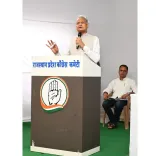
CM Saini credits Modi's 'Har Gaon Har Garib' for big dreams
Synopsis
Haryana CM Nayab Singh Saini marked PM Modi's 25-year public service milestone by crediting the 'Har Gaon, Har Garib' philosophy for teaching him to hold big dreams even with limited resources, as part of BJP's Seva Jyoti Yatra campaign.
Key Takeaways
Haryana Chief Minister Nayab Singh Saini posted a tribute to PM Narendra Modi on October 7, 2026 .
He cited the phrase Har Gaon, Har Garib ('Every Village, Every Poor Person') as a core personal and political lesson.
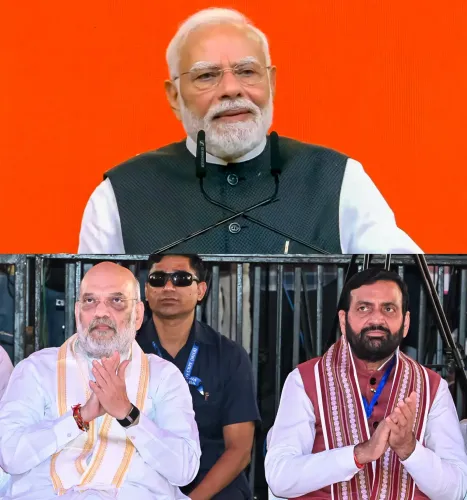
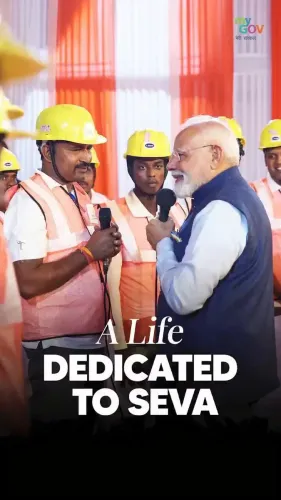
The post was part of #25YearsOfSeva , the BJP's campaign marking Modi's 25-year elected-leadership milestone .
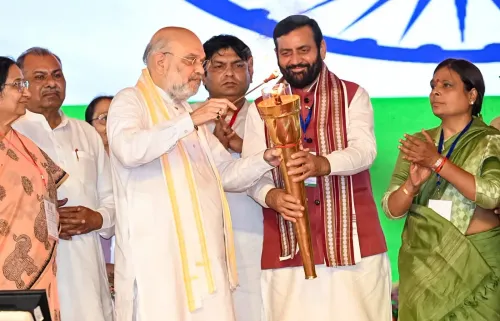
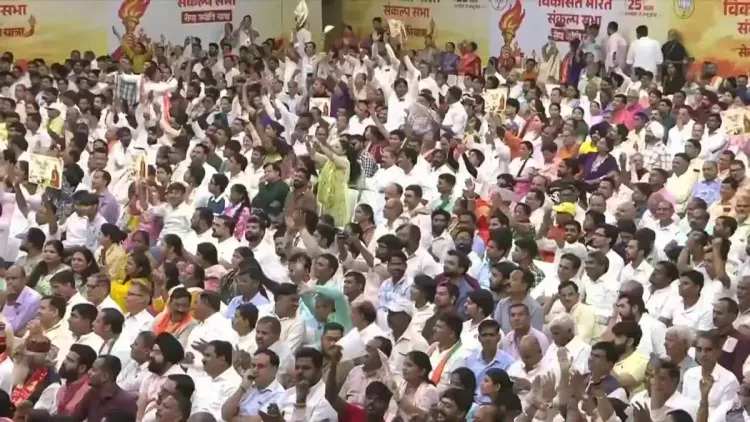
The Seva Jyoti Yatra is a BJP outreach initiative running alongside the anniversary commemoration.
Saini emphasised Modi's message: resources may be limited, but aspirations must remain large — aligning his Haryana governance pitch with the national welfare narrative.
A phrase — four words, two promises — has shaped a political career. Haryana Chief Minister Nayab Singh Saini invoked Prime Minister Narendra Modi's governing philosophy 'Har Gaon, Har Garib' ('Every Village, Every Poor Person') on Wednesday, October 7, 2026, calling it the lesson that taught him to dream large even when resources are limited.
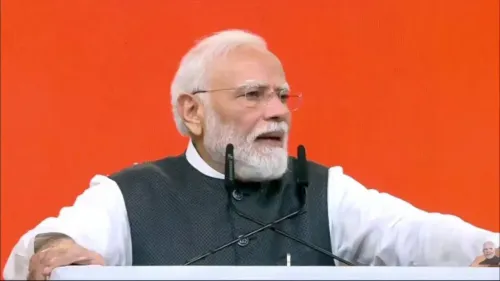
Posting under the hashtags #25YearsOfSeva and #SevaJyotiYatra, Saini quoted Modi directly: 'साधन-संसाधन भले ही सीमित हों, लेकिन सपने बड़े होने चाहिए' — 'Means and resources may be limited, but dreams must be large.' The message was part of a broader BJP commemoration marking 25 years of Modi's public service as an elected leader, a milestone the party has been celebrating with the Seva Jyoti Yatra outreach initiative.
'Har Gaon, Har Garib' — the philosophy behind the tribute
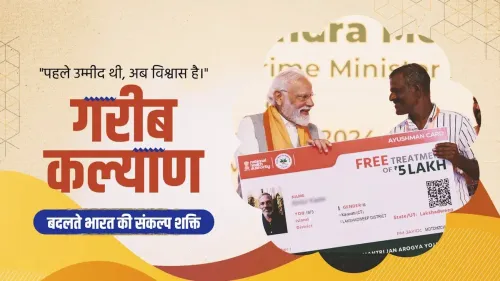
The phrase Har Gaon, Har Garib has been a cornerstone of the BJP's grassroots messaging under Modi, framing welfare delivery — electricity connections, housing, sanitation, banking access — as a moral promise to India's most marginalised. For a leader like Saini, who has positioned himself as a voice for Haryana's rural and backward communities, invoking it carries pointed personal weight: it is both a policy citation and a statement of political identity.
The Seva Jyoti Yatra, running in parallel with the #25YearsOfSeva campaign, is a party-driven commemorative journey marking Modi's 25-year arc from Gujarat Chief Minister to a third term at the Centre. State leaders across the BJP have used the occasion to express personal gratitude and align local governance narratives with the broader Modi legacy.
Saini's signal to Haryana's villages
For Saini, the timing is deliberate. As Haryana's Chief Minister, anchoring his public messaging to the 'village and the poor' framing reinforces his administration's stated priorities — rural infrastructure, welfare scheme delivery, and outreach to communities that have historically felt peripheral to state politics. The post, brief as it is, functions as a political positioning statement: same values, same source, different geography.
Twenty-five years is a long arc to celebrate. The sharper question it forces — whether the dreams have outpaced the resources — is one every village in Haryana will answer at the ballot box, on its own schedule.
Point of View
Har Garib,' he ties Haryana's welfare agenda directly to the Modi brand, useful for a state CM seeking to consolidate rural support. The #SevaJyotiYatra framework also lets state leaders participate in a nationally coordinated narrative without appearing merely ceremonial. Whether the 25-year tribute translates into fresh grassroots momentum will depend on how the yatra's ground events land in districts where welfare delivery remains uneven.
NationPress
7 Oct 2026
Frequently Asked Questions
What is the meaning of 'Har Gaon, Har Garib'?
'Har Gaon, Har Garib' translates to 'Every Village, Every Poor Person' — a BJP welfare-delivery philosophy under PM Modi that frames government schemes as a direct promise to rural and marginalised communities.
What is the #25YearsOfSeva campaign?
The #25YearsOfSeva campaign is a BJP initiative marking PM Narendra Modi's 25-year milestone as an elected leader, running alongside the Seva Jyoti Yatra outreach programme in 2026.
What is the Seva Jyoti Yatra?
The Seva Jyoti Yatra is a BJP-organised commemorative outreach journey held to mark PM Modi's 25 years in elected public office, with state leaders participating to connect the national anniversary to local governance.
Why did CM Nayab Singh Saini post about Modi's 25 years of service?
Saini posted as part of the BJP's coordinated #25YearsOfSeva celebrations, using the occasion to credit Modi's 'Har Gaon, Har Garib' philosophy as a personal political lesson on ambition despite limited resources.
Who is Nayab Singh Saini?
Nayab Singh Saini is the Chief Minister of Haryana and a senior BJP leader, known for his alignment with PM Modi's welfare and rural-outreach agenda.