CM Saini Challenges Employers After 12-Lakh Tax Relief
Synopsis
Haryana Chief Minister Nayab Singh Saini publicly challenged private employers on 20 November 2026, asking whether they had raised employee salaries after the central government waived income tax on earnings up to ₹12 lakh — a pointed rhetorical move aimed at the employer-employee divide.
Key Takeaways
Haryana CM Nayab Singh Saini posted a sharp challenge to private employers on 20 November 2026 .
He invoked the central government's income tax waiver on incomes up to ₹12 lakh under the new tax regime.
The post asked, in Hindi, whether employers had responded by increasing employee salaries.
Income tax policy is a Union subject ; states like Haryana handle labour regulations and minimum wages separately.
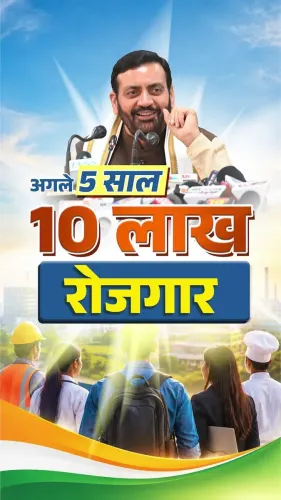
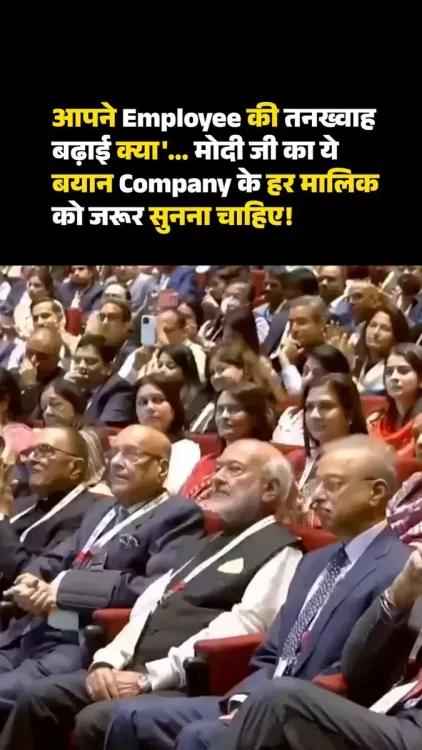
The post included a video and was framed as a direct moral challenge to the private sector, not a formal policy announcement.
No public response from industry bodies or Haryana employers had been issued at the time of publication.
A sharp rhetorical question from Haryana Chief Minister Nayab Singh Saini landed on Friday, 20 November 2026 — and it was aimed squarely at private employers across the country. Posting on X with a video, Saini invoked the central government's income tax relief on earnings up to ₹12 lakh and turned it into a pointed challenge: if the government has already freed millions of salaried workers from their tax burden, what has the employer done in return?
The post, in Hindi, reads: 'Maine toh 12 lakh income tax maaf kar diya, toh kya aapne employee ki tankha badhaayi?' — 'I have waived income tax up to ₹12 lakh, so have you increased your employee's salary?' The rhetorical sting is deliberate and the interrobang punctuation makes it unmistakable.The ₹12 Lakh Relief and What It Means for Workers
The reference is to the central government's income tax exemption for individuals earning up to ₹12 lakh under the new tax regime — a significant expansion of the relief available to salaried Indians. Under this structure, a worker earning below that threshold effectively takes home their full gross salary with no income tax deducted. The new tax regime, first introduced in Union Budget 2020, has been progressively sweetened with lower rates and a wider zero-tax band. For Haryana's large base of salaried workers in sectors ranging from manufacturing to IT services, that relief translates directly into higher disposable income — without any action required from their employer.Saini's Implicit Argument: Government Gave, Now Employers Must Follow
What makes the CM's framing politically interesting is the logical pressure it places on the private sector. Income tax is a Union subject — the state government in Chandigarh has no direct hand in setting exemption limits. But Saini is positioning the central government's generosity as a moral benchmark that private employers should feel obliged to match. The underlying argument: if millions of workers have more money in their pockets because the state reduced its own claim on their wages, employers who have not revised salaries upward are, in effect, pocketing that windfall themselves. It is a framing that sidesteps the technical division of powers between Centre and states — and goes straight for the gut of the employer-employee relationship. Whether it triggers any formal Haryana government move on state-level labour regulations or minimum wage revision remains to be seen, but the political signal is unmistakable: the BJP-led government wants credit for the tax relief to land with workers, not get absorbed invisibly into corporate margins.A Familiar Playbook, a Fresh Urgency
State-level leaders commenting on central tax announcements is not new. What is notable here is the confrontational directness — no policy jargon, no committee, just a one-line dare with a video clip attached. The post is designed to go viral among salaried Indians who have already noticed the change in their take-home pay and may be wondering why their employer has not acknowledged it. It is constituency politics conducted at the speed of a reel.Industry bodies and HR associations in Haryana have not publicly responded as of publication. Watch for follow-up moves from the state government on minimum wage notifications or labour compliance — the question Saini just asked publicly tends to have a policy answer eventually.
Point of View
He implicitly positions the private sector as the obstacle to worker prosperity, not the state. It is a low-cost, high-visibility move that keeps the income-tax announcement alive in public discourse long after the budget cycle has moved on. If it generates enough pressure, it could also serve as political cover for a Haryana minimum wage revision — letting the CM say the private sector was warned first.
NationPress
20 Nov 2026
Frequently Asked Questions
What did Haryana CM Nayab Singh Saini say about income tax and salaries?
CM Saini posted on X asking private employers whether they had raised employee salaries after the central government waived income tax on earnings up to ₹12 lakh, framing the tax relief as a benchmark employers should now match.
What is the ₹12 lakh income tax exemption Saini is referring to?
It refers to the central government's income tax relief under the new tax regime, under which individuals earning up to ₹12 lakh pay zero income tax, expanding a structure first introduced in Union Budget 2020.
Can Haryana state government waive income tax?
No. Income tax is a Union subject and can only be revised by the central government through the Union Budget. State governments like Haryana control state-level taxes, labour regulations, and minimum wages.
Is Nayab Singh Saini the Chief Minister of Haryana?
Yes. Nayab Singh Saini is the BJP Chief Minister of Haryana, in office since 2024.
Will Haryana increase minimum wages after Saini's statement?
No formal announcement has been made. Saini's post is a rhetorical challenge to private employers; any follow-up on minimum wages or labour regulations would require a separate state government notification.