CM Saini Hails 12 Years of Middle-Class Growth Under Modi
Synopsis
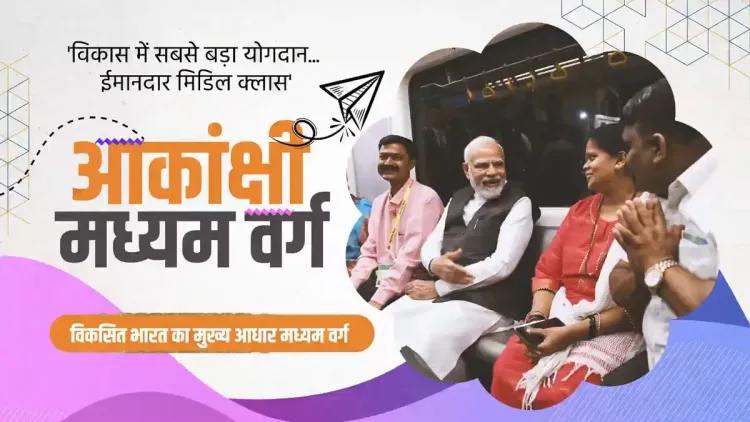
Haryana Chief Minister Nayab Singh Saini marked 12 years of the Modi government by crediting income-tax relief, GST, digital expansion, housing, and health schemes with transforming India's middle class into a confident driver of the Viksit Bharat vision.
Key Takeaways
CM Nayab Singh Saini posted on 15 June 2026 under #12YearsOfSakshamMiddleClass , praising PM Modi 's policies for middle-class empowerment since 2014 .
Key reforms cited include GST (implemented 1 July 2017 ), Digital India (launched August 2015 ), and Pradhan Mantri Jan Dhan Yojana (started August 2014 ).
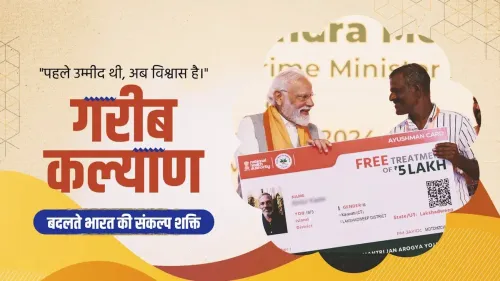
Pradhan Mantri Awas Yojana (2015) and Ayushman Bharat (2018) are highlighted as pillars of housing and health support for middle-income families.
The post links middle-class growth to the Viksit Bharat goal of making India a developed economy by 2047 .
Income-tax relief, affordable digital connectivity, and improved transport infrastructure are cited as direct quality-of-life improvements for the middle class.
Small businesses and self-employed professionals are identified as key stakeholders benefiting from economic formalisation and digital payment expansion.
Haryana Chief Minister Nayab Singh Saini on Monday, 15 June 2026 credited Prime Minister Narendra Modi's twelve years in office with an 'unprecedented transformation' in the empowerment and economic advancement of India's middle class, posting his assessment on X under the campaign hashtag #12YearsOfSakshamMiddleClass.
Context
In his post, CM Saini wrote that since 2014, the central government's 'people-centric policies' had made the middle class both a 'partner in development' and the 'primary foundation of India's progress.' He specifically cited income-tax relief, expansion of digital services, housing, health, and financial inclusion initiatives as measures that had made middle-class life 'more convenient, secure and empowered.'
The post is part of a broader BJP-led campaign marking twelve years of the Modi government, framing the middle class as a central beneficiary and driver of national growth. Saini, who leads the BJP government in Haryana, aligned his state-level voice with the national campaign narrative.
Policy Backdrop
The reforms highlighted by CM Saini span a decade of central government action. The Goods and Services Tax (GST), implemented on 1 July 2017, unified India's indirect tax structure by replacing multiple central and state levies — a reform the post credits with giving 'new momentum to economic activity.'
The Digital India programme, launched in August 2015, expanded digital infrastructure and e-governance, while Pradhan Mantri Jan Dhan Yojana, started in August 2014, brought millions of unbanked citizens into the formal financial system. The Pradhan Mantri Awas Yojana, launched in 2015, targeted affordable housing for urban and rural households, and Ayushman Bharat, rolled out in 2018, extended health insurance coverage to lower- and middle-income families.
The Insolvency and Bankruptcy Code, enacted in May 2016, further strengthened ease of doing business and credit discipline, contributing to the formalisation thrust that has characterised economic policy since 2014.
Stakeholders and Impact
CM Saini argued that the cumulative effect of these policies — modern infrastructure, improved transport networks, affordable digital connectivity, and technology-based services — had brought 'wide-ranging positive changes' to the daily lives of middle-class families. He described today's Indian middle class as 'more confident, aspirational, and full of opportunities.'
Small businesses and self-employed professionals, a significant segment of the middle class, have been among the stakeholders most directly affected by GST rationalisation and the rapid expansion of digital payment systems. The formalisation of the economy has widened the base of economic participants, even as compliance requirements have evolved over the period.
What's Next
Saini concluded by linking the empowered middle class to the Viksit Bharat vision — the government's official goal of transforming India into a developed economy by 2047. He stated that this 'capable middle class is playing an important role in realising the resolve of #ViksitBharat by driving innovation, entrepreneurship, and economic growth.'
Policy watchers will look to the next Union Budget for fresh middle-class provisions and to any updated progress metrics released under the Viksit Bharat framework, as the ruling party continues to position the middle class as both a political constituency and an economic engine heading into the latter half of the decade.
Point of View
Using the middle class as the central frame — a constituency the party has consistently courted through tax relief and digital access. By tying local Haryana leadership to the national Modi narrative, Saini reinforces his own political positioning ahead of future electoral cycles in the state. The invocation of Viksit Bharat signals that the party intends to sustain this middle-class messaging as a long-term ideological anchor, not just an anniversary talking point. The post reflects a broader pattern in which state-level BJP leaders serve as amplifiers of central government policy achievements, blurring the line between governance communication and campaign outreach.
NationPress
20 Sept 2026
Frequently Asked Questions
What is the #12YearsOfSakshamMiddleClass campaign about?
It is a BJP-led campaign marking twelve years of the Modi government, highlighting policies said to have empowered India's middle class through tax relief, digital services, housing, health, and financial inclusion since 2014.
What reforms did CM Nayab Singh Saini mention in his post?
Saini cited income-tax relief, GST, expansion of digital payment systems, the Digital India programme, Pradhan Mantri Awas Yojana, Ayushman Bharat, and improved transport and connectivity infrastructure.
What is Viksit Bharat and how does it relate to the middle class?
Viksit Bharat is the Indian government's official vision to transform India into a developed economy by 2047. Saini's post positions the empowered middle class as a key driver of innovation, entrepreneurship, and growth needed to achieve this goal.
When was GST implemented in India?
The Goods and Services Tax was implemented across India on 1 July 2017, replacing multiple central and state indirect tax levies to create a unified national tax structure.
What is Pradhan Mantri Jan Dhan Yojana?
Pradhan Mantri Jan Dhan Yojana is a financial inclusion scheme started in August 2014 that brought millions of unbanked citizens into the formal banking system through zero-balance accounts.