CM Saini Marks 12 Years of Modi Govt Youth Schemes

Synopsis
Haryana Chief Minister Nayab Singh Saini marked 12 years of the Modi government on 13 June 2026 by highlighting Skill India, PMKVY, Startup India, and Khelo India as transformative pillars of youth empowerment and the Viksit Bharat vision.
Key Takeaways
Haryana CM Nayab Singh Saini posted on 13 June 2026 under #12YearsOfYuvaShakti to mark 12 years of the Modi government's youth-focused policies.
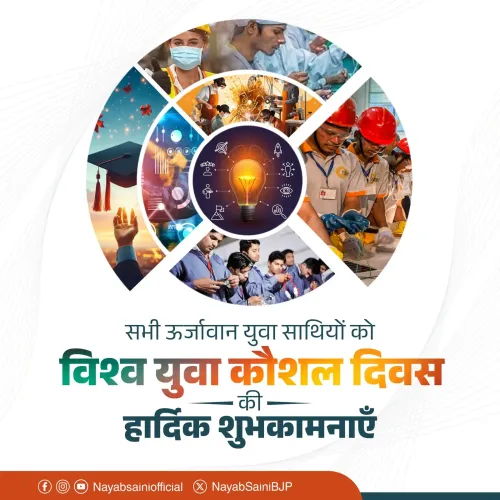
He credited Skill India Mission and PMKVY — both launched in 2015 — with building a robust vocational training ecosystem.
Startup India (launched January 2016 ) was cited for repositioning youth as job creators rather than job seekers.
Khelo India (launched 2017 ) was highlighted for expanding grassroots sports infrastructure and raising India's global sporting profile.
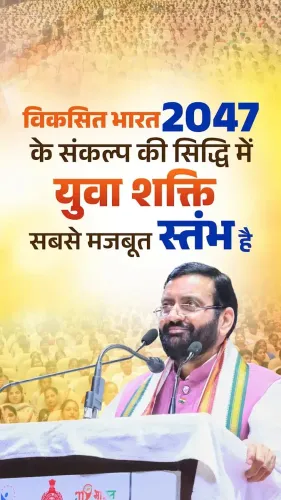
The post invokes the Viksit Bharat vision — a developed India by 2047 — framing youth as its primary drivers.
The messaging forms part of a coordinated BJP campaign marking 12 years of the Modi government at the Centre.
Haryana Chief Minister Nayab Singh Saini on Saturday, 13 June 2026, credited the 12 years of the Narendra Modi-led central government with a structural transformation in youth empowerment, citing flagship initiatives including Skill India, Pradhan Mantri Kaushal Vikas Yojana (PMKVY), Startup India, and Khelo India as cornerstones of this shift.
Context
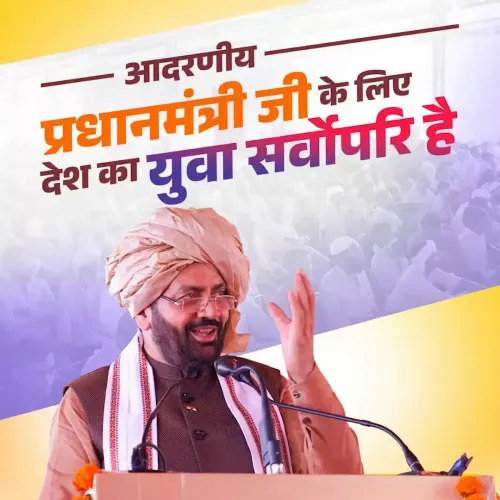
Posting under the hashtag #12YearsOfYuvaShakti, CM Saini wrote that since 2014, India has witnessed an 'unprecedented and structural transformation' in the direction of youth empowerment and development. He credited Prime Minister Narendra Modi's 'visionary leadership and strategic vision' for converting youth potential from mere possibility into 'active creative energy.' The post is part of a coordinated BJP communication campaign marking the completion of 12 years of the Modi government at the Centre.
Saini specifically highlighted that the Skill India Mission and PMKVY have built a 'robust ecosystem,' while Startup India has redefined traditional employment paradigms by positioning young people as job creators rather than job seekers.
Policy Backdrop
The Skill India Mission was launched in 2015 as an umbrella programme aimed at training over 400 million people in industry-relevant skills. Its flagship component, PMKVY, also launched in 2015, provides short-term vocational training and certification to youth across sectors.
The Startup India initiative, announced in January 2016, introduced tax benefits, simplified compliance norms, and funding support to encourage entrepreneurship among young Indians. The Khelo India programme, introduced in 2017, was designed to build grassroots sports infrastructure and create a structured pipeline for identifying and nurturing athletic talent at the district and state levels. CM Saini noted that Khelo India has expanded 'institutional excellence and high-performance culture' in sports, positioning India as a competitive force on global sporting platforms.
Stakeholders and Impact
The primary beneficiaries of these schemes are Indian youth — aspiring entrepreneurs, vocational trainees, and athletes. The central government's integrated approach has linked skilling, digital infrastructure, and entrepreneurship promotion to leverage India's demographic dividend as an economic asset.
Haryana, under CM Saini's administration, has been among the states that have adopted and adapted central youth-focused schemes as part of national-state policy coordination. The post also invokes the #ViksitBharat ('Developed India') vision — the government's overarching goal of making India a fully developed nation by 2047 — framing today's youth as the primary agents of that ambition.
What's Next
The #12YearsOfYuvaShakti campaign signals continued political messaging around youth policy as the BJP reinforces its governance record ahead of future electoral cycles. State-level implementation reports of Skill India and Startup India in Haryana and other BJP-governed states are expected to follow as part of the broader communication push.
Possible new guidelines or enhanced budget allocations for Khelo India ahead of upcoming international sporting events could further cement the programme's role in India's global sports ambitions. The convergence of skilling, entrepreneurship, and sports policy under the Viksit Bharat framework suggests that youth empowerment will remain a central pillar of both central and state-level governance narratives.
Point of View
Startup India, Khelo India — rather than abstract claims, the communication attempts to shift the youth-policy debate from intent to institutional output. The invocation of 'Viksit Bharat 2047' ties near-term scheme performance to a long-horizon national aspiration, making the BJP's youth agenda appear both urgent and generational. For Haryana specifically, where youth unemployment and agrarian distress have historically been electoral fault lines, Saini's alignment with this narrative serves a dual purpose: reinforcing central-state policy coherence while pre-empting opposition critiques on jobs.
NationPress
25 Sept 2026
Frequently Asked Questions
What is #12YearsOfYuvaShakti that CM Nayab Saini posted about?
#12YearsOfYuvaShakti is a BJP social media campaign marking 12 years of the Narendra Modi government at the Centre since 2014, focusing on youth empowerment schemes such as Skill India, Startup India, and Khelo India.
What is the Pradhan Mantri Kaushal Vikas Yojana (PMKVY)?
PMKVY is a flagship central government scheme launched in 2015 that provides short-term vocational training and certification to Indian youth, helping them gain industry-relevant skills and enter the formal economy.
What is the Viksit Bharat vision mentioned by CM Saini?
Viksit Bharat — meaning 'Developed India' — is the central government's vision to transform India into a fully developed nation by 2047, the centenary of independence. It has been a key policy communication theme since 2023.
What has the Khelo India programme achieved?
Khelo India, launched in 2017, was designed to build grassroots sports infrastructure and create a structured talent pipeline at district and state levels. It aims to improve India's performance on global sporting platforms by nurturing athletes from an early stage.
How has Startup India helped Indian youth?
Startup India, announced in January 2016, offers tax benefits, simplified compliance requirements, and funding support to young entrepreneurs, repositioning youth as job creators rather than job seekers and redefining traditional employment patterns.