CM Saini Orders 700 New School Buildings, ICT Labs in Haryana
Synopsis
Haryana CM Nayab Singh Saini has ordered 700 new school buildings in one year, ICT labs across 719 Utkrisht Vidyalayas, and a ₹1 crore per district fund for basic school amenities, announced after chairing a School Education Department review on October 14, 2026.
Key Takeaways
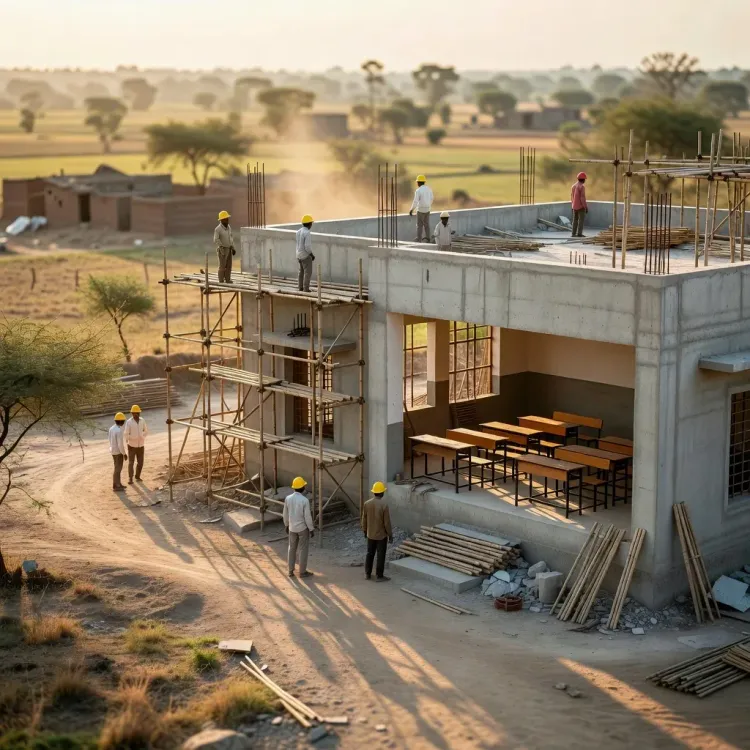
700 government school buildings in Haryana are to be constructed within one year , as directed by CM Nayab Singh Saini.
719 Utkrisht Vidyalayas will each receive a 10-computer ICT lab , expanding digital access across the state's model schools.
Every district in Haryana will receive ₹1 crore for basic school infrastructure including sanitation and amenities.
The directives were issued at a School Education Department review meeting chaired by Saini on October 14, 2026 .
The plan aligns with the National Education Policy 2020 goals and the Samagra Shiksha Abhiyan framework for school infrastructure funding.
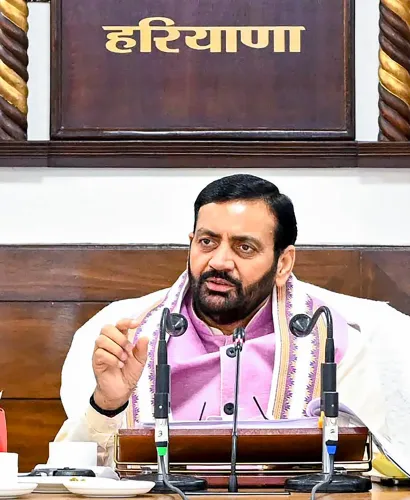
Haryana is about to build 700 new school buildings in a single year — and that is just the opening line of a sweeping infrastructure push that Haryana Chief Minister Nayab Singh Saini announced on Wednesday, October 14, 2026, after chairing a high-level review meeting of the State School Education Department.
Three directives, one overhaul
Saini issued three concrete directives to senior officials. First, 700 government schools across Haryana will receive brand-new buildings, with construction to be completed within one year. Second, 719 Utkrisht Vidyalayas — the state's flagship 'excellent schools' — will each get a 10-computer ICT laboratory, wiring digital skilling directly into the district fabric. Third, every single district in the state will receive ₹1 crore earmarked for basic school amenities — toilets, drinking water, boundary walls, the unglamorous infrastructure that determines whether a child actually stays in school.
Taken together, the package targets three failure points simultaneously: crumbling physical structures, the digital-access gap, and the chronic under-funding of district-level maintenance that plagues government schooling across India.
Utkrisht Vidyalayas: Haryana's model-school bet
The Utkrisht Vidyalaya scheme represents Haryana's attempt to build centres of quality within the government school network — schools that are meant to demonstrate what state-run education can look like at its best. Equipping all 719 of them with ICT labs is a direct play on the National Education Policy 2020 mandate for technology-integrated learning, and it aligns with the framework of the Samagra Shiksha Abhiyan, the centrally sponsored scheme that has since 2018-19 channelled funds into school buildings, labs, and basic facilities across Indian states including Haryana.
The per-district ₹1 crore allocation decentralises spending authority, letting District Education Officers address hyper-local facility gaps without waiting for project-by-project state approvals — a design choice that, if implemented cleanly, could compress the usual lag between sanction and spade-in-ground.
The one-year clock starts now
The most watched number in this announcement will be 700 — the new school buildings promised within twelve months. Construction timelines for public infrastructure in India rarely run on schedule, and district-wise fund utilisation will be the real test of whether these directives translate into completed classrooms or remain promises on a presentation slide. Haryana's school students and district officials now share the same calendar pressure.
What Saini has done today is set a measurable, time-bound benchmark. The buildings either go up, or they don't.
Point of View
Though its success depends entirely on district administration capacity. The Utkrisht Vidyalaya ICT push signals Haryana's alignment with the NEP 2020 digital-learning mandate, using centrally available Samagra Shiksha funds to amplify state commitments. The one-year construction deadline for 700 buildings is the bravest — and most scrutinisable — number in the announcement.
NationPress
14 Oct 2026
Frequently Asked Questions
How many new school buildings will be built in Haryana?
700 new school buildings are to be constructed across Haryana within one year, as directed by Chief Minister Nayab Singh Saini at a School Education Department review meeting on October 14, 2026.
What are Utkrisht Vidyalayas in Haryana?
Utkrisht Vidyalayas are Haryana's model or 'excellent schools' — a state scheme to build centres of quality within the government school network. All 719 such schools are now set to receive 10-computer ICT labs.
How much money will each Haryana district get for school facilities?
Each district in Haryana will receive ₹1 crore for basic school amenities such as sanitation, drinking water, and other essential infrastructure, as announced by CM Saini.
What is the Samagra Shiksha Abhiyan and how does it relate to this plan?
The Samagra Shiksha Abhiyan is a centrally sponsored scheme launched in 2018-19 that funds school buildings, labs, and basic facilities across Indian states. Haryana's current school infrastructure push aligns with and draws from this framework.
When did CM Nayab Singh Saini announce the Haryana school infrastructure plan?
CM Saini announced the plan on Wednesday, October 14, 2026 , after chairing a review meeting of the Haryana School Education Department .