KIIFB overhaul: CM Satheesan tightens grip, probe into irregularities
Synopsis
Within two weeks of taking office, Kerala CM V.D. Satheesan has already held two special meetings on KIIFB — the ₹60,000 crore infrastructure body now under scrutiny for alleged appointment irregularities, contract staff proliferation, and employees running private consultancies. The KIIFB CEO's abrupt resignation right after the UDF win signals just how politically charged this overhaul has become.
Key Takeaways
Satheesan convened two special meetings on KIIFB within his first two weeks in office.
KIIFB has financed projects worth over ₹60,000 crore since its establishment in 1999 .
Preliminary reviews reportedly flagged irregular appointments, excess contract staff, and conflicts of interest involving private consultancies.
The government plans to bring KIIFB under direct Finance Department supervision and phase out temporary appointments.
The KIIFB CEO , a close aide of outgoing CM K.M.
Abraham , resigned shortly after the UDF election victory.
A broader probe into past appointments, financial commitments and administrative decisions is under consideration.
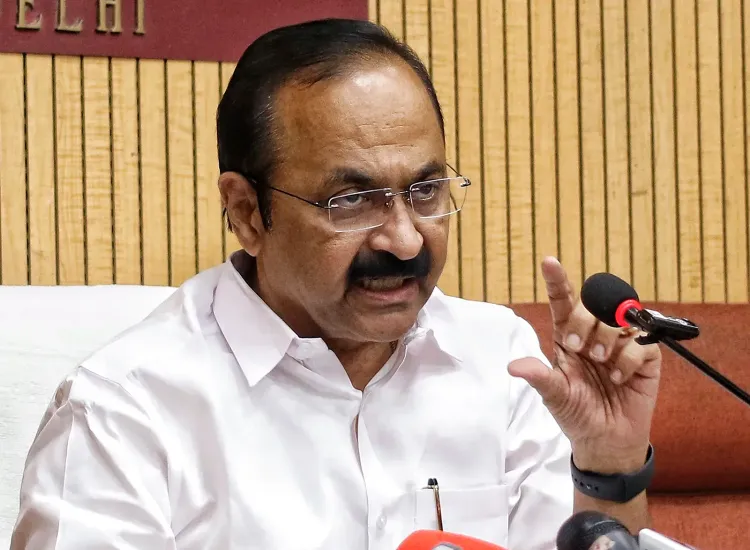
Chief Minister V.D. Satheesan has moved swiftly to restructure the Kerala Infrastructure Investment Fund Board (KIIFB), convening two special review meetings within his first two weeks in office and signalling a sweeping governance overhaul of the state's premier infrastructure financing agency. The initiative, driven in part by Satheesan's dual role as Finance Minister, is being positioned as the most consequential administrative reform of the newly elected Congress-led United Democratic Front (UDF) government in Thiruvananthapuram.
What Triggered the Review
Preliminary internal reviews reportedly flagged widespread irregularities in appointments, an over-reliance on contract staff, and the concentration of key positions within a narrow network of individuals. Concerns have also been raised over retired officials continuing to occupy influential roles and the alleged proliferation of high-paying posts outside the standard government pay framework.
Allegations have additionally surfaced that some KIIFB employees simultaneously operate private consultancies — a conflict of interest that the administration is now examining. According to government sources, these findings prompted the Chief Minister to fast-track the restructuring rather than wait for a formal audit cycle.
What the Overhaul Entails
The government plans to bring KIIFB under the direct supervision of the Finance Department, ending what officials describe as years of largely autonomous functioning with limited oversight. A large number of temporary and contract appointments are expected to be phased out, with future staffing drawn primarily from qualified serving government officers and Finance Department personnel on deputation.
The administration is also reviewing KIIFB's organisational structure and those of its affiliated entities, with the stated goals of reducing duplication, curbing expenditure and strengthening accountability. A broader scrutiny of past appointments, financial commitments and administrative decisions is under active consideration, according to reports.
KIIFB's Scale and Significance
Established in 1999, KIIFB has grown into one of Kerala's most powerful public institutions, having financed projects worth more than ₹60,000 crore across roads, healthcare, education, water supply, power and ports. Its expanding financial footprint, however, has attracted persistent criticism over spending practices, staffing patterns and governance mechanisms — criticism that the new government is now treating as a mandate for reform.
Political Context
The restructuring carries clear political undertones. Shortly after the UDF's decisive Assembly election victory, the KIIFB CEO — widely regarded as a close aide of outgoing Chief Minister K.M. Abraham — resigned from the post. The exit underscored the degree to which the agency had become associated with the previous administration's governance style.
For Satheesan, who holds direct financial authority as both Chief Minister and Finance Minister, the KIIFB overhaul is an early signal of intent: that public institutions built around informal networks and weak oversight will face structural correction under the new dispensation.
What Comes Next
If implemented in full, the reforms could mark the most far-reaching transformation in KIIFB's 26-year history. The administration has not yet announced a formal timeline for completing the review or publishing its findings, but the pace of the initial meetings suggests the government intends to move quickly before institutional resistance can consolidate.
Point of View
And bringing it under Finance Department control is as much a power transfer as a governance reform. The real test will be whether the probe produces structural fixes or settles into selective accountability. Kerala's infrastructure pipeline depends heavily on KIIFB's borrowing capacity; aggressive personnel changes without a credible transition plan could stall project execution at a moment when the state can least afford delays.
NationPress
20 Oct 2026
Frequently Asked Questions
What is KIIFB and why is it under scrutiny?
KIIFB, the Kerala Infrastructure Investment Fund Board, is the state's principal infrastructure financing agency, established in 1999 and responsible for funding over ₹60,000 crore in projects across roads, healthcare, education and other sectors. It is under scrutiny following preliminary reviews that reportedly identified irregular appointments, excess contract staff, and alleged conflicts of interest.
What reforms is CM Satheesan planning for KIIFB?
CM V.D. Satheesan plans to place KIIFB under direct Finance Department supervision, phase out a large number of temporary and contract appointments, and staff the agency primarily with serving government officers on deputation. A broader review of past financial commitments and administrative decisions is also under consideration.
Why did the KIIFB CEO resign after the UDF election win?
The KIIFB CEO, described as a close aide of outgoing Chief Minister K.M. Abraham, resigned shortly after the Congress-led UDF registered its Assembly election victory. The resignation is widely seen as reflecting the agency's close association with the previous Left government's leadership.
How does Satheesan's dual role affect KIIFB's oversight?
Satheesan holds both the Chief Minister and Finance Minister portfolios, giving him direct authority over KIIFB's parent department. This dual role is expected to end what government sources describe as years of autonomous functioning and weak oversight at the agency.
When could the KIIFB overhaul be completed?
No formal timeline has been announced, but the government has signalled urgency through two high-level review meetings in the first two weeks of office. A full probe and restructuring, if pursued, could mark the most significant transformation in KIIFB's 26-year history.