Satheesan writes to Bengal CM over journalist Rajagopal's passport denial
Synopsis
A veteran Malayali journalist's blocked passport renewal — tied to his deletion from Kolkata's electoral rolls during the Special Intensive Revision — has triggered a rare political alignment in Kerala, with both ruling UDF and Opposition Left demanding intervention. The case is shaping up as a test of whether the SIR process has broader civil-rights consequences.
Key Takeaways
Satheesan wrote to West Bengal CM Suvendu Adhikari on 29 June seeking urgent intervention in journalist R.
Rajagopal's passport renewal case.
Rajagopal's renewal was reportedly held up after an adverse Kolkata Police verification report, following his removal from Ballygunge Assembly constituency electoral rolls during the Special Intensive Revision (SIR) .
His passport verification appointment was scheduled for 17 July , preventing him from attending his daughter's wedding in California .
Opposition leader Pinarayi Vijayan alleged Rajagopal was targeted for his criticism of the BJP and accused the Centre of using SIR to selectively disenfranchise citizens.
Both ruling UDF and Opposition Left have expressed concern, marking a rare cross-party convergence on the issue.
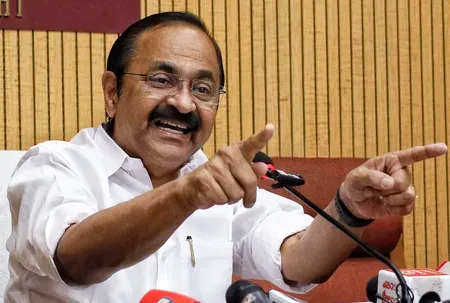
Kerala Leader of the Opposition V.D. Satheesan on Monday, 29 June wrote to West Bengal Chief Minister Suvendu Adhikari, urging his personal intervention in the reported blocking of passport renewal for veteran journalist and editor R. Rajagopal. The case has drawn sharp reactions from across Kerala's political spectrum, with both the ruling United Democratic Front (UDF) and the Opposition Left expressing concern over what they describe as a violation of citizens' rights.
Background: What Happened to Rajagopal
R. Rajagopal, a Malayali journalist who served as editor of a Kolkata-based national daily, reportedly had his passport renewal held up after an adverse police verification report from the Kolkata Police. His troubles are said to have begun after he was removed from the electoral rolls of Kolkata's Ballygunge Assembly constituency during the Special Intensive Revision (SIR) of electoral rolls conducted earlier this year.
Rajagopal has reportedly challenged the deletion before the appropriate tribunal. According to reports, the Regional Passport Office subsequently asked him to appear for verification but scheduled the appointment only for 17 July — preventing him from travelling to California to attend his daughter's wedding.
What Satheesan Said
In a post on X, Satheesan confirmed he had written to the Bengal chief minister seeking urgent action. 'I have written to the Chief Minister of West Bengal requesting his urgent intervention in the reported denial of passport renewal to renowned journalist R. Rajagopal. According to reports, his passport renewal has been held up following an adverse police verification report from the Kolkata Police. I sincerely hope the matter is examined fairly and resolved,' Satheesan wrote.
He further urged Adhikari: 'I would like to request your good self to kindly look into the matter with urgency.'
Opposition's Allegations: SIR as a Political Tool
Kerala's Leader of the Opposition, Pinarayi Vijayan, described the reported denial as 'shocking' and said it raised serious questions about the consequences of the Special Intensive Revision. In a social media post, Vijayan alleged that Rajagopal may have been targeted due to his longstanding criticism of the Bharatiya Janata Party (BJP), and accused the Centre of using the SIR as a tool to selectively disenfranchise citizens.
'If this is the experience of a journalist of Rajagopal's stature, one can only imagine the plight of ordinary citizens,' Vijayan said. He further alleged that the electoral roll revision was being used to advance what he called a divisive Hindutva agenda, and maintained that citizenship and civil rights could not be made contingent on the revision process. He called upon those committed to democratic values to oppose any action undermining constitutional rights.
Broader Political Significance
Notably, the Rajagopal passport case has produced a rare moment of convergence between Kerala's ruling UDF and the Opposition Left — two formations that are otherwise fierce political rivals — both raising alarms over the treatment of the veteran journalist, albeit from different vantage points.
Critics argue the case illustrates the potential for the Special Intensive Revision process to have cascading consequences beyond electoral rolls, affecting fundamental rights such as travel documentation. The controversy is expected to intensify ahead of the 17 July passport verification date, and all eyes are now on whether West Bengal's government responds to Satheesan's appeal.
Point of View
The procedural cascade becomes impossible to dismiss as an isolated clerical error. What is striking is that both the UDF and the Left — who agree on almost nothing in Kerala — are raising the same alarm, which suggests the concern cuts across partisan interest. The deeper question mainstream coverage is not asking: if the SIR's adverse effects on passport verification are this visible for a public figure, how many ordinary citizens have faced the same chain of consequences without any political recourse?
NationPress
28 Sept 2026
Frequently Asked Questions
Why has journalist R. Rajagopal's passport renewal been denied?
Rajagopal's passport renewal has reportedly been held up after the Kolkata Police submitted an adverse police verification report. This is linked to his removal from the electoral rolls of Kolkata's Ballygunge Assembly constituency during the Special Intensive Revision (SIR) of electoral rolls earlier this year.
Who is R. Rajagopal and why is his case significant?
R. Rajagopal is a veteran Malayali journalist who served as editor of a Kolkata-based national daily. His case has drawn national attention because it allegedly shows how the Special Intensive Revision process can have cascading consequences on fundamental rights, including the right to travel.
What action has Kerala LoP V.D. Satheesan taken?
Satheesan wrote to West Bengal Chief Minister Suvendu Adhikari on 29 June, requesting his personal and urgent intervention to ensure Rajagopal's passport matter is examined fairly and resolved. He shared details of the letter in a post on X.
What has Opposition leader Pinarayi Vijayan alleged?
Vijayan alleged that Rajagopal may have been targeted because of his longstanding criticism of the BJP, and accused the Centre of using the SIR as a tool to selectively disenfranchise citizens. He called on those committed to democratic values to oppose actions that undermine constitutional rights.
When is Rajagopal's passport verification appointment scheduled?
According to reports, the Regional Passport Office has scheduled Rajagopal's verification appointment for 17 July — a date that reportedly comes too late for him to travel to California to attend his daughter's wedding.