CM Sawant vows legal push for ST seats in Goa Assembly
Synopsis
Goa Chief Minister Pramod Sawant has publicly committed to pursuing all legal measures with the Central Government to secure Scheduled Tribe reservation in the Goa Legislative Assembly, invoking constitutional rights under Article 332.
Key Takeaways
CM Pramod Sawant declared on October 29, 2026 that the Goa Government is 'firmly committed' to securing ST reservation in the state assembly.
The Goa Legislative Assembly currently has no seat reserved for the Scheduled Tribe community, despite Article 332 of the Constitution providing for such reservations.
The 40-seat assembly is one of the smallest state legislatures in India, making every seat politically significant.
Any reservation change requires Central Government involvement — either through a delimitation exercise or a constitutional amendment .
Sawant specifically committed to pursuing 'all necessary legal measures with the Central Government,' signalling a formal escalation is being prepared.
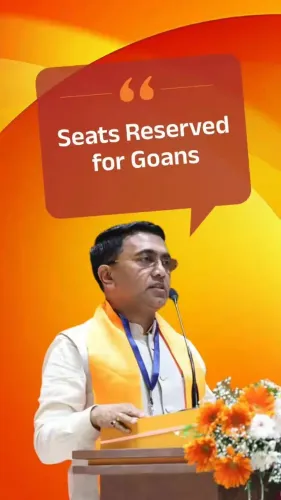
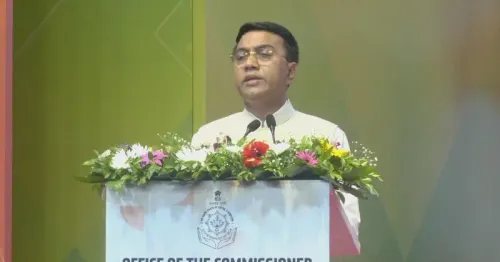
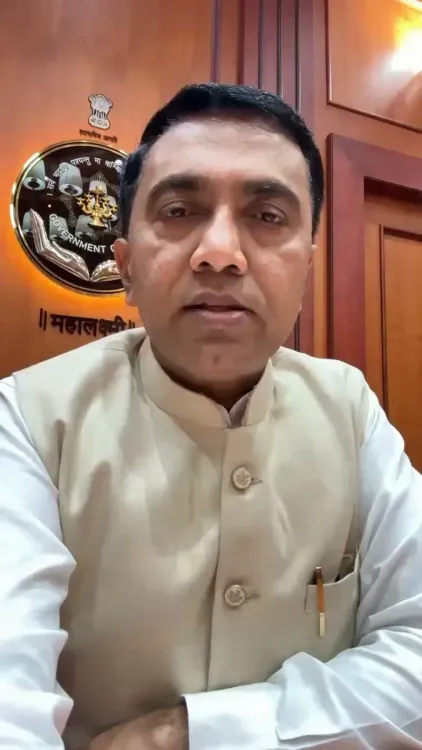
A political promise that has been debated for years in Goa just got a formal, public restatement from the top. Goa Chief Minister Pramod Sawant declared on Thursday, October 29, 2026, that his government is 'firmly committed' to securing Scheduled Tribe reservation in the Goa Legislative Assembly — and will pursue 'all necessary legal measures' with the Central Government to make it happen.
A 40-seat house with no ST-reserved constituency
The Goa Legislative Assembly is a compact, 40-seat unicameral body — one of the smallest state legislatures in India. Despite Article 332 of the Constitution providing for ST reservation in state assemblies in proportion to their population, Goa currently has no seat specifically reserved for the Scheduled Tribe community. That gap has been a long-running grievance, and Sawant's statement frames it as a matter of constitutional rights, not political favour.
Why the Centre holds the key
Changes to reserved constituencies in a state assembly are not something a chief minister can order unilaterally. Any realignment requires a delimitation exercise or a constitutional amendment — both of which demand the Union Government's active participation and, in practice, Parliament's approval. Sawant's explicit mention of pursuing measures 'with the Central Government' signals that the state is preparing to formally escalate the demand, likely through the Union Ministry of Home Affairs, which oversees such processes.
State governments have historically approached the Centre with formal resolutions or legal petitions when census data reveals a mismatch between ST population share and assembly representation. Goa's ST population share has repeatedly surfaced in these discussions, making the demand constitutionally grounded rather than merely aspirational.
What the ST community stands to gain
For the Scheduled Tribe community in Goa, a reserved seat in the assembly would mean guaranteed legislative representation — a direct voice in budget debates, law-making, and the accountability of the executive. Without it, ST interests depend entirely on political will rather than structural protection. Sawant's pledge, made publicly and on record, raises the cost of inaction — for his own government and for the Centre.
The next concrete test will be whether a formal petition or resolution lands on the Union Home Ministry's desk, and whether it can gain enough momentum to be attached to a future constitutional amendment or delimitation order in Parliament. Goa's ST community is not just watching — it is now waiting for paperwork to follow the promise.
Point of View
Creating an internal accountability loop that is politically calculated but substantively legitimate. If the Centre delays, Sawant can position Goa as a claimant state denied its constitutional due; if it acts, he claims credit. Either way, the ST community in Goa now has a formal, recorded promise to hold both levels of government to.
NationPress
30 Oct 2026
Frequently Asked Questions
Does Goa have any ST-reserved seats in its Legislative Assembly?
No. The Goa Legislative Assembly currently has no seat specifically reserved for the Scheduled Tribe community, despite Article 332 of the Constitution providing for such reservations in proportion to the ST population.
What is Article 332 of the Indian Constitution?
Article 332 mandates reservation of seats for Scheduled Tribes in state legislative assemblies, in proportion to their population share in the state.
Why does Goa need Central Government approval for ST reservation in its assembly?
Changes to reserved constituencies require either a delimitation exercise or a constitutional amendment, both of which require Parliament's involvement and the Union Government's active participation — a state government cannot act unilaterally.
Who is Pramod Sawant and how long has he been Goa's Chief Minister?
Pramod Sawant is a BJP leader who has served as Chief Minister of Goa since 2019.
What are the next steps for securing ST reservation in the Goa Assembly?
The Goa Government is expected to pursue formal legal measures including a petition or resolution to the Union Ministry of Home Affairs, which could trigger a delimitation process or a constitutional amendment in Parliament.