SC grants bail to Mohammad Kashif in PM morphed photo fraud case
Synopsis
The Supreme Court has granted bail to a man who allegedly faked proximity to PM Modi and Union ministers using morphed photos and fabricated invitations to extort money — after nearly three years in custody and two rejected bail pleas. The ruling spotlights the tension between PMLA's stringent bail threshold and the constitutional right against prolonged pre-trial detention.
Key Takeaways
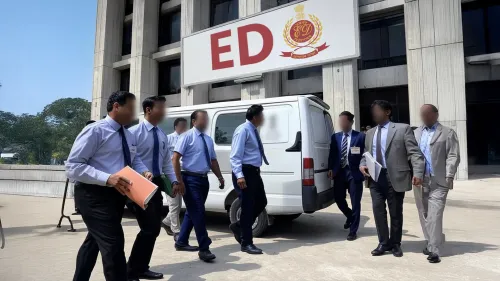
The Supreme Court on 18 May granted bail to Mohammad Kashif in a PMLA case registered by the Enforcement Directorate .
Kashif allegedly used morphed photographs with PM Narendra Modi and Union ministers to extort money, with alleged proceeds of crime of ₹1.10 crore .
He had been in custody for nearly three years ; two earlier bail pleas were rejected by the Allahabad High Court .
Noida Police arrested him in April 2023 ; searches recovered cash, rubber stamp impressions, and a note-counting machine.
The court directed Kashif to cooperate with trial and recorded his undertaking not to misuse the names of constitutional functionaries.
The ED retains the right to seek bail cancellation if conditions are violated.
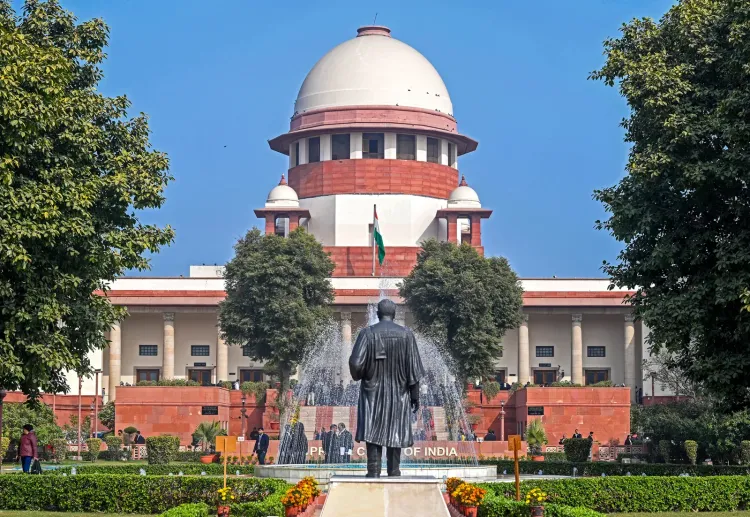
The Supreme Court on Monday, 18 May granted bail to Mohammad Kashif, accused in a money laundering case in which he allegedly posed as a close aide of Prime Minister Narendra Modi and other Union ministers to extort money from people using morphed photographs and fabricated official invitations. The ruling sets aside an Allahabad High Court order that had refused bail under the Prevention of Money Laundering Act (PMLA).
What the Supreme Court Ordered
A Bench of Justice M.M. Sundresh and Justice N. Kotiswar Singh set aside the High Court's refusal, noting that Kashif had remained in custody for nearly three years and that the alleged proceeds of crime in the case stood at approximately ₹1.10 crore. The court directed Kashif to cooperate with trial proceedings and recorded his undertaking that he would not invoke the names of high constitutional functionaries or government officials in the future.
The Bench clarified that the Enforcement Directorate (ED) would be at liberty to seek cancellation of bail if conditions were violated or if Kashif failed to cooperate during trial.
How the Alleged Fraud Operated
According to the ED, Kashif allegedly uploaded morphed and edited photographs of himself with Prime Minister Modi and other Union ministers on his Facebook and Instagram accounts to project close access to influential political leaders and senior government officials. He then allegedly leveraged this manufactured credibility to collect money from individuals on the pretext of securing government jobs, obtaining ministry contracts, and facilitating official work in government departments.
Notably, investigators reportedly found purported invitation cards in Kashif's name for the Prime Minister's oath-taking ceremony and a lunch event — props that allegedly lent his claims an air of authenticity.
The Arrest and Evidence Recovered
The case originates from an FIR registered at Surajpur police station in Gautam Buddh Nagar district under multiple provisions of the Indian Penal Code (IPC) — including cheating, forgery, and impersonation — along with Section 66D of the Information Technology Act. Kashif was intercepted by Noida Police in April 2023 while travelling in a Mercedes. Searches at premises linked to him led to the recovery of cash exceeding ₹1.10 crore, along with documents, rubber stamp impressions, and a note-counting machine.
A Long Road Through the Courts
The Allahabad High Court rejected Kashif's first bail plea on 17 December 2024, holding that he had 'misrepresented his status' and that the material on record — including recovered cash and witness statements — did not satisfy the twin conditions for bail under Section 45 of the PMLA. A Special Leave Petition (SLP) challenging that order was dismissed by the Supreme Court on 10 January 2025. His second bail plea was also rejected by the High Court on 5 February 2025, which observed that there was no undue delay in the trial and that the predicate offence carried punishment extending up to life imprisonment.
What Happens Next
With bail now granted, Kashif's trial before the designated PMLA court is expected to proceed. The ED retains the option to seek bail cancellation if the conditions imposed by the Supreme Court are breached. The case underscores growing judicial scrutiny of prolonged pre-trial detention in PMLA matters, even where serious allegations are involved.
Point of View
Even in cases where the alleged proceeds of crime are relatively modest — here, ₹1.10 crore. Three years of undertrial detention for a ₹1.10 crore fraud charge raises proportionality questions that the courts are increasingly being forced to confront. The case also exposes how cheaply institutional credibility can be manufactured — a few morphed photographs on social media were allegedly sufficient to convince people to part with money for government jobs and contracts. That vulnerability is as much a public awareness failure as it is a law enforcement one.
NationPress
14 Oct 2026
Frequently Asked Questions
Why did the Supreme Court grant bail to Mohammad Kashif?
The Supreme Court granted bail primarily because Kashif had been in custody for nearly three years and the alleged proceeds of crime were around ₹1.10 crore. The Bench found these circumstances warranted relief, while imposing strict conditions including cooperation with trial proceedings.
What was Mohammad Kashif accused of doing?
Kashif was accused of uploading morphed photographs of himself with PM Narendra Modi and Union ministers on social media to falsely project political influence, and then allegedly collecting money from people on the pretext of securing government jobs, ministry contracts, and official facilitation.
What evidence did investigators recover?
Noida Police and the ED recovered cash exceeding ₹1.10 crore, documents, rubber stamp impressions, and a note-counting machine from premises linked to Kashif. His mobile phones allegedly contained social media accounts with morphed photographs and fabricated invitation cards for official events.
What conditions did the Supreme Court impose on Kashif's bail?
The court directed Kashif to cooperate fully with trial proceedings and recorded his undertaking not to use the names of high constitutional functionaries or government officials in future. The ED was given liberty to seek cancellation of bail if these conditions are violated.
What is the current status of the case?
Kashif has been granted bail and the trial before the designated PMLA court is expected to continue. The predicate offence under the IPC — which includes cheating, forgery, and impersonation — carries punishment up to life imprisonment, according to the Allahabad High Court's earlier observations.