SC Collegium recommends 4 Chief Justices, senior advocate for apex court
Synopsis
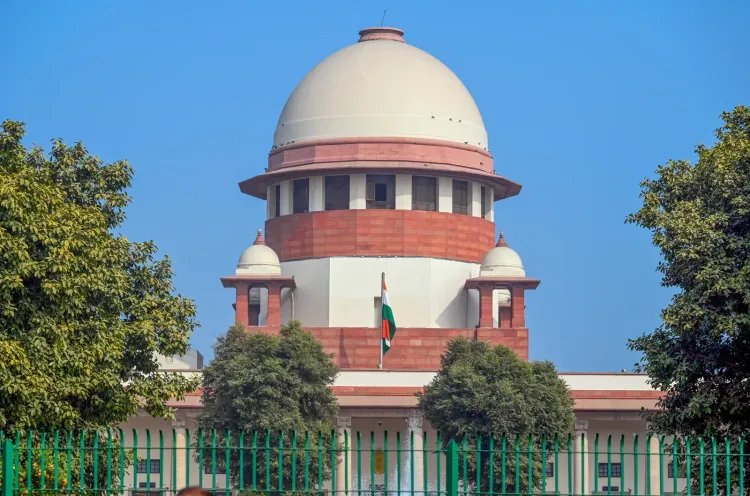
The Supreme Court Collegium has recommended five new judges for the apex court — four sitting High Court Chief Justices and senior advocate V. Mohana — just weeks after President Murmu expanded the court's sanctioned strength from 33 to 37. If confirmed, the appointments will mark one of the largest single-round additions to the Supreme Court bench in recent years.
Key Takeaways
The Supreme Court Collegium recommended five names for elevation across meetings on 22 and 27 May 2026 .
The recommended names include Justice Sheel Nagu , Justice Shree Chandrashekhar , Justice Sanjeev Sachdeva , Justice Arun Palli , and senior advocate V.
President Droupadi Murmu promulgated an ordinance in May 2026 expanding the Supreme Court's sanctioned judge strength from 33 to 37 , excluding the CJI.
The expansion follows Union Cabinet approval to amend the Supreme Court (Number of Judges) Act, 1956 .
The move is aimed at reducing case pendency and ensuring faster delivery of justice at the apex court.
The Supreme Court Collegium has recommended the elevation of four High Court Chief Justices and a senior advocate as judges of the apex court, in decisions taken across meetings held on 22 and 27 May 2026. The recommendations, published on the Supreme Court's official website, come as the Centre moves to expand the court's sanctioned judicial strength to address a mounting backlog of cases.
The Five Recommended Names
The Collegium has put forward the following for elevation: Justice Sheel Nagu, Chief Justice of the Punjab and Haryana High Court (parent court: Madhya Pradesh); Justice Shree Chandrashekhar, Chief Justice of the Bombay High Court (parent court: Jharkhand); Justice Sanjeev Sachdeva, Chief Justice of the Madhya Pradesh High Court (parent court: Delhi); and Justice Arun Palli, Chief Justice of the Jammu & Kashmir and Ladakh High Court (parent court: Punjab and Haryana). The fifth name is senior advocate V. Mohana, who has practised before the Supreme Court in constitutional, civil, and service matters.
Profiles of the Recommended Judges
Justice Nagu was appointed to the Madhya Pradesh High Court in May 2011 and assumed charge as Chief Justice of the Punjab and Haryana High Court in July 2024. Justice Chandrashekhar was elevated to the Jharkhand High Court bench in January 2013 and took over as Chief Justice of the Bombay High Court in January 2025.
Justice Sachdeva began as an Additional Judge of the Delhi High Court in April 2013, became a permanent judge in March 2015, and was appointed Chief Justice of the Madhya Pradesh High Court in July 2025. Justice Palli joined the Punjab and Haryana High Court bench in December 2013 and was appointed Chief Justice of the Jammu & Kashmir and Ladakh High Court in April 2025.
Context: Expanding the Supreme Court's Strength
The recommendations follow a significant structural change at the apex court. Earlier in May 2026, President Droupadi Murmu promulgated the Supreme Court (Number of Judges) Amendment Ordinance, 2026, raising the sanctioned strength of Supreme Court judges from 33 to 37, excluding the Chief Justice of India. The ordinance came days after the Union Cabinet approved a proposal to amend the Supreme Court (Number of Judges) Act, 1956.
The expansion is explicitly aimed at tackling the growing pendency of cases and accelerating the delivery of justice — a concern that has drawn sustained attention from legal experts and the judiciary itself.
What Happens Next
The Collegium's recommendations now await formal acceptance and appointment orders from the government. Notably, the inclusion of a practising senior advocate — V. Mohana — alongside sitting Chief Justices reflects a broader convention of drawing on bar-side expertise for the apex bench. If all five are elevated, the Supreme Court will move meaningfully closer to its newly expanded sanctioned strength of 37 judges.
Point of View
Bypassing the usual legislative process. That sequencing raises a structural question: the Collegium is filling seats that Parliament has not yet formally created through statute. More broadly, the elevation of a practising advocate alongside four Chief Justices signals a deliberate effort to diversify the bench's composition. Whether the government clears these names swiftly or sits on them — as has happened in past Collegium cycles — will be a telling indicator of the current state of executive-judiciary relations.
NationPress
25 Sept 2026
Frequently Asked Questions
Who has the Supreme Court Collegium recommended for elevation in May 2026?
The Collegium has recommended five persons: Justice Sheel Nagu (Chief Justice, Punjab and Haryana High Court), Justice Shree Chandrashekhar (Chief Justice, Bombay High Court), Justice Sanjeev Sachdeva (Chief Justice, Madhya Pradesh High Court), Justice Arun Palli (Chief Justice, Jammu & Kashmir and Ladakh High Court), and senior advocate V. Mohana.
Why is the Supreme Court's judge strength being expanded?
President Droupadi Murmu promulgated an ordinance in May 2026 increasing the sanctioned strength of Supreme Court judges from 33 to 37, excluding the Chief Justice of India. The stated aim is to address the growing backlog of pending cases and deliver faster justice.
What is the Supreme Court (Number of Judges) Amendment Ordinance, 2026?
It is an ordinance promulgated by President Droupadi Murmu that raises the number of Supreme Court judges (excluding the CJI) from 33 to 37. It came days after the Union Cabinet approved an amendment to the Supreme Court (Number of Judges) Act, 1956.
Who is senior advocate V. Mohana?
V. Mohana is a senior advocate who has practised before the Supreme Court, handling constitutional, civil, and service matters. The Collegium's recommendation makes her one of the rare bar-side practitioners to be considered for direct elevation to the apex bench.
What happens after the Collegium makes its recommendations?
The recommendations are sent to the Union government, which issues formal appointment orders. The government may accept, return, or sit on the recommendations — though a Collegium that reiterates a name is conventionally binding on the executive.