CM Sukhu launches HP district & tehsil reorganisation panel

Synopsis
Himachal Pradesh CM Sukhvinder Singh Sukhu has formed a commission — headed by a retired HC judge — to recommend creation of new districts, tehsil corrections, and block restructuring, with the goal of bringing governance to every last citizen.
Key Takeaways
CM Sukhvinder Singh Sukhu announced a formal commission on 16 October 2026 to reorganise Himachal Pradesh's administrative units.
The commission covers districts, blocks, SDM jurisdictions, and tehsils simultaneously — a comprehensive restructuring exercise.
It is chaired by a retired Himachal Pradesh High Court judge , with the Director of Land Records, a senior advocate, and a retired bureaucrat as members.
All administrative boundary decisions will be made on the commission's recommendations, not by unilateral government order.
Himachal currently has 12 districts ; the mountainous terrain makes last-mile delivery a persistent governance challenge.
Similar district and tehsil reorganisation exercises have been carried out in Telangana, Uttar Pradesh, and Madhya Pradesh over the last decade.
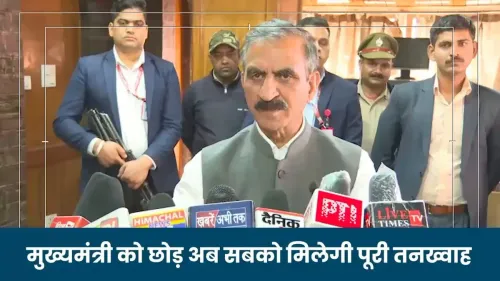
A retired High Court judge will now decide where Himachal Pradesh draws its administrative lines. Himachal Pradesh Chief Minister Sukhvinder Singh Sukhu announced on Friday, 16 October 2026 that his government has set up a formal commission to reorganise the state's districts, blocks, SDM jurisdictions, and tehsils — with the explicit mandate to push governance to the very last citizen.
Who sits on the commission — and why that composition matters
The panel is chaired by a retired judge of the Himachal Pradesh High Court, with the Director of Land Records, a senior advocate, and a retired bureaucrat serving as members. That mix is deliberate: the quartet combines judicial precision on boundary legality, ground-level revenue-records expertise, legal advocacy, and decades of field administration. Sukhu underlined in his post that every member is a specialist in law and administration — 'kanoon aur prashasan ke jaankar' (those who understand law and administration).
The commission's brief covers three tiers simultaneously: whether a new district should be carved out, which tehsil boundaries need correction, and which development blocks require restructuring. No single change will be ordered by the government unilaterally — every decision will rest on the commission's formal recommendations.
Himachal's long-standing last-mile gap
Himachal Pradesh currently has 12 districts, spread across rugged Himalayan terrain where a single district headquarters can sit hours away from remote villages. The state has periodically added tehsils and blocks since the 1990s to close that distance, but the geography keeps outpacing the administration. A citizen needing a land record, a birth certificate, or an SDM order can still face half-day travel in several sub-divisions.
Sukhu's framing — 'prashashan ki pahunch samaj ke antim vyakti tak' (ensuring administration reaches the last person in society) — is the classic decentralisation argument, but it arrives with structural teeth this time: a statutory commission rather than a bureaucratic committee means the process is harder to quietly shelve.
A pattern playing out across Indian states
Himachal is not moving in isolation. Telangana reorganised its entire district map in 2016, nearly doubling its district count. Uttar Pradesh and Madhya Pradesh have created new tehsils and sub-divisions in successive phases over the last decade. The common logic: smaller administrative units mean shorter queues, faster grievance redressal, and more accountable officials.
What to watch next: when the commission publishes its recommendations and whether the Sukhu cabinet acts on them before the state's next electoral cycle. The gap between a commission report and a gazette notification has, in other states, stretched from months to years — and that gap is precisely where political momentum meets implementation reality.
Point of View
CM Sukhu insulates the process from charges of political gerrymandering — a smart move given that new districts often trigger inter-constituency rivalries. The 'last person' framing connects the exercise to the Congress party's broader equity narrative, positioning administrative reform as social justice. However, the real test lies downstream: commission reports in Indian states frequently gather dust, and with no firm timeline disclosed, the gap between announcement and gazette notification remains the critical variable to watch. If the commission reports before the next Himachal election cycle, it could become a tangible governance credential; if it drifts, it risks looking like managed optics.
NationPress
16 Oct 2026
Frequently Asked Questions
Why is Himachal Pradesh reorganising its districts and tehsils?
The Sukhu government says the primary goal is to bring administration within reach of every citizen, particularly in remote Himalayan areas where district headquarters can be hours away. Smaller, more local administrative units reduce travel time and improve service delivery for routine government needs.
Who is heading the Himachal Pradesh reorganisation commission?
A retired judge of the Himachal Pradesh High Court is chairing the commission. The other members include the Director of Land Records, a senior advocate, and a retired bureaucrat — all chosen for their expertise in law and administration.
Will Himachal Pradesh get new districts?
That decision will depend entirely on the commission's recommendations. CM Sukhu has said no new district, tehsil, or block boundary change will be decided without the commission's formal report.
How many districts does Himachal Pradesh currently have?
Himachal Pradesh currently has 12 districts. The state has periodically created new tehsils and blocks since the 1990s to address geographic and population pressures, but a comprehensive multi-tier reorganisation of this kind is less common.
Have other Indian states done similar district reorganisation exercises?
Yes. Telangana nearly doubled its district count in 2016, and Uttar Pradesh and Madhya Pradesh have both created new tehsils and sub-divisions in successive phases over the last decade, all with the shared objective of shortening administrative distances for citizens.