Anurag Thakur Warns Against 'Regime Change' Narrative by Foreign Elements
Synopsis
BJP MP Anurag Thakur on 16 October 2026 warned that foreign elements manufacture domestic unrest in India to engineer 'regime change,' calling visible political actors mere 'pawns' whose strings are pulled by external masters — a framing the BJP has deployed periodically since 2014.
Key Takeaways
BJP MP Anurag Thakur posted on 16 October 2026 warning against 'manufactured outrage' orchestrated by foreign elements.
He explicitly used the term 'regime change' — typically associated with foreign-backed government toppling — to describe threats to India's elected government.
Thakur described domestic political actors as 'pawns' whose 'real strings are being pulled by their masters' abroad.
The BJP has used similar framing around domestic unrest periodically since 2014 , including during the farmers' protests and student movements.
The FCRA amendment of 2020 tightened foreign funding rules for Indian NGOs, reflecting the same legislative worldview Thakur's post echoes.
No specific triggering event or named foreign actor was identified in the post, making independent verification of the specific claim impossible.
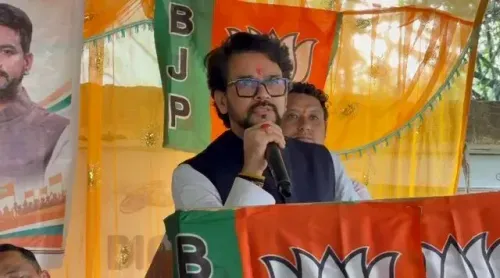
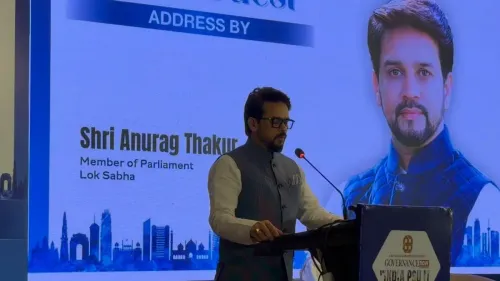
When a senior BJP lawmaker publicly invokes the phrase 'regime change,' the political temperature in New Delhi rises a few degrees. On Friday, 16 October 2026, BJP MP Anurag Thakur took to X with a pointed warning, urging Indians not to fall for what he called 'manufactured outrage' — and framing domestic unrest as a tool of foreign-backed destabilisation.
The 'Regime Change' Charge — What Thakur Actually Said
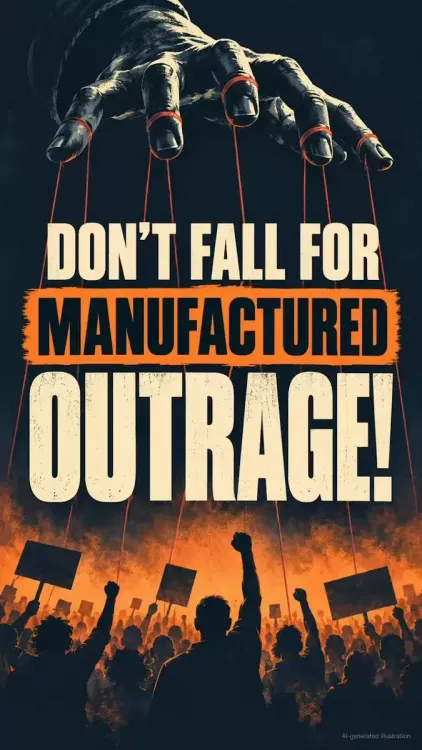
Thakur's post pulled no punches: 'Regime Change is the standard term used by Foreign elements to topple elected governments in their own interest by manufacturing unrest and tension to the scale of a full fledged civil war.' He went further, describing visible political actors as 'pawns' and 'political tools' — 'fancy faces' whose 'real strings are being pulled by their masters.'
The language is deliberate and carries weight. 'Regime change' is a term with a documented history in international geopolitics — from CIA-backed coups of the Cold War era to more recent Western-led interventions — and Thakur is explicitly importing that vocabulary into the Indian domestic context. The implication: certain internal political movements, he argues, are not organic but externally orchestrated.
A Recurring BJP Framing Since 2014
This is not the first time the ruling party's voices have reached for this frame. Since 2014, senior figures in the BJP have periodically characterised large-scale domestic protests and opposition mobilisation as being shaped or amplified by external actors with an interest in destabilising India's elected government. The pattern has surfaced in commentary around farmers' protests, student demonstrations, and various civic movements.
The legislative corollary to this worldview is the Foreign Contribution (Regulation) Act (FCRA), amended in 2020, which tightened controls on foreign funding channelled to Indian NGOs and civil society organisations. Critics called the amendments a curb on dissent; the government argued they were a national-security necessity. Thakur's post sits squarely within that same ideological continuum.
Civil Society and Opposition in the Crosshairs
By invoking 'pawns' and 'masters,' Thakur's framing places unnamed domestic opposition figures in a subordinate, even treasonous, light — cast not as legitimate political adversaries but as instruments of foreign will. Opposition parties and civil society groups have historically pushed back hard against this characterisation, arguing it is used to delegitimise constitutionally protected dissent.
The post carries an attached video, suggesting a more detailed argument may accompany the text — though the specific trigger event remains unspecified in the public record. What is clear is the message: Thakur is calling on citizens to be sceptical of the outrage cycle itself, not just its stated causes.
Why This Language Lands Differently in 2026
In an era of documented foreign influence operations — from social-media disinformation campaigns to state-sponsored amplification of civil unrest across multiple democracies — the 'regime change' accusation is neither frivolous nor automatically credible. It demands evidence. When deployed without naming the specific event, the specific foreign actor, or the specific funding chain, it functions primarily as a political signal: trust the government, distrust the street.
That is precisely what makes Thakur's post significant — and contested. Parliamentary debates, Ministry of Home Affairs statements on foreign funding, and any forthcoming evidence will determine whether this is a serious security warning or a well-worn rhetorical move. Either way, the BJP has planted a flag, and the argument is now in the open.
Point of View
Which institutionalised the government's suspicion of foreign-funded civil society. Deployed without naming a specific adversary or event, however, the charge functions as a broad delegitimisation tool — one opposition parties will contest fiercely on the floor of Parliament and in the public square. Whether evidence eventually substantiates the claim will determine whether this post is remembered as a prescient warning or a political deflection.
NationPress
16 Oct 2026
Frequently Asked Questions
What did Anurag Thakur mean by 'regime change' in his October 2026 post?
Thakur used the term to argue that foreign elements are deliberately stoking civil unrest and outrage in India with the goal of destabilising or toppling its elected government — a tactic he says has been historically used by external powers in other countries.
Who are the 'pawns' and 'masters' Anurag Thakur referred to?
Thakur did not name specific individuals or countries. He described visible domestic political figures as 'pawns' or 'political tools' acting in the interest of unnamed foreign 'masters' who are the real orchestrators of unrest.
Has the BJP made similar 'foreign interference' claims before?
Yes. Since 2014, BJP leaders have periodically framed large domestic protests and opposition campaigns as being amplified or shaped by foreign actors. The FCRA amendment of 2020 reflected this concern in law by tightening foreign funding rules for Indian NGOs.
What is the Foreign Contribution (Regulation) Act and why is it relevant here?
The FCRA, amended in 2020, imposes strict controls on foreign funding received by Indian NGOs and associations. The government argued it was a national-security measure; critics said it was used to suppress civil society. Thakur's framing echoes the same concern about foreign money influencing Indian politics.
What specific event prompted Anurag Thakur's 'regime change' warning?
Thakur did not specify the triggering event in his post, and no specific incident has been publicly confirmed in connection with this statement. He spoke in broad terms about manufactured outrage and foreign-driven destabilisation.