Supreme Court Denounces Lawyer Violence in Barabanki, Grants Bail to Toll Workers
Synopsis
The Supreme Court has condemned violent acts by Bar members in Barabanki, UP, and ordered the immediate release of toll plaza employees who faced threats and denial of legal representation from local lawyers, emphasizing the importance of justice and fair legal processes.
Key Takeaways
Supreme Court condemns violence by lawyers.
Bail granted to toll workers after two months of custody.
Importance of legal representation emphasized.
Proceedings moved to Tis Hazari Courts for fairness.
Call for accountability within the Bar Association.
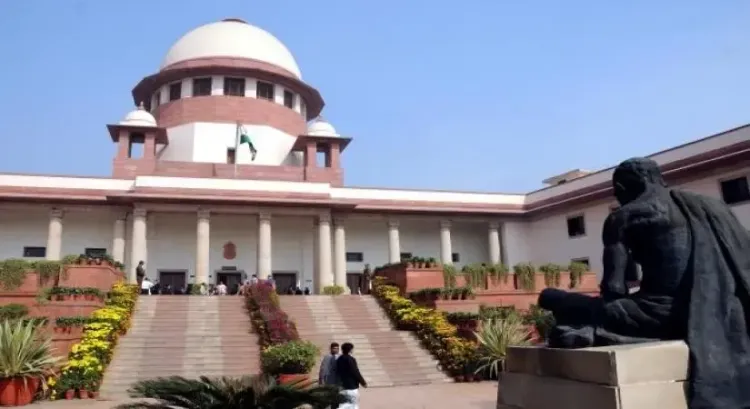
New Delhi, March 18 (NationPress) The Supreme Court has issued a strong denunciation of violent behavior by members of the Bar in Barabanki, Uttar Pradesh, mandating the swift release on bail of toll workers who claimed they were denied legal representation and faced threats from local lawyers.
A panel of Justices Vikram Nath and Sandeep Mehta, while accepting a writ petition under Article 32 of the Constitution, noted that the "guardians of justice" had themselves become aggressors, fostering an environment of fear that compromised the accused's access to adequate legal counsel.
"The guardians of justice (Members of the District Bar Association, Barabanki) have transformed into offenders, prompting the petitioners to seek refuge in this court to safeguard their Fundamental Rights," remarked the Justice Vikram Nath-led panel.
The petitioners, who are contractual workers for M/s Skylark Infra Engineering Pvt. Ltd., had been stationed at the Gotona Bara Toll Plaza on the Lucknow–Sultanpur highway and had been detained for over two months following a confrontation with a lawyer concerning toll fees.
According to the FIR, a lawyer reportedly refused to pay toll fees on January 14, resulting in a verbal dispute that escalated into a physical altercation between the complainant and the toll staff.
A subsequent criminal case was filed against the workers at Police Station Haidergarh under the Bharatiya Nyaya Sanhita (BNS). The workers claimed they were arrested without being informed of the reasons and were placed in judicial custody on January 16. They further asserted that local bar members initiated violent protests after the incident.
The Supreme Court highlighted that a resolution was disseminated within the local bar urging lawyers not to provide defense for the accused.
When one attorney attempted to file a bail plea on behalf of the workers, bar members allegedly resorted to arson and vandalized his office belongings.
Characterizing the incident as profoundly troubling, the bench stated: "The legal profession, once viewed as honorable, has been clearly marred by the acts of violence stemming from the conflict at the toll plaza."
It added that while a sense of camaraderie among lawyers is understandable, it "cannot under any circumstances justify the violence and chaos that ensued when a courageous lawyer stepped forward to defend the accused."
"These regrettable acts of violence must be condemned. The disciplinary body, namely the Bar Council of India, is expected to take necessary action in this matter," stated the apex court.
Observing that the petitioners had spent over two months in custody, the Supreme Court ruled that the refusal of bail under these conditions was unwarranted and infringed upon their fundamental right to personal liberty as stipulated in Article 21 of the Constitution.
"A mere review of the FIR is sufficient to convince us that this was not a situation where bail could justifiably be denied to the accused-petitioners," it noted.
The Supreme Court ordered that the petitioners be released on bail upon providing personal bonds deemed satisfactory by the relevant magistrate.
To facilitate a fair trial and proper legal representation, the apex court also mandated that the criminal proceedings related to the FIR be shifted from Barabanki to the Tis Hazari Courts in Delhi.
"To guarantee that the accused receive adequate legal representation and a fair trial, we direct that the proceedings stemming from FIR No.15/2026 shall be transferred to the Tis Hazari Courts, New Delhi, for all subsequent actions," stated the order.
The apex court further instructed the Director General of Police (DGP) of Uttar Pradesh to assure the safety and security of the petitioners and to escort them to a secure location upon their release.
Before concluding the case, the Justice Vikram Nath-led panel reiterated its condemnation of the lawyers involved in the incident, highlighting that members of the Bar in Barabanki had engaged in violence by damaging the property of the attorney who filed the bail application for the accused. The apex court also ordered that a copy of its ruling be sent to the Uttar Pradesh DGP and the Bar Council of India for suitable action.
Point of View
It is imperative to recognize that the Supreme Court's condemnation of the violent actions by Bar members is a pivotal moment for the legal system in India. Upholding the rights of individuals seeking justice is crucial, and the court's decision reinforces the need for accountability within the legal profession.
NationPress
7 Oct 2026
Frequently Asked Questions
What prompted the Supreme Court to intervene in this case?
The Supreme Court intervened after toll plaza workers in Barabanki filed a petition claiming they were denied legal representation and faced threats from local lawyers.
What were the allegations against the toll workers?
The toll workers were accused of involvement in a scuffle with a lawyer over toll payments, resulting in their arrest and subsequent detention.
What actions did the Bar members take against the accused?
Members of the Bar allegedly threatened to not represent the accused and engaged in violent protests, including vandalism against a lawyer who tried to help them.
What did the Supreme Court order regarding the trial?
The Supreme Court ordered that the criminal proceedings be transferred from Barabanki to the Tis Hazari Courts in Delhi to ensure a fair trial and proper legal representation.
How did the Supreme Court view the actions of the Bar members?
The Supreme Court strongly condemned the actions of the Bar members, describing them as acts of hooliganism that undermine the integrity of the legal profession.