Supreme Court Criticizes Gujarat Government for Delay in Life Convict's Release Case
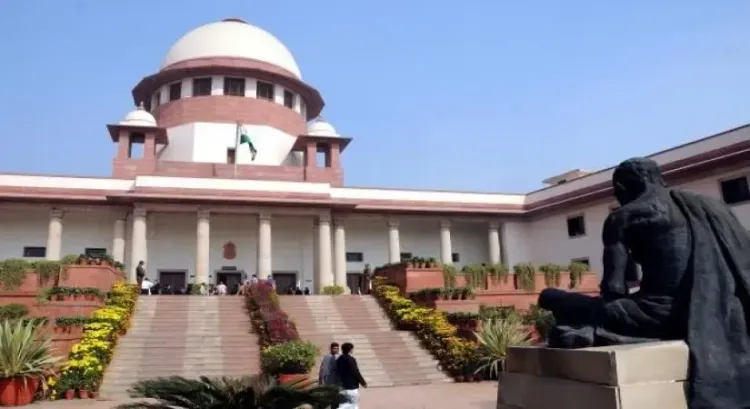
Synopsis
The Supreme Court has strongly criticized the Gujarat government for its delay in addressing a plea for the premature release of a life convict, threatening strict penalties for non-compliance with policy timelines.
Key Takeaways
The Supreme Court has criticized the Gujarat government for delaying a life convict's premature release plea.
Failure to comply with the Court's directives could lead to severe penalties.
The next hearing is set for April 7.
Premature release is seen as a vested right under established policy.
Key officials may be summoned to court if decisions are not made promptly.
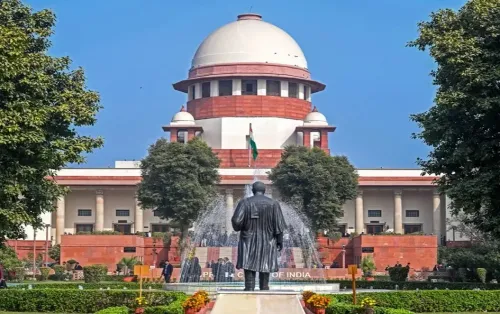
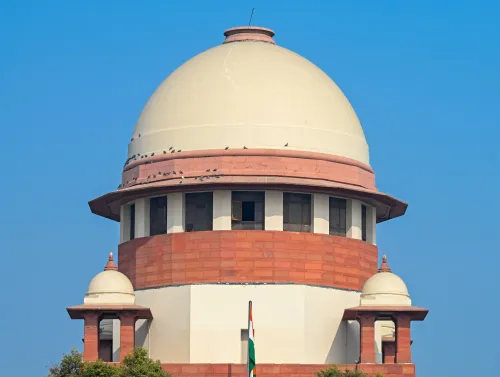
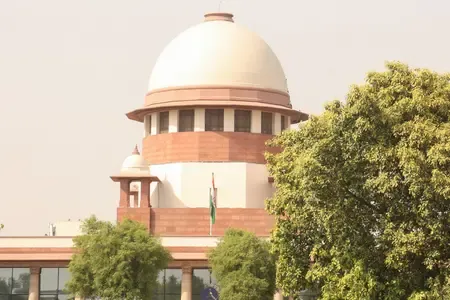
New Delhi, March 30 (NationPress) The Supreme Court has voiced its strong dissatisfaction regarding the Gujarat government's prolonged delay in addressing the plea for the premature release of a life convict. The court warned that any failure to comply with the established policy timelines could lead to "strict penal orders", including the initiation of suo motu contempt proceedings.
A bench consisting of Justices Ahsanuddin Amanullah and R. Mahadevan remarked that despite being given over three months to make a decision, the state government has yet to finalize the petitioner’s case, labeling the authorities' actions as "absolutely unacceptable".
Justice Amanullah, leading the bench, expressed, "The assertion today that the Committee is expected to decide soon is, in our view, absolutely unacceptable."
The apex court was reviewing a Special Leave Petition (SLP) submitted by Mahesh Kumar Dhisalal Jangid, which challenged a ruling from the Gujarat High Court.
In a previous ruling dated December 12, 2025, the Supreme Court had noted the state government's commitment to consider the petitioner’s case for premature release under the Gujarat remission policy. The court pointed out that the petitioner had already served the minimum required period of incarceration necessary for such consideration, and had granted the state government time to communicate its decision before the next hearing.
Referring to a circular from 1992 issued under Section 432 of the Code of Criminal Procedure concerning premature releases, the Supreme Court emphasized that the policy mandates the initiation of the process at least three months prior to the completion of 14 years of imprisonment.
"It is clear from this that the policy indicates that a final order must be issued on the day the period is completed," the order stated.
The bench further clarified that while premature release is not classified as a fundamental right, it does take on the characteristics of a vested right once a policy is established by the state government.
Expressing concern over the lack of compliance, the Supreme Court indicated it could initiate proceedings against all responsible officials but chose to hold off for now.
"We could have moved to initiate proceedings against everyone involved, from the initiator of the process to the final decision-maker. However, we will refrain from doing so at this time," the bench remarked.
It ordered that the matter be scheduled for April 7 and warned that any future non-compliance with the policy could result in severe repercussions.
"This will lead to strict penal orders from this Court, including, but not limited to, the initiation of suo motu contempt," the order cautioned.
The court also instructed that this order be forwarded to the Chief Secretary for "strict adherence throughout the state".
Moreover, the Justice Amanullah-led Bench specified that if a final decision is not recorded by the next hearing, senior officials, including the Chief Secretary, Home Secretary, and Inspector General of Prisons, must personally appear before the Supreme Court.
"The Chief Secretary, Additional Chief Secretary/Secretary of the Home Department, and the Inspector General of Prisons, Gujarat, shall be required to attend Court to explain why proceedings should not be initiated against them," it added.
Point of View
The Supreme Court's stern warning to the Gujarat government underscores the importance of timely justice. The court's intervention reflects a commitment to ensuring that legal processes are not unduly delayed, emphasizing that compliance with established policies is crucial for maintaining public trust.
NationPress
1 Oct 2026
Frequently Asked Questions
What was the Supreme Court's main concern regarding the Gujarat government's actions?
The Supreme Court expressed significant dissatisfaction with the delay in addressing a plea for premature release of a life convict, stating that such delays are 'absolutely unacceptable' and may lead to strict penalties.
What could happen if the Gujarat government fails to comply with the Supreme Court's directive?
If the Gujarat government does not comply with the Supreme Court's directive, it could face strict penal orders, including the initiation of suo motu contempt proceedings.
When is the next hearing scheduled?
The next hearing on this matter is scheduled for April 7.
What does the Supreme Court say about the nature of premature release?
The Supreme Court noted that while premature release is not a fundamental right, it becomes a vested right once a policy is established by the state government.
Who must appear in court if a decision is not made by the next hearing?
If a decision is not made by the next hearing, senior officials including the Chief Secretary, Home Secretary, and Inspector General of Prisons must personally appear before the Supreme Court.