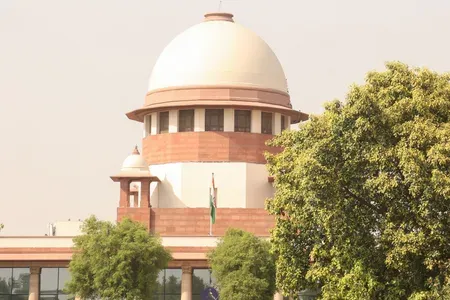
SC dismisses PIL against NEET-UG 2026 retest, calls issue infructuous
Synopsis
The Supreme Court shut the door on a PIL challenging the NEET-UG 2026 retest, calling it infructuous — but the deeper fight over NTA's structural failures is far from over. With 22 lakh candidates forced through a second national exam and a separate batch of reform petitions still pending, Wednesday's ruling is a procedural end, not a clean slate.
Key Takeaways
The Supreme Court dismissed a PIL against the NEET-UG 2026 retest on 15 July 2026 , calling the matter infructuous.
The bench of Justices P.S.
Narasimha and Alok Aradhe noted the re-examination had already been conducted on 21 June 2026 .
The PIL was filed by Dr Mangala Kohli , former Assistant Director General of Health Services, challenging the cancellation of the original exam held on 3 May 2026 .
The petition argued that CBI findings pointed to a localised compromise, not nationwide contamination, making a full retest disproportionate.
More than 20 lakh candidates appeared for the retest at 5,440 centres across India and 14 centres abroad .
Petitioners seeking NTA structural reforms may now intervene in a separate batch of pending Supreme Court cases on the issue.
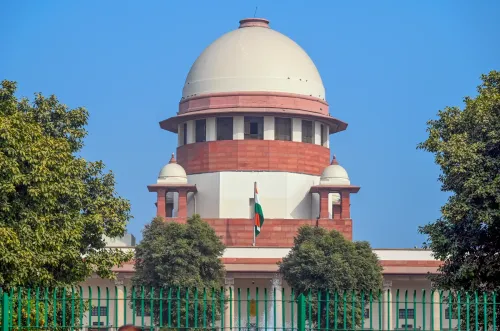
The Supreme Court on Wednesday, 15 July 2026, dismissed a public interest litigation (PIL) challenging the National Testing Agency's (NTA) decision to cancel the original NEET-UG 2026 examination and order a nationwide retest, ruling that the matter had become infructuous since the fresh examination had already been held. The bench held that the issue no longer survived in light of subsequent developments.
What the Court Said
A bench of Justices P.S. Narasimha and Alok Aradhe told the petitioner's counsel that the re-examination's completion had rendered the challenge moot. When the counsel pressed for the PIL to be tagged with other pending petitions seeking structural reforms in the NTA, the Justice Narasimha-led bench observed orally that the petitioner was at liberty to intervene in that batch of cases rather than pursue the present plea separately.
Who Filed the PIL and Why
The PIL was filed by Dr Mangala Kohli, a former Assistant Director General of Health Services, through Advocate-on-Record Abhishek Chandra Mishra. The petition had challenged the NTA's cancellation of the NEET-UG 2026 examination originally conducted on 3 May 2026, which was scrapped following allegations of paper leaks and examination malpractice.
The plea contended that investigations by the Central Bureau of Investigation (CBI) pointed to a 'localised operational compromise through specific organised networks' rather than evidence of contamination across the entire national examination process. On that basis, it argued that cancelling the entire test and compelling around 22 lakh candidates — including those untouched by the alleged fraud — to sit a fresh national-level examination inflicted 'severe academic, mental and financial hardship' while disrupting the medical admissions cycle.
The petition had also sought institutional, structural and technological reforms in the conduct of national competitive examinations, including independent oversight, encrypted digital question delivery, biometric authentication and AI-assisted monitoring.
Background: How the Case Reached This Bench
On 17 June 2026, Chief Justice of India Surya Kant had declined an urgent hearing on the PIL, noting that NEET-UG 2026 matters were already being heard by the bench led by Justice P.S. Narasimha, and that the present plea would be listed before the same bench.
The Retest: Scale and Security Measures
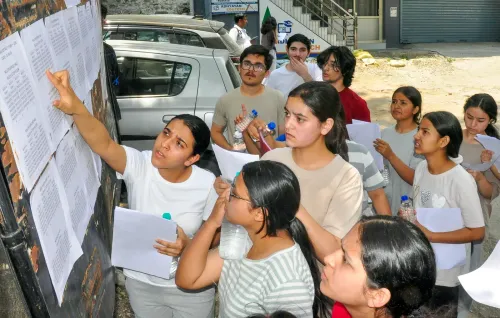
The NTA conducted the NEET-UG 2026 re-examination on 21 June 2026, with more than 20 lakh medical aspirants appearing at 5,440 centres across India and 14 centres abroad. The exercise deployed nearly 7 lakh personnel, including examination staff, police, observers and administrative officials.
Over 95,000 examination rooms were monitored through more than 1.38 lakh CCTV cameras, and over 51,000 signal jammers were installed to prevent electronic malpractice. Security protocols included Aadhaar-based biometric verification, facial authentication, two-layer frisking and real-time command-and-control centre surveillance — measures designed to preserve the integrity of one of India's largest entrance examinations.
What Comes Next
With this PIL dismissed, the broader question of structural reforms within the NTA remains before a separate batch of pending petitions. Petitioners seeking systemic changes to how national competitive examinations are conducted may now seek to intervene in those proceedings. The outcome of that batch will likely shape how India's high-stakes entrance examination ecosystem is regulated going forward.
Point of View
On the basis of what the CBI reportedly described as a localised network breach, a proportionate response? The NTA's credibility crisis did not begin with NEET-UG 2026, and it will not end with a dismissed PIL. The real accountability reckoning lies in the pending batch of reform petitions, where the court will have to decide whether India's examination infrastructure needs a structural overhaul or just better optics. Given that the agency deployed 51,000 signal jammers and 1.38 lakh CCTV cameras for a single retest, the scale of the problem — and the cost borne by students — is self-evident.
NationPress
14 Oct 2026
Frequently Asked Questions
Why did the Supreme Court dismiss the PIL against the NEET-UG 2026 retest?
The Supreme Court dismissed the PIL because the NEET-UG 2026 re-examination had already been conducted on 21 June 2026, making the challenge infructuous. The bench of Justices P.S. Narasimha and Alok Aradhe held that the issue no longer survived in light of the retest having taken place.
Who filed the PIL against the NEET-UG 2026 retest?
The PIL was filed by Dr Mangala Kohli, a former Assistant Director General of Health Services, through Advocate-on-Record Abhishek Chandra Mishra. It challenged the NTA's decision to cancel the original NEET-UG 2026 exam held on 3 May 2026 and order a nationwide retest.
What was the core argument in the dismissed PIL?
The petition argued that CBI findings indicated a 'localised operational compromise' rather than nationwide contamination, making a full retest disproportionate. It contended that around 22 lakh bona fide candidates were subjected to severe academic, mental and financial hardship due to institutional failures by the NTA.
How was the NEET-UG 2026 retest conducted?
The retest was held on 21 June 2026 at 5,440 centres in India and 14 centres abroad, with more than 20 lakh candidates appearing. Security measures included Aadhaar-based biometric verification, facial authentication, over 1.38 lakh CCTV cameras and more than 51,000 signal jammers.
Can petitioners still seek NTA reforms after this dismissal?
Yes. The Supreme Court bench noted that petitioners are at liberty to intervene in a separate batch of pending cases seeking structural and institutional reforms in the NTA's functioning. That batch remains active and is being heard by the same bench led by Justice P.S. Narasimha.