Supreme Court dismisses PIL on airport construction curbs after Ahmedabad crash
Synopsis
The Supreme Court refused to examine a PIL demanding a national policy on construction near airports — filed after the Air India Ahmedabad crash struck B.J. Medical College. The bench sent the petitioner to administrative authorities, leaving India's fragmented airport safety-zone enforcement framework unaddressed by the judiciary for now.
Key Takeaways
The Supreme Court on 16 June declined to entertain a PIL seeking curbs on construction near airports, allowing withdrawal without examining merits.
The bench of CJI Surya Kant and Justice V.
Mohana granted liberty to approach competent authorities such as the DGCA or AAI .
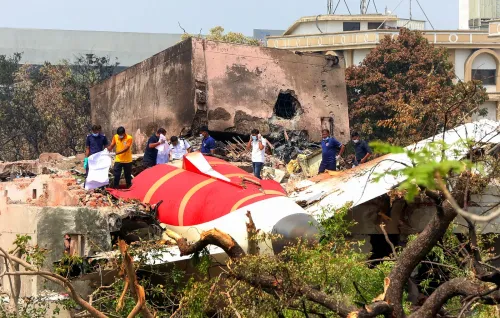
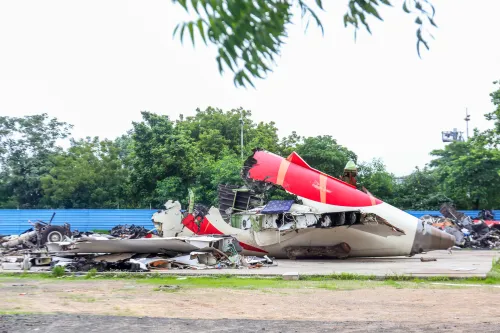
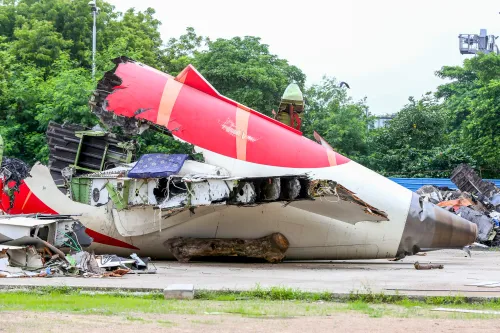
The PIL was filed by advocate Laxmikant Matadan Shukla in the wake of the Air India Flight AI171 crash near Ahmedabad airport .
The petition alleged the aircraft struck B.J.
Medical College after take-off, killing passengers, crew, and medical personnel.
The plea had sought a nationwide policy restricting residential, hospital, and school construction in airport safety zones, citing dense settlements near airports including Mumbai .
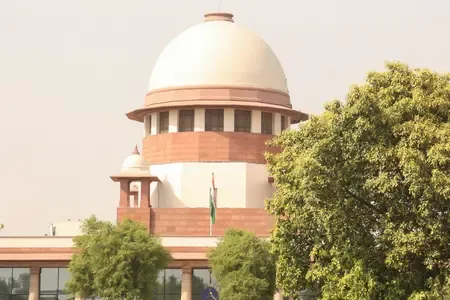
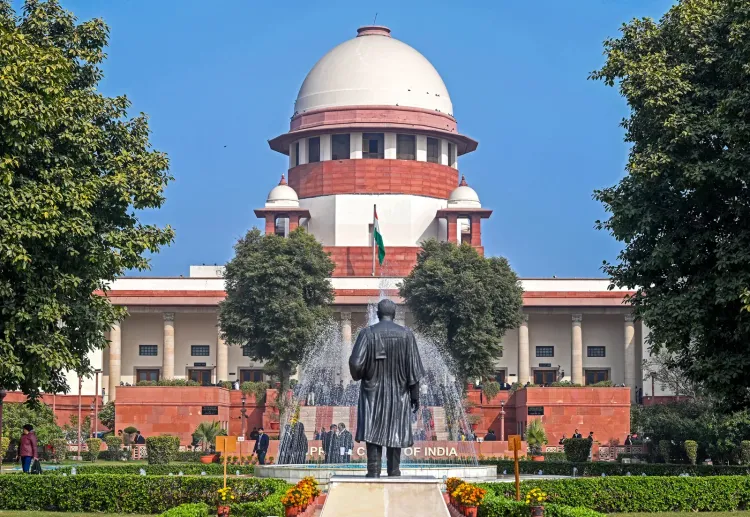
The Supreme Court of India on Tuesday, 16 June declined to entertain a Public Interest Litigation (PIL) seeking directions to the Centre to formulate a comprehensive policy regulating construction and development around airports, a petition filed in the aftermath of the Air India Flight AI171 crash near Ahmedabad. The bench permitted the petitioner to withdraw the matter and approach the competent authorities instead.
What the Court Ordered
A bench comprising Chief Justice of India (CJI) Surya Kant and Justice V. Mohana disposed of the petition without examining its merits. The court stated in its order: 'Learned counsel for the petitioner seeks and is permitted to withdraw this petition with liberty to approach the authorities concerned.' The bench further recorded: 'The Writ Petition is, accordingly, dismissed as withdrawn with liberty as aforesaid.'
What the PIL Sought
The petition, filed through advocate Laxmikant Matadan Shukla, had urged the Union government to frame a nationwide public policy prohibiting or restricting the construction of residential buildings, hospitals, educational institutions, and other vulnerable establishments in close proximity to airport runways. The plea specifically cited examples of dense urban settlements around several airports, including Mumbai, and called for uniform national guidelines governing construction activity within designated airport safety zones.
The Ahmedabad Crash Backdrop
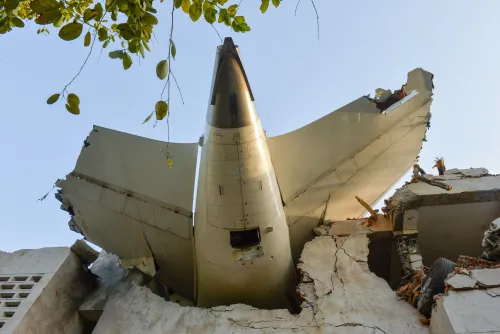
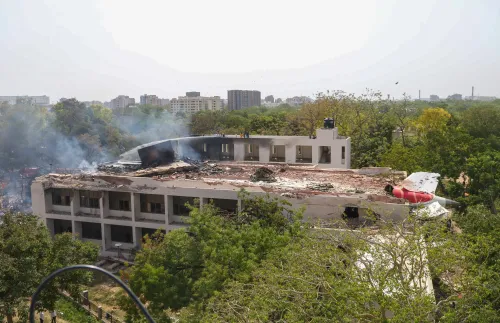
The PIL was filed against the backdrop of the Air India Flight AI171 crash near Ahmedabad airport. The petitioner contended that the aircraft went down shortly after take-off and struck the premises of B.J. Medical College, resulting in the deaths of passengers, crew members, resident doctors, and medical students. The tragedy, according to the petition, had thrown a spotlight on the broader issue of unregulated urban growth around airport peripheries across India.
The Larger Safety Question
The petition maintained that the Ahmedabad incident underscored the urgent need for a nationwide framework that balances urban development with aviation safety. India's rapid urban expansion has seen residential and institutional construction encroach on airport vicinities in multiple cities, a pattern that aviation safety experts have long flagged as a systemic risk. Notably, the absence of a uniform central policy on airport safety zones has left enforcement fragmented across state authorities and municipal bodies.
What Happens Next
With the Supreme Court granting liberty to approach the competent authorities, the petitioner may now seek relief from the Directorate General of Civil Aviation (DGCA), the Airports Authority of India (AAI), or relevant state bodies. The court's decision does not foreclose the issue on merits — it leaves the door open for administrative or legislative action. Whether the Centre moves proactively to frame such a policy in the wake of the Ahmedabad crash remains to be seen.
Point of View
Split across the DGCA, AAI, state governments, and municipal bodies. The judiciary's restraint here places the burden squarely on the executive, which has shown little urgency on this front despite repeated near-miss incidents. If the Centre does not act, the next PIL will be harder to deflect.
NationPress
16 Sept 2026
Frequently Asked Questions
Why did the Supreme Court dismiss the PIL on airport construction?
The Supreme Court did not rule on the merits of the petition. It allowed the petitioner to withdraw the PIL voluntarily and granted liberty to approach the competent administrative authorities — such as the DGCA or AAI — for appropriate relief.
What did the PIL demand?
The PIL sought a judicial direction to the Union government to frame a comprehensive national policy restricting construction of residential buildings, hospitals, schools, and other vulnerable structures near airport runways. It cited dense urban settlements around airports including Mumbai as examples of the risk.
What was the connection to the Air India Ahmedabad crash?
The petition was filed after Air India Flight AI171 crashed near Ahmedabad airport shortly after take-off and struck the premises of B.J. Medical College, resulting in the deaths of passengers, crew members, resident doctors, and medical students. The petitioner argued the tragedy exposed the dangers of unregulated construction around airport perimeters.
Who filed the PIL and through which advocate?
The PIL was filed through advocate Laxmikant Matadan Shukla. The petition was directed against the Union government, seeking a nationwide framework for airport safety zones.
What can the petitioner do now?
The Supreme Court has granted liberty to approach the competent authorities, which may include the Directorate General of Civil Aviation (DGCA), the Airports Authority of India (AAI), or relevant state and municipal bodies. The court's order does not bar future legal action if administrative remedies are exhausted.