Ahmedabad air crash probe: Centre tells Supreme Court no case for court-monitored inquiry
Synopsis
The Centre has drawn a firm line: no court-monitored probe into the Ahmedabad air crash that killed 260. With 49 of 66 mandatory investigation steps done and a final report expected in six weeks, the AAIB is betting its 218-investigation track record and a multilateral international framework against petitioners who want judicial oversight of one of India's deadliest aviation disasters.
Key Takeaways
The AAIB filed a counter affidavit in the Supreme Court opposing a court-monitored or parallel probe into the Air India AI-171 crash of 12 June 2025 .
The crash near Ahmedabad claimed 260 lives , including that of Captain Sumeet Sabharwal , the Pilot-in-Command.
49 of 66 mandatory ICAO Annex 13 investigative steps have been completed; the final report is expected within approximately six weeks .
The NTSB (US), Boeing , GE Aerospace , and teams from the UK and Canada are participating in the investigation.
The AAIB has completed 218 investigations since its establishment in 2012 , citing this record as evidence of institutional competence.
Petitions before the apex court include one by Pushkar Raj Sabharwal , father of the deceased pilot, seeking an independent inquiry.
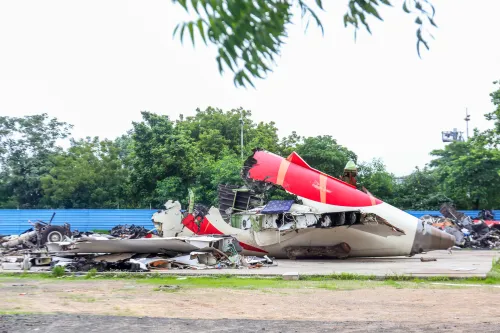
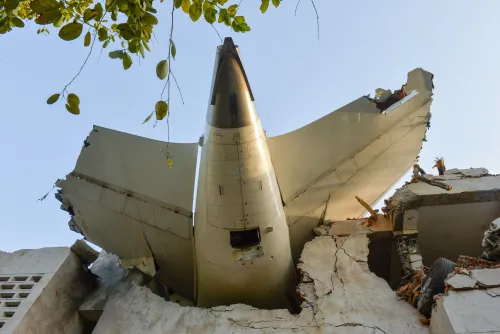
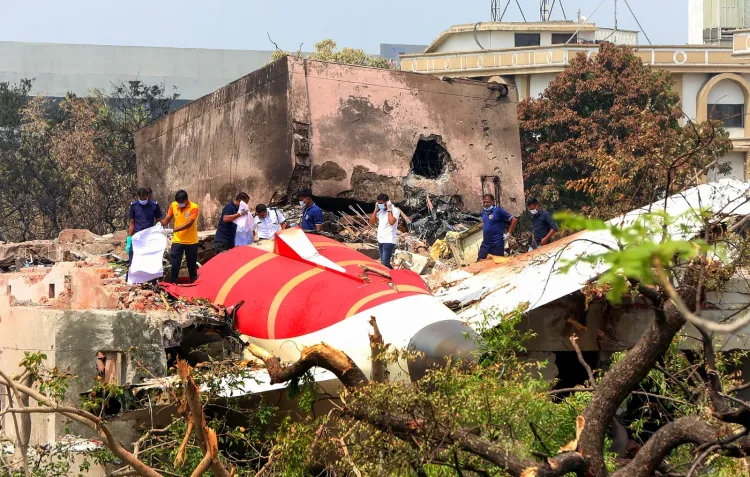
The Aircraft Accident Investigation Bureau (AAIB) has told the Supreme Court that there is no legal or factual basis for ordering a parallel or court-monitored probe into the Air India Flight AI-171 crash of 12 June 2025, which killed 260 people near Ahmedabad. In a counter affidavit filed before the apex court, the AAIB argued that the ongoing investigation operates under a comprehensive statutory and internationally recognised framework, leaving no room for judicial intervention.
The Legal Framework the AAIB Is Relying On
The AAIB's affidavit contends that aircraft accident investigations are governed by the Chicago Convention, ICAO Annex 13, and the Aircraft (Investigation of Accidents and Incidents) Rules, 2025 — a framework it describes as 'a complete code, leaving no lacuna that could justify the creation of a parallel investigative body.'
The bureau submitted that its statutory mandate is limited to identifying causes and improving aviation safety, and explicitly does not extend to fixing civil or criminal liability. It also defended the confidentiality of cockpit voice recordings, citing Rule 17(5) of the 2025 Rules, which it called 'an absolute statutory prohibition' on public disclosure of audio content from such recordings.
How Far the Investigation Has Progressed
According to the AAIB, 49 of the 66 mandatory investigative steps prescribed under ICAO Annex 13 have already been completed. These include securing and documenting the crash site, reviewing maintenance and crew records, recording witness statements, collecting ATC, radar and weather data, downloading and analysing flight recorder data, conducting metallurgical examinations of failed components, and reviewing organisational culture and human factors.
The AAIB told the court that all technical testing has been completed except for data retrieved from one Engine Monitoring Unit, and that six specialist groups are currently preparing the final analysis and report. The bureau stated that investigation activities are 'anticipated to be completed within approximately six weeks.'
International Participation in the Probe
The AAIB noted that India is simultaneously the State of Occurrence, State of Registry, and State of the Operator in this investigation. The United States, as the State of Design and Manufacture of the Boeing 787-8 aircraft, has appointed an accredited representative through the National Transportation Safety Board (NTSB), with Boeing and GE Aerospace participating as technical advisers. Investigation teams from the UK and Canada are also involved in line with international protocols.
The affidavit further clarified that once the draft final report is prepared, it must be shared with the NTSB for comments before it can be finalised and published under the 2025 Rules.
On Crew Family Interviews and Institutional Track Record
Rejecting allegations that interviews with family members of deceased crew were intended to attribute blame, the AAIB stated that such interactions are part of internationally accepted investigation methodology. 'Such an examination is not at all adversarial in nature and is intended to devise guidelines so that no such unfortunate incident happens in future,' the affidavit said, adding that 'the said examination is not intended to foist any guilt, fault, or liability on the crew members.'
Citing its institutional record, the AAIB informed the court that it has completed 218 investigations since its establishment in 2012 — comprising 97 accident investigations, 120 serious incident investigations, and one incident investigation. The affidavit concluded: 'There is no warrant, whether on the facts or in law, for this Hon'ble Court to substitute or supplement this expert body with any judicial or alternative investigative mechanism.'
Background: What the Petitions Seek
The AAIB's counter affidavit was filed in response to a batch of petitions before the Supreme Court, including one by Pushkar Raj Sabharwal, father of late Captain Sumeet Sabharwal, the Pilot-in-Command of Air India Flight AI-171, seeking an independent and court-monitored probe. Earlier, the apex court had granted the Centre three weeks to place on record the status of the investigation after being informed that certain aircraft components had been sent abroad for specialised testing. The case is being closely watched as one of India's most consequential aviation disaster inquiries in recent memory.
Point of View
And India's multilateral investigation setup is by the book. But the Centre's resistance to any judicial oversight sits uneasily against the scale of the tragedy: 260 dead, a grieving pilot's father in court, and a public that has seen past institutional inquiries quietly conclude without accountability. The six-week timeline for a final report is the real test — if it arrives with clear causal findings and actionable safety recommendations, the case against judicial oversight holds. If it hedges or is delayed again, the demand for independent scrutiny will only grow louder.
NationPress
14 Oct 2026
Frequently Asked Questions
What is the AAIB's position on a court-monitored probe into the Ahmedabad air crash?
The AAIB has told the Supreme Court that there is no legal or factual basis for a parallel or court-monitored investigation into the Air India AI-171 crash of 12 June 2025. It argues that the existing framework under the Chicago Convention, ICAO Annex 13, and the Aircraft (Investigation of Accidents and Incidents) Rules, 2025 constitutes a complete legal code that leaves no gap requiring judicial intervention.
How many people died in the Ahmedabad Air India AI-171 crash?
The Air India Flight AI-171 crash on 12 June 2025 near Ahmedabad claimed 260 lives. The Pilot-in-Command was Captain Sumeet Sabharwal, whose father is among the petitioners before the Supreme Court seeking an independent inquiry.
How far has the AAIB's investigation progressed?
The AAIB has completed 49 of the 66 mandatory investigative steps prescribed under ICAO Annex 13. All technical testing is done except for data from one Engine Monitoring Unit, and six specialist groups are preparing the final report, which is expected within approximately six weeks.
Which countries are involved in the AI-171 crash investigation?
India is the State of Occurrence, Registry, and Operator. The United States, as the State of Design and Manufacture of the Boeing 787-8, has an accredited NTSB representative involved, with Boeing and GE Aerospace as technical advisers. Investigation teams from the UK and Canada are also participating under international protocols.
Why are petitions before the Supreme Court seeking an independent probe?
A batch of petitions, including one filed by Pushkar Raj Sabharwal — father of the late Captain Sumeet Sabharwal — seeks an independent and court-monitored investigation into the crash. Petitioners have raised concerns about the adequacy of the existing inquiry and questioned whether interviews with crew families were aimed at attributing blame, an allegation the AAIB has denied.