What is the Supreme Court's directive regarding the Ahmedabad air crash inquiry?
Synopsis
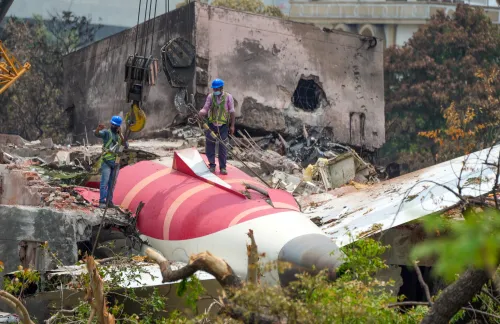
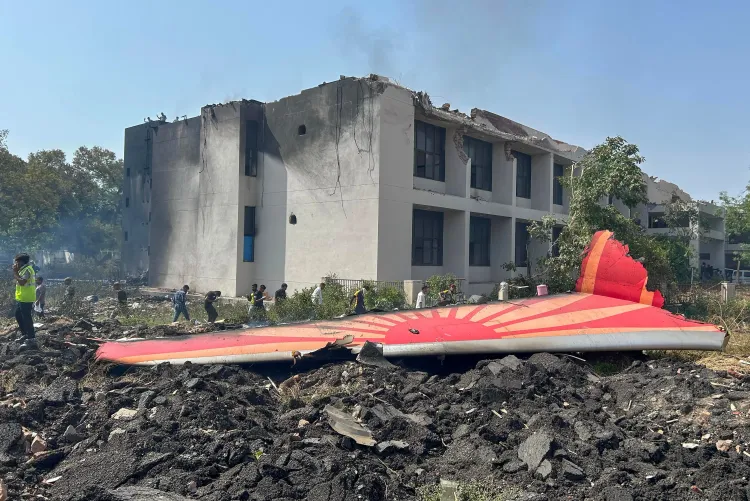
The Supreme Court has instructed the Central Government to provide a status report on the Ahmedabad air crash investigation within three weeks. The tragedy, which resulted in 260 fatalities, has raised concerns regarding airline safety and the necessity for a thorough inquiry, as the court emphasizes the importance of procedural transparency.
Key Takeaways
The Supreme Court has imposed a three-week deadline on the Central Government for the status report.
A total of 260 lives were lost in the Ahmedabad air crash.
Concerns regarding the safety of Boeing 787 aircraft have been raised.
An independent, court-monitored investigation is being sought.
International protocols are being followed due to the involvement of victims from multiple nationalities.
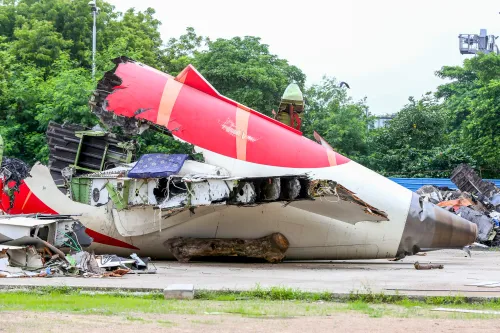
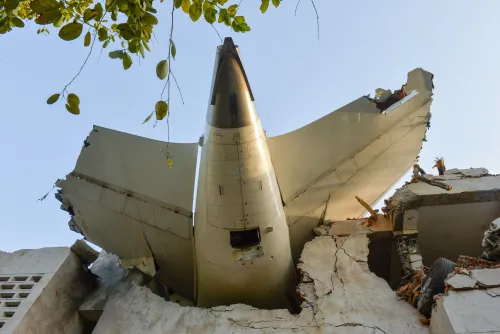
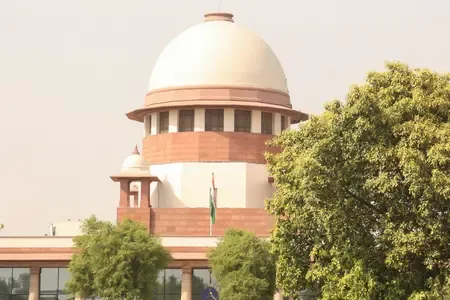
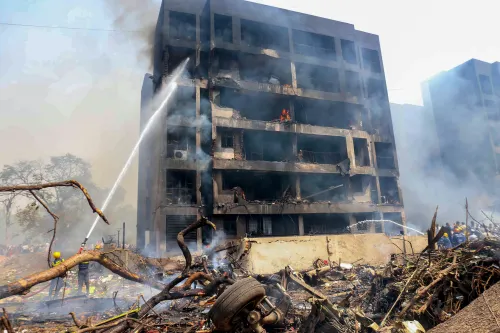
New Delhi, Feb 11 (NationPress) The Supreme Court has allocated a period of three weeks for the Central Government to submit an update regarding the investigation into the tragic Ahmedabad air crash, which resulted in the loss of 260 lives.
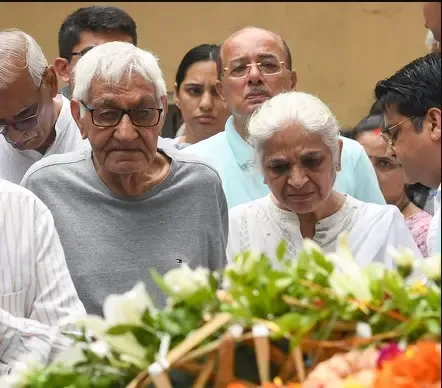
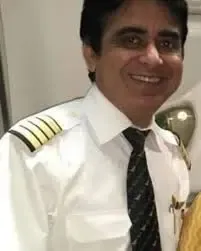
A panel led by Chief Justice of India (CJI) Surya Kant and Justice Joymalya Bagchi was reviewing petitions, including one from the father of the late Captain Sumeet Sabharwal, the Pilot-in-Command of Air India flight AI-171, which tragically went down on June 12, 2025. He is advocating for an independent investigation that is monitored by the court into this calamity.
During the proceedings, Solicitor General Tushar Mehta, representing both the Central Government and the Directorate General of Civil Aviation (DGCA), informed that the inquiry conducted by the Aircraft Accident Investigation Bureau (AAIB) was nearing its conclusion.
“We are in the final stages of the inquiry, and the report will be ready soon,” stated the Central Government’s second-highest legal official, adding that certain aircraft parts had been dispatched overseas for specialized analysis.
Considering the international nature of the victims, SG Mehta mentioned that global protocols were being adhered to during the inquiry.
Upon acknowledging this update, the CJI-led panel granted three weeks for the Central Government to finalize the process and ordered that the report be submitted in a sealed envelope alongside an affidavit detailing the procedural protocols undertaken thus far.
“What procedural protocols have been followed? Please provide us with this information in three weeks,” remarked the apex court, requesting a progress report for the next hearing.
Representing the NGO Safety Matters Foundation, attorney Prashant Bhushan raised concerns from pilot associations regarding the safety of the Boeing 787 and requested that these aircraft be grounded until a thorough review is conducted.
“The entire pilots’ association is indicating that there is a significant issue with the Boeing 787 that necessitates grounding,” he argued, emphasizing that neither the government nor the AAIB had addressed these concerns.
Attorney Gopal Sankaranarayanan, representing Captain Sabharwal’s father, reiterated the call for a court-supervised probe, alleging that in past aircraft accidents, initial reports often blamed pilots before subsequent investigations uncovered technical faults.
He cited previous Boeing 737 incidents where pilots were initially faulted, only for U.S. regulators to later identify defects in the aircraft, arguing that crucial documents were not promptly made public.
Describing the incident as “extremely unfortunate,” the panel cautioned against making generalized conclusions about any specific aircraft model or airline without definitive findings.
“We should exercise caution when making statements about a specific brand of aircraft. Dreamliners were once regarded as the best,” the apex court noted.
In reference to recent media reports concerning a supposed fuel switch issue on another Dreamliner flight, the court pointed out that initial claims were later clarified by official sources. “Last week, it was reported that a Dreamliner flying from London to Delhi experienced a fuel switch issue. However, it was later confirmed by official accounts that everything was functioning properly. Nonetheless, this incident was indeed unfortunate. We must be cautious in our comments about a specific airline,” it remarked.
Point of View
It is crucial to approach the aftermath of the Ahmedabad air crash with sensitivity and thoroughness. The Supreme Court's directive for transparency in the investigation reflects a commitment to holding accountable those responsible for ensuring aviation safety. The public deserves clarity on the measures being taken to prevent such tragedies in the future.
NationPress
9 Sept 2026
Frequently Asked Questions
What is the status of the Ahmedabad air crash inquiry?
The Supreme Court has granted the Central Government three weeks to submit a status report on the ongoing investigation into the Ahmedabad air crash.
How many lives were lost in the Ahmedabad air crash?
The tragic air crash in Ahmedabad resulted in the loss of 260 lives.
Who is advocating for a court-monitored investigation?
The father of Captain Sumeet Sabharwal, the Pilot-in-Command of the crashed flight, is advocating for an independent, court-monitored investigation.
What concerns have been raised regarding the Boeing 787?
Pilot associations have raised concerns over the safety of Boeing 787 aircraft, requesting that these planes be grounded until a thorough examination is conducted.
What procedural protocols are being followed in the inquiry?
The Supreme Court has requested details on the procedural protocols followed during the inquiry, which the Central Government must provide within three weeks.