Did the SC Grant Bail to a Man Caught with 31.5 kg of Ganja?
Click to start listening
Synopsis
In a significant legal development, the Supreme Court has granted bail to a 27-year-old man arrested for possessing a substantial quantity of ganja. This case raises questions about the judicial process and the implications of drug-related laws in India.
Key Takeaways
- The Supreme Court granted bail to a man arrested with 31.5 kg of ganja.
- He has been in custody for over two years with minimal trial progress.
- The Rajasthan High Court previously denied bail citing commercial quantity provisions.
- The case raises important questions regarding the drug laws in India.
- Judicial delays can significantly impact defendants' rights.
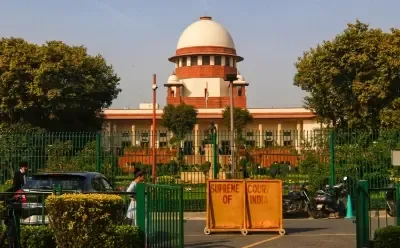
New Delhi, Dec 12 (NationPress) The Supreme Court has approved bail for a 27-year-old individual who was detained in September 2023 for allegedly possessing 31.5 kg of ganja (cannabis).
Highlighting that the accused has been in custody for over two years while the trial has seen minimal progress, a Bench comprising Justices Pankaj Mithal and S.V.N. Bhatti pointed out that “only 9 out of 22 witnesses have been examined so far,” despite the fact that the chargesheet has already been submitted.
Deepak, a resident of Jhunjhunu, Rajasthan, was apprehended on September 19, 2023, under an FIR related to the alleged possession of 31.5 kg of ganja.
Describing it as “a case of split recovery,” the Justice Mithal-led Bench remarked that under the circumstances, “we find it justifiable to grant the petitioner bail.”
“The petitioner is hereby directed to be released on bail, subject to terms and conditions as may be set by the Trial Court, provided he cooperates with the ongoing trial,” the apex court ruled.
Previously, on August 28, the Rajasthan High Court (Jaipur Bench) had denied the accused’s second bail application, asserting that the recovery constituted a commercial quantity and fell under the strict provisions of Section 37 of the Narcotic Drugs and Psychotropic Substances (NDPS) Act, 1985.
A single-judge Bench led by Justice Praveer Bhatnagar noted that 31.5 kg of cannabis was reportedly seized from the joint possession of Deepak and a co-accused. Citing the FSL findings, it stated: “In the F.S.L. report, the substance was confirmed as ‘ganja’ as defined under Section 2(iii)(b) of the NDPS Act.”
Rejecting the claim that the sampling procedure was improperly conducted, the Rajasthan High Court determined that “even if it is assumed that the processes under Section 52-A of the NDPS Act were not followed accurately, the absence of such procedure does not invalidate the recovery.”
Considering that the recovery involved a commercial quantity, the Rajasthan High Court concluded it was “not inclined to grant bail to the accused-petitioner.”
Point of View
This case underscores the pressing need to evaluate the efficacy of our drug laws and the judicial process. While the legal system aims to dispense justice, the prolonged detention of individuals awaiting trial raises questions about fairness and the presumption of innocence.
NationPress
12/12/2025
Frequently Asked Questions
What was the reason for the bail grant?
The Supreme Court noted that the accused had spent over two years in custody with minimal trial progress.
What is the significance of the quantity involved?
The 31.5 kg of ganja is considered a commercial quantity under the NDPS Act, which usually entails stricter legal repercussions.
What did the Rajasthan High Court decide earlier?
The Rajasthan High Court dismissed the accused's second bail plea, citing that the recovery was substantial and involved stringent legal implications.