Should the SC Establish Guidelines for Statements by Constitutional Functionaries?
Synopsis
A coalition of former civil servants and activists is urging the Supreme Court to create guidelines that would govern the statements made by constitutional functionaries, aiming to uphold the values of constitutional morality. This move comes in response to the rising number of derogatory remarks from public officials.
Key Takeaways
Guidelines proposed for public officials’ statements.
Emphasis on constitutional morality.
Historical context from Constituent Assembly Debates.
Examples of troubling comments from various officials.
Clarification on free speech limitations.
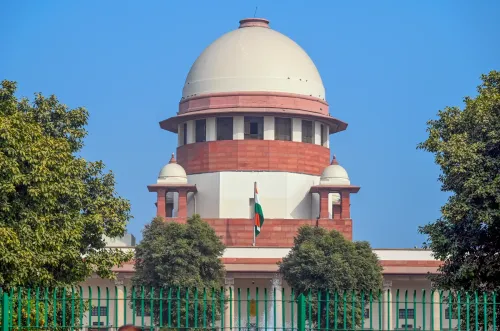
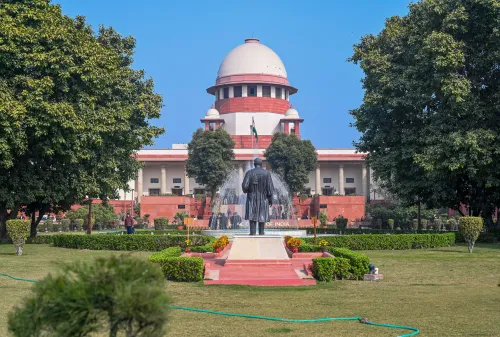
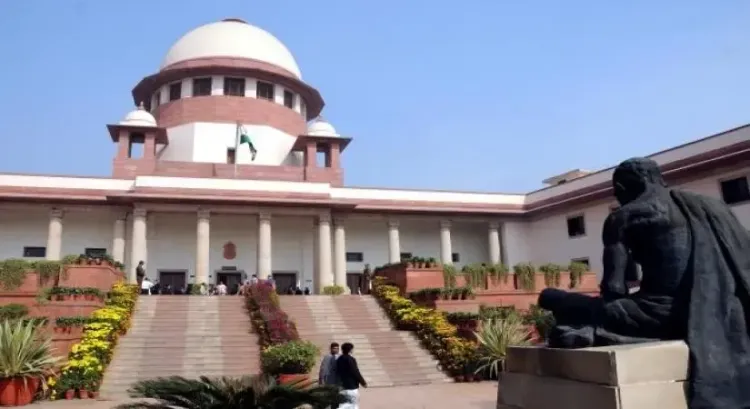
New Delhi, Feb 9 (NationPress) A coalition of former civil servants, scholars, and social activists has approached the Supreme Court, advocating for the creation of guidelines to oversee statements made by constitutional functionaries that fail to align with constitutional morality.
The writ petition, submitted under Article 32 of the Constitution via advocate Fuzail Ahmad Ayyubi, argued that the ongoing discriminatory and derogatory remarks by public office holders erode the fundamental values enshrined in the Constitution.
Referencing the Constituent Assembly Debates, the petition highlighted Acharya J.B. Kripalani’s caution that the principles in the Preamble are not solely legal, constitutional, or formal but are moral principles that must be embodied in political, administrative, and public life.
“Over seven decades later, we find ourselves in a political environment where the preambular principles are present in the text, yet the actions of administrators and constitutional functionaries frequently contradict their intent,” the plea stated, emphasizing that “the embodiment of these principles, as urged by Acharya Kripalani, has been lost both in thought and practice.”
The petition claimed that this disregard for constitutional morality has led to a series of disturbing public remarks by constitutional authorities and senior public officials in recent years.
It cited statements attributed to figures such as Assam Chief Minister Himanta Biswa Sarma, Uttarakhand Chief Minister Pushkar Singh Dhami, Uttar Pradesh Chief Minister Yogi Adityanath, BJP leader Nitesh Rane, and National Security Adviser Ajit Doval, among others, noting that nearly 30 such statements have been identified through research.
While recognizing that political figures may adhere to various ideologies, the petition insisted that constitutional functionaries and public office holders are obligated by the Constitution to maintain fairness in action and restraint in speech.
“Constitutional functionaries and public officials are compelled by the Constitution to guarantee fairness in their actions. This implies that statements that are discriminatory or derogatory in nature, even if not classified as hate speech, should not be permissible from such individuals,” it added.
Clarifying the nature of the relief sought, the petition emphasized that it does not aim to restrict free speech or call for punitive measures against hate speech, which is governed by existing laws.
“This petition does not seek to restrict free speech or impose penalties for hate speech,” it clarified, stressing that the limited request is for the apex court to formulate guidelines, either through judicial review or a dialogic process, to ensure that public officials adhere to constitutional morality in their actions and public discourse.
The plea has listed the Union of India and the states of Assam, Uttar Pradesh, Uttarakhand, and Madhya Pradesh as respondents.
Point of View
I firmly believe that ensuring adherence to constitutional morality is vital for maintaining the integrity of our democratic institutions. This plea calls for necessary guidelines to hold public officials accountable, reflecting the values enshrined in our Constitution. It is crucial for the nation to uphold these principles in both thought and action.
NationPress
17 Sept 2026
Frequently Asked Questions
What is the purpose of the petition filed in the Supreme Court?
The petition aims to establish guidelines for statements made by constitutional functionaries to uphold constitutional morality and prevent derogatory comments.
Who are the respondents named in the petition?
The respondents include the Union of India and the states of Assam, Uttar Pradesh, Uttarakhand, and Madhya Pradesh.
Does the petition seek to limit free speech?
No, the petition clarifies that it does not aim to restrict free speech or impose penalties for hate speech, but rather seeks guidelines for responsible discourse.