Can a Consensual Relationship that Turns Sour be Criminalized? SC's Verdict
Synopsis
The Supreme Court's recent ruling highlights the distinction between consensual relationships and criminal acts, asserting that acrimonious breakups should not lead to legal repercussions. This case serves as a reminder of the need for careful legal consideration in matters of personal relationships.
Key Takeaways
The Supreme Court's ruling emphasizes the distinction between consensual relationships and criminal acts.
Not every breakup in a consensual relationship should lead to criminal proceedings.
The ruling underscores the importance of legal clarity in personal disputes.
It affirms that marriage during an existing marriage is prohibited under the Hindu Marriage Act.
Judicial processes should not be abused in personal conflicts.
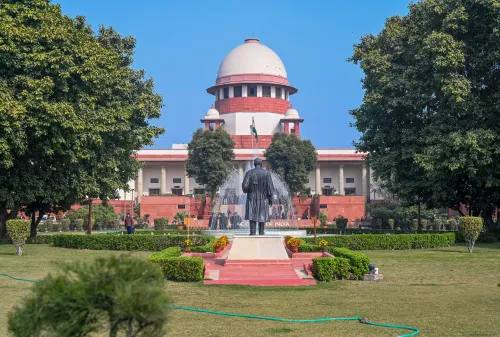
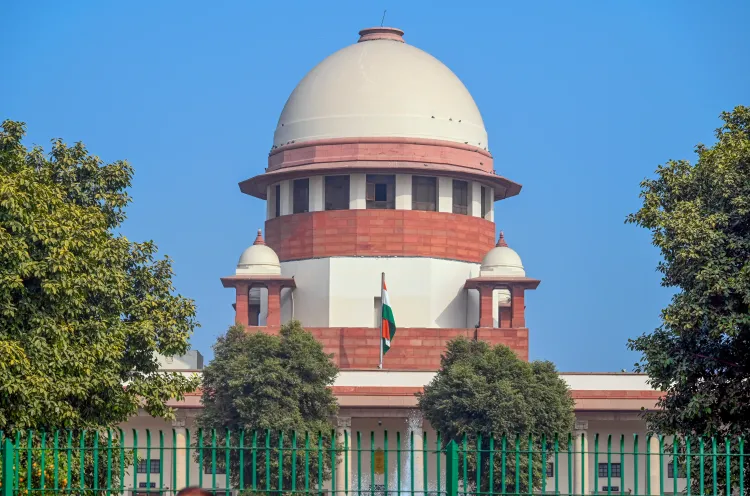
New Delhi, Feb 5 (NationPress) The Supreme Court on Thursday dismissed an FIR and halted criminal proceedings against an advocate from Chhattisgarh, who was accused of repeatedly raping a woman under the false pretense of marriage. The court determined that the allegations stemmed from a consensual relationship between two adults that subsequently soured.
A bench comprising Justices B.V. Nagarathna and Ujjal Bhuyan ruled that pursuing the prosecution would constitute an abuse of legal processes, thus overturning the Chhattisgarh High Court's decision to maintain the FIR filed under Section 376(2)(n) of the IPC.
The FIR was initiated following a complaint from a female advocate, who claimed that the accused had repeatedly assaulted her under the guise of marriage promises.
Upon reviewing the evidence, the apex court remarked that "the circumstances of this case clearly reflect a typical situation of a consensual relationship becoming acrimonious."
The court noted that the complainant was a married individual with a ten-year-old child, and divorce proceedings were pending during the relevant period.
"It is inconceivable to argue that the complainant was eligible for marriage to the accused on 18.09.2022," the Supreme Court stated, emphasizing that marriage during an existing marriage is prohibited under the Hindu Marriage Act of 1955.
"The law expressly forbids bigamous marriages, thus preventing individuals from entering into a second marriage while still in their first," the ruling affirmed.
The Supreme Court concluded that the 33-year-old complainant, being an advocate, could not be perceived as a naïve or gullible woman incapable of making informed decisions.
"It is challenging to accept that the complainant, who is also an advocate, was unaware of this established legal principle and consequently misled by the accused into engaging in sexual relations under false pretenses of marriage," the court held.
Reiterating its previous judgments, the Supreme Court noted that not every breach of a marriage promise constitutes rape, and emphasized the need for courts to differentiate between actual cases of sexual violence and disputes arising from failed consensual relationships.
"A mere breakup in a consensual relationship should not trigger criminal charges," the bench warned, highlighting a concerning trend where failed relationships are improperly framed in a criminal context.
Describing the pursuit of the prosecution as an abuse of the judicial process, the apex court asserted that the elements of Section 376(2)(n) IPC were not satisfied, even if the allegations were taken at face value.
"The details of this case clearly indicate a consensual relationship that has gone awry," the court noted, urging both parties to avoid dragging the state into their personal conflicts.
In its ruling, the Supreme Court annulled the FIR, the charge sheet, and the pending sessions case, concluding that it was "neither expedient nor in the interest of justice" to continue the prosecution.
Point of View
I believe this ruling underscores the importance of distinguishing between genuine cases of sexual violence and disputes arising from failed consensual relationships. The Supreme Court's decision is a crucial reminder that not all disagreements in personal relationships warrant criminal proceedings, and the legal system must maintain its integrity by not overreaching into private matters.
NationPress
3 Oct 2026
Frequently Asked Questions
What was the Supreme Court's ruling regarding consensual relationships?
The Supreme Court quashed the FIR against an advocate, stating that the case stemmed from a consensual relationship that later became acrimonious, thus emphasizing that such disputes should not lead to criminal charges.
What does the ruling say about the complainant's status?
The court noted that the complainant was a married woman with ongoing divorce proceedings, which impacted the court's view on the legitimacy of her claims.
How does this ruling impact future cases?
This ruling sets a precedent for distinguishing between genuine cases of sexual violence and personal disputes, reinforcing the need for careful legal scrutiny in similar situations.
What is the significance of the Hindu Marriage Act in this case?
The court highlighted that under the Hindu Marriage Act, a bigamous marriage is prohibited, which was a key factor in determining the validity of the complainant's claims.
Can a breach of promise to marry be classified as rape?
The Supreme Court reiterated that not every breach of a promise to marry constitutes rape, emphasizing the need to differentiate between consensual relationships and actual sexual violence.