Did the SC Overturn the Controversial Allahabad HC Ruling on Attempted Rape?

Synopsis
In a groundbreaking decision, the Supreme Court has reversed an alarming ruling from the Allahabad High Court that downplayed a minor's sexual assault. This ruling paves the way for a more sensitive judicial handling of sexual offences. Explore the implications of this pivotal judgment and the call for expert guidelines in the judicial system.
Key Takeaways
The Supreme Court overturned a controversial ruling from the Allahabad HC.
It reinstated serious charges against the accused in a minor's sexual assault case.
The ruling emphasizes the need for judicial sensitivity in handling sexual offences.
A committee will be formed to draft guidelines for better judicial practices.
The guidelines will focus on the needs of vulnerable victims and avoid complex legal jargon.
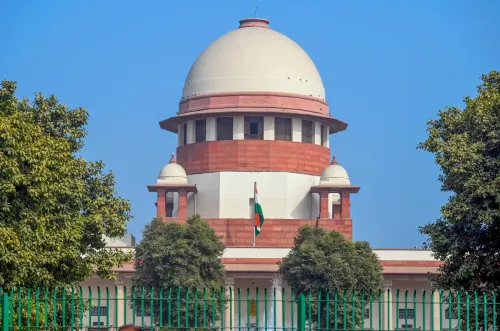
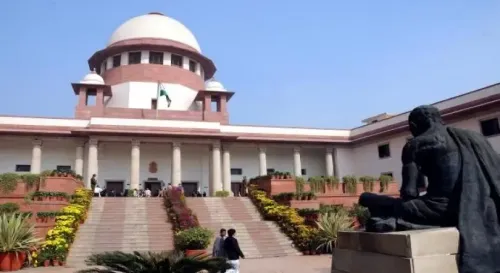
New Delhi, Feb 18 (NationPress) The Supreme Court has overturned the contentious ruling of the Allahabad High Court, which had determined that grabbing a minor's breasts and breaking her pyjama string did not constitute an attempt to rape. In addressing the suo motu matter, including criminal appeals from petitions by two NGOs and the victim's mother, a Bench led by Chief Justice of India (CJI) Surya Kant asserted that the Allahabad High Court's logic was rooted in a "clearly flawed interpretation of established criminal jurisprudence principles".
"The actions taken by the accused appear to establish a prima facie case for invoking the provisions regarding the attempt to commit rape," the Bench, which also included Justices Joymalya Bagchi and N.V. Anjaria, remarked.
The suo motu proceedings were initiated following a letter from senior advocate Shobha Gupta, Founder-President of 'We the Women of India', which emphasized the "insensitive and legally unfounded" remarks made in the Allahabad High Court's order issued in March last year.
In its judgment, a single-judge Bench of Justice Ram Manohar Narayan Mishra from the Allahabad High Court modified the charges against the two accused, who had initially been summoned by the trial court for violations under Section 376 IPC (rape) and Section 18 (punishment for attempting to commit an offence) of the Protection of Children from Sexual Offences (POCSO) Act.
Partly accepting the revision plea from the accused, Justice Mishra ruled that they could instead be summoned for a lesser charge under Sections 354(b) IPC, which pertains to assault or abuse of a woman with the intention of disrobing her, combined with Section 9/10 of the POCSO Act.
Dissenting with that conclusion, the Supreme Court referenced its previous ruling in State of Madhya Pradesh v. Mahendra alias Golu and reiterated the difference between "preparation" and "attempt" in criminal law.
"There exists a clear distinction between ‘preparation’ and ‘attempt’ to commit an offence. The 'preparation' phase involves planning, whereas an ‘attempt’ commences immediately following the completion of preparation," the CJI-led Bench remarked, quoting from the earlier decision.
Upon reviewing the allegations, the Supreme Court noted that the accused had purportedly taken the minor victim on a motorcycle under the guise of giving her a ride home, halted near a culvert, assaulted her, and only fled when witnesses arrived after hearing her cries for help.
"A simple review of these allegations makes it abundantly clear that the case presented indicates that the accused had a premeditated intention to commit an offence under Section 376 of the IPC against her," the apex court stated.
It further indicated that "the intent to commit the crime had begun to materialize" and that the only reason the crime was not fully executed was due to the intervention of bystanders.
As a result, the apex court reinstated the original summons order dated June 23, 2023, issued by the Special Judge (POCSO), Kasganj, and upheld its earlier interim directive that the trial should advance as if summons had been issued under Section 376 read with Section 511 IPC and Section 18 of the POCSO Act.
Simultaneously, the CJI Surya Kant-led Bench clarified that its observations were made from a prima facie standpoint and "should not be construed as an indication of the guilt of the accused, which remains the subject of the ongoing trial".
In its ruling, the Supreme Court also tackled a broader concern raised by the petitioners regarding judicial sensitivity in cases related to sexual crimes and vulnerable victims. It urged the National Judicial Academy, Bhopal, through its Director and former SC judge, Justice Aniruddha Bose, to form a committee of experts tasked with creating a comprehensive report aimed at developing guidelines to enhance sensitivity and compassion in judicial processes involving sexual offences and vulnerable cases.
The expert panel, chaired by Justice Bose and comprising four additional domain specialists, is expected to evaluate past initiatives, gauge their real-world effects, and draft "Guidelines for Judges and the Judicial System in Cases of Sexual Offences and Other Sensitive Incidents Involving Vulnerable Victims, Complainants, and/or Witnesses".
"The primary beneficiaries of these guidelines will be the victims/complainants, many of whom are children, young women, and individuals from vulnerable communities," the Supreme Court noted, adding that the draft would avoid complex, foreign legal terminologies.
The committee has been tasked with delivering its report within three months.
The Supreme Court indicated that upon receipt, the report would be presented to the Chief Justice of India for appropriate administrative action.
Point of View
It is imperative to acknowledge the Supreme Court's decision as a significant step toward justice for vulnerable victims. This ruling not only challenges previous flawed interpretations but also advocates for a judicial system that is more attuned to the nuances of sexual offences. It reflects a growing recognition of the need for compassion and understanding in legal proceedings.
NationPress
29 Sept 2026
Frequently Asked Questions
What was the Supreme Court's ruling regarding the Allahabad HC judgment?
The Supreme Court set aside the Allahabad High Court's ruling, asserting that the actions of the accused constituted an attempt to rape, and reinstated the original charges.
Why did the Supreme Court deem the Allahabad HC's reasoning flawed?
The Supreme Court found that the Allahabad HC's reasoning was based on a clearly erroneous application of established criminal principles.
What are the key implications of the Supreme Court's decision?
The ruling restores serious charges against the accused and initiates a push for guidelines to improve judicial sensitivity in cases involving sexual offences.
What actions will be taken following this ruling?
The National Judicial Academy has been tasked with forming a committee to develop comprehensive guidelines aimed at enhancing sensitivity in the judicial handling of sexual offences.