Supreme Court orders fresh SIT probe into 2012 Karnataka teen rape-murder, slams agencies
Synopsis
Three agencies, one acquittal, and zero justice — the Supreme Court's searing indictment of the 2012 Karnataka teen rape-murder probe cuts to the core of India's investigative credibility. With evidence botched, witnesses missed, and a suspect's hair unmatched, the bench has ordered a time-bound SIT to do in three months what three agencies couldn't do in over a decade.
Key Takeaways
The Supreme Court on 21 September 2026 ordered a de novo SIT investigation into the 2012 rape and murder of a 17-year-old girl in Karnataka .
The bench slammed the Belthangady police , Karnataka CID , and the CBI , saying their conduct 'shocks the very conscience of the court.' The sole accused, Santhosh Rao , was acquitted by the Sessions Court on 16 June 2023 for want of evidence; he is protected from re-prosecution under Article 20(2) .
Key lapses included failure to secure CCTV footage , loss of physical evidence, and improper preservation of the vaginal swab — rendering it unfit for DNA analysis .
Hair from unidentified persons was found on the victim's clothing; a DNA expert confirmed comparisons are still possible.
The SIT must complete its probe within three months and submit a report to the competent court.
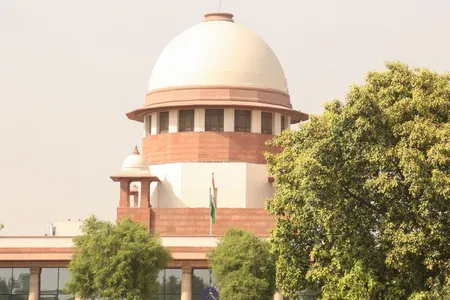
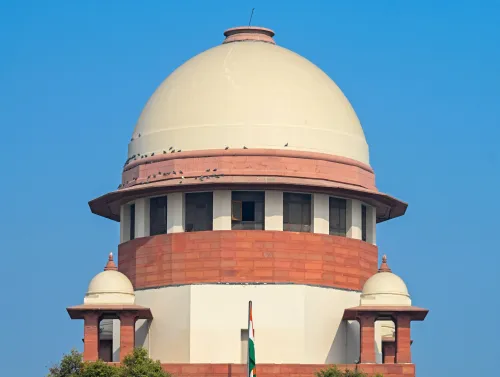
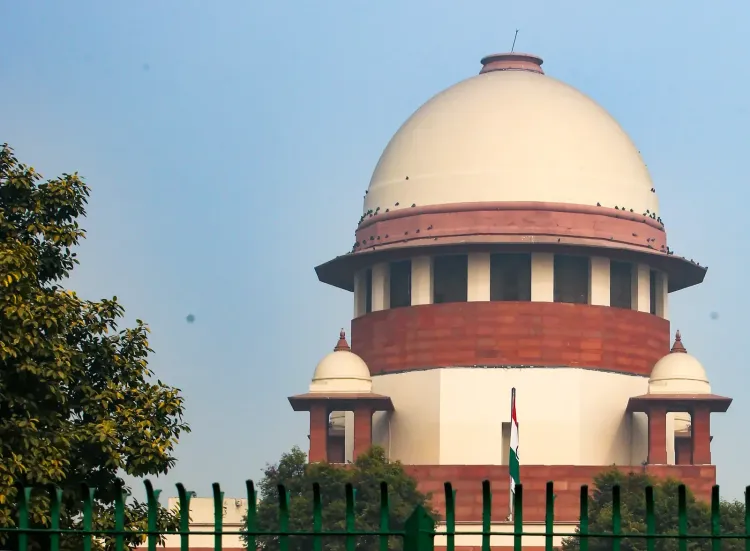
The Supreme Court of India on Monday, 21 September 2026, ordered a de novo investigation into the 2012 rape and murder of a 17-year-old girl in Karnataka, declaring that the conduct of multiple investigating agencies in the case 'shocks the very conscience of the court.' The bench directed the Karnataka government to immediately constitute a Special Investigation Team (SIT) headed by a senior police officer to restart the probe from scratch.
What the Supreme Court Ordered
A bench of Justice Sanjay Kumar and Justice Sanjeev Sachdeva set aside the Karnataka High Court's order dated 30 August 2024, which had dismissed a plea seeking reinvestigation. The apex court mandated that the new SIT comprise officers well-versed in modern investigative technology. Crucially, it barred any officer previously involved with the Belthangady police, the Karnataka Criminal Investigation Department (CID), or the Central Bureau of Investigation (CBI) from participating in the fresh probe — a direct rebuke of all three agencies.
The court also directed that the investigation be completed within three months and that a police report be filed before the competent court in accordance with law.
A Case of Three Failed Investigations
The victim, a second-year pre-university student, was brutally raped and murdered in October 2012 in Karnataka. The case passed through three successive agencies: it was initially investigated by the Belthangady police, then transferred to the Karnataka CID, and subsequently handed to the CBI in 2013 following public outrage. Despite this, all three arrived at the same conclusion, filing a charge sheet against Santhosh Rao and clearing three other persons whom the victim's own father had long suspected.
On 16 June 2023, the Sessions Court acquitted Rao, holding that the prosecution had produced no evidence connecting him to the crime and that he was incapable of committing the offence. The Supreme Court observed that 'the possibility of the real culprit(s) manipulating the investigation cannot be ruled out,' adding that such 'lax and improper investigation gives premium to the Investigating Officers who failed to do their job correctly and diligently.'
Key Investigative Lapses Identified by the Court
The bench catalogued several critical failures in the handling of evidence: investigators did not secure CCTV footage, failed to recover the victim's umbrella, slippers, and inner garments, and improperly preserved the vaginal swab, rendering it unfit for DNA analysis. Notably, hair belonging to persons other than Santhosh Rao was found on a piece of the victim's clothing — a lead none of the three agencies pursued.
The court noted that a DNA expert confirmed that if suspected individuals were identified, blood samples could still be collected and compared with the hair recovered as Material Object No. 15. The bench also pointed out that the state government, acting on a prior Supreme Court direction, located eight potential witnesses within just three weeks — raising sharp questions about why three investigative agencies failed to examine the same leads when the evidence was fresh.
Constitutional Protections for the Acquitted
While ordering the fresh probe, the bench was careful to insulate Santhosh Rao from any further jeopardy. It clarified that, having been tried and acquitted, Rao is fully protected under Article 20(2) of the Constitution and Section 300 of the CrPC — the double-jeopardy provisions — and shall not be subjected to further investigation or prosecution.
The court also underlined that its observations must not be construed as expressing even a prima facie opinion on the role of any individual, specifically naming Mallik Jain, Deeraj Jain, and Uday Jain, and directed the SIT to proceed independently.
Broader Implications for Criminal Justice
The Supreme Court reiterated that constitutional courts can direct a de novo investigation in exceptional circumstances where the probe has not been conducted in a proper and objective manner, relying on its earlier judgments that fair investigation is a constitutional guarantee under Article 21. 'Injustice to a person who was falsely charged can always be compensated, however injustice to the victim who was brutally raped and then murdered can never be compensated,' the bench stated. It added that society would be 'failing in its duty' if it did not bring the real culprits to book.
With the SIT now mandated to submit its report within three months, the case will be closely watched as a test of whether systemic failures in India's investigative machinery can be corrected years after the fact.
Point of View
A state CID, and the CBI — all reach the same flawed conclusion despite contradictory physical evidence, the problem is systemic, not incidental. The court's finding that eight witnesses were located in three weeks — after years of investigative 'inability' — is a quietly devastating detail. It suggests that the failure was not one of capacity but of will, raising the uncomfortable question of who benefited from the investigation going nowhere. The double-jeopardy protection for Santhosh Rao is legally correct but also the most painful consequence of shoddy work: a wrongly accused man and an unavenged victim are both casualties of the same investigative collapse.
NationPress
21 Sept 2026
Frequently Asked Questions
What is the 2012 Karnataka rape-murder case that the Supreme Court has ordered reinvestigated?
It involves the brutal rape and murder of a 17-year-old girl in Karnataka in October 2012. The case was investigated by three agencies — the Belthangady police, the Karnataka CID, and the CBI — all of which charged Santhosh Rao, who was subsequently acquitted by the Sessions Court in June 2023 for lack of evidence.
Why has the Supreme Court ordered a fresh investigation?
The court found multiple critical investigative lapses, including failure to secure CCTV footage, loss of key physical evidence, and improper preservation of forensic samples. It also noted that hair from unidentified persons was found on the victim's clothing but was never pursued, and that the victim's father had consistently named three other suspects who were never properly examined.
Who will conduct the new investigation and by when?
The Supreme Court has directed the Karnataka government to constitute an SIT headed by a senior police officer. Officers from the Belthangady police, Karnataka CID, or CBI are specifically barred from the team. The SIT must complete its probe within three months and file a report before the competent court.
Can Santhosh Rao be prosecuted again under the new investigation?
No. The Supreme Court clarified that Santhosh Rao, having already been tried and acquitted, is fully protected under Article 20(2) of the Constitution and Section 300 of the CrPC — the double-jeopardy provisions — and cannot be subjected to further investigation or prosecution.
Who are the individuals named in the Supreme Court's order?
The court specifically named Mallik Jain, Deeraj Jain, and Uday Jain in the context of directing the SIT to investigate independently. However, it explicitly stated that its observations should not be construed as expressing any prima facie opinion on the role of any of these individuals.