SC hints at retired judge-led SIT for NEET-UG 2026 protest crackdown
Synopsis
The Supreme Court has signalled a retired judge-led SIT to probe both police excesses and attacks on officers during the NEET-UG 2026 protests — while ordering the release of detained minors and a blanket stay on coercive action against students with clean records. With seven state governments put on notice and evidence preservation mandated, the case is shaping into a landmark test of India's protest-policing framework.
Key Takeaways
The Supreme Court on 28 July indicated it may form an SIT headed by a retired apex court judge to probe the NEET-UG 2026 protest crackdown.
A bench led by CJI Surya Kant ordered immediate release of all minors detained during protests and directed no coercive action against students with no criminal antecedents.
The court ordered preservation of CCTV footage , drone recordings, body-worn camera footage, and all electronic records linked to the protests.
Responses have been sought from the Union government and 7 state governments : Assam, Bihar, Kerala, Madhya Pradesh, Maharashtra, Uttar Pradesh, and West Bengal.
Solicitor General Tushar Mehta confirmed around 250 police personnel were injured and supported an independent probe.
The matter is posted for further hearing next week ; the SIT's constitution will be finalised after reviewing government responses.
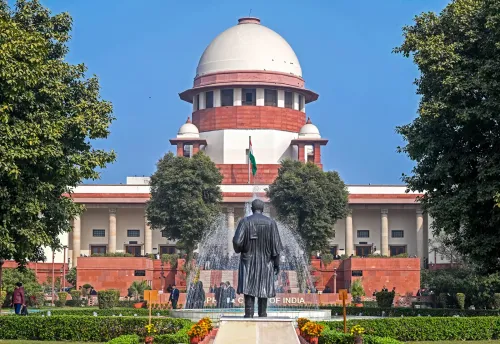
The Supreme Court of India on Tuesday, 28 July indicated it may constitute a Special Investigation Team (SIT) headed by a retired apex court judge to probe allegations of police excesses and attacks on police personnel during nationwide student protests over the alleged NEET-UG 2026 paper leak. A bench led by Chief Justice of India (CJI) Surya Kant, along with Justices Joymalya Bagchi and V. Mohana, also directed that no coercive action be taken against student protesters with no criminal antecedents.
Key Directions from the Court
The bench ordered the immediate release of all minors detained during protests across states, and directed that students arrested solely for participating in demonstrations be freed if they have no prior criminal record. The court further ordered the preservation of all CCTV footage, drone recordings, body-worn camera footage, wireless communications, PCR logs, and other electronic records linked to the protests.
Crucially, the court also directed that digital data and personal information of student protesters collected by police must not be made public until further orders. The matter has been posted for further hearing next week.
What the Court Observed
'The allegations made by petitioners prima facie make out a case for an independent and fair probe. Such a probe will effectively address the allegations,' the CJI Kant-led bench observed. The court added that existing protocols governing public protests may require modification, remarking, 'These agitations in democracy are bound to be,' and called for an appropriate mechanism to be activated in such situations.
The bench sought responses from the Union government and the state governments of Assam, Bihar, Kerala, Madhya Pradesh, Maharashtra, Uttar Pradesh, and West Bengal.
What Petitioners Alleged
Senior advocate Gopal Sankaranarayanan, appearing for one petitioner, argued that police action against student demonstrators was not confined to Delhi but was a pan-India issue. He referred to videos allegedly showing police personnel without name tags engaging in violence, and urged the court to order a probe under a former Chief Justice of India. He further claimed that a Bihar police officer had used an AK-47 rifle against students even after the Supreme Court took cognisance of the matter.
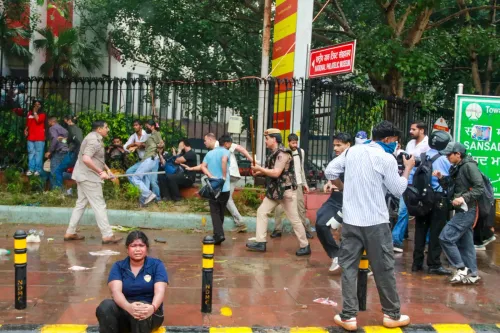
Senior advocate Shyam Divan cited alleged use of electric shock batons against protesters and videos purportedly showing a senior police officer threatening students with false narcotics cases. Senior advocate Shadan Farasat submitted that violence in Bihar was more severe than in Delhi, and that around 150 persons, mostly minors, remained in custody despite the Bihar government's announcement that criminal cases against protesters would be withdrawn. Farasat also alleged that lawyers in Delhi were assaulted by police after crowds had dispersed.
Advocate Prashant Bhushan highlighted the case of Junaid Malik, a volunteer who allegedly supplied food to protesters and was reportedly picked up by police and later abandoned in Mussoorie.
What the Government Said
Solicitor General Tushar Mehta, appearing for the Union government and Delhi Police, supported an independent probe while noting that two sets of petitions were before the court — one alleging police brutality against students, and another concerning injuries to police personnel. He submitted that around 250 police personnel had sustained injuries and acknowledged that anti-social elements may have infiltrated the protests.
'If students were attacked, it is a serious matter, and the government cannot take it lightly,' Mehta submitted. 'As a State, we also cannot do anything that would demoralise the police force. Ultimately, there may be one version, another version, and then the truth. It is the truth that must emerge before this Court,' he added.
Background and What Comes Next
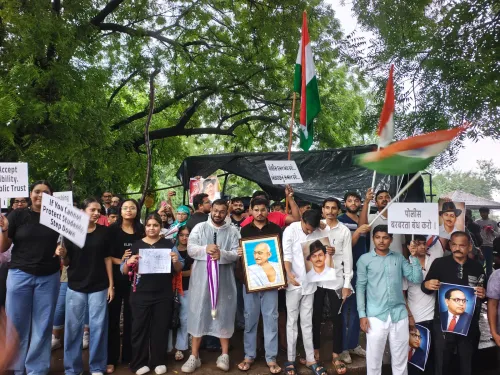
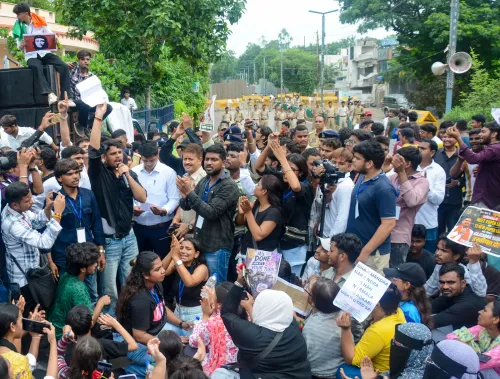
The Supreme Court is hearing a batch of petitions seeking pan-India guidelines to protect the constitutional right to peaceful protest, filed in the wake of alleged excessive police force during student demonstrations in Delhi and several other states over the alleged NEET-UG 2026 paper leak. On Monday, 27 July, the court had underscored that the right to peaceful and lawful protest is constitutionally protected and flagged that both police excesses and violence against police personnel require impartial examination.
Earlier, the Delhi High Court had issued notice to the Centre and Delhi Police on a batch of PILs alleging excessive force during the 20 July 'Sansad Chalo' protest, and had directed preservation of CCTV and electronic records. Senior advocate N. Hariharan suggested that petitions pending before the Delhi High Court be transferred to the Supreme Court. The apex court is expected to take a final call on the SIT's constitution after reviewing government responses next week.
Point of View
Not investigators. The dual framing of the probe, covering both police excess and attacks on officers, is legally careful but politically loaded: it gives the government a narrative foothold while not diluting accountability for alleged brutality. The order on evidence preservation and the ban on publicising protesters' personal data suggests the bench is alive to the risk of retaliatory surveillance. The deeper question — whether India has a coherent, rights-consistent protocol for policing mass protests — remains unanswered, and the court's own observation that 'these agitations in democracy are bound to be' suggests it intends to fill that gap.
NationPress
27 Oct 2026
Frequently Asked Questions
What has the Supreme Court ordered in the NEET-UG 2026 protest case?
The Supreme Court on 28 July directed that no coercive action be taken against student protesters with no criminal antecedents, ordered the immediate release of all detained minors, and indicated it may form an SIT headed by a retired apex court judge to probe both police excesses and attacks on police personnel. It also mandated preservation of all CCTV, drone, and electronic records related to the protests.
What is the NEET-UG 2026 paper leak controversy?
The NEET-UG 2026 paper leak refers to allegations that the undergraduate medical entrance examination was compromised, triggering nationwide student protests. The demonstrations, including the 20 July 'Sansad Chalo' march in Delhi, drew allegations of excessive police force across multiple states.
Which states have been asked to respond to the Supreme Court?
The Supreme Court has sought responses from the Union government and seven state governments — Assam, Bihar, Kerala, Madhya Pradesh, Maharashtra, Uttar Pradesh, and West Bengal — all of which saw protests or police action against student demonstrators.
Who is heading the Supreme Court bench hearing this case?
The bench is led by Chief Justice of India Surya Kant, along with Justices Joymalya Bagchi and V. Mohana. The bench is hearing a batch of petitions seeking pan-India guidelines to protect the constitutional right to peaceful protest.
When will the Supreme Court take a final decision on the SIT?
The matter has been posted for further hearing next week. The court indicated it will finalise the SIT's constitution after reviewing responses from the Union government and the seven state governments named as respondents.