SC: Peaceful protest no excuse for police excess, uniform protocol needed
Synopsis
The Supreme Court drew a sharp constitutional line on 27 July: peaceful protest is an absolute right, and agitation alone cannot justify lathi-charges. With NEET-UG 2026 student protests having triggered police action across multiple states, the court is now signalling a push for a uniform national protocol — a ruling that could redefine how law enforcement handles public demonstrations in India.
Key Takeaways
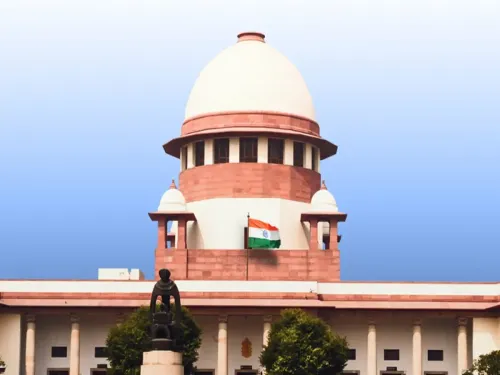
The Supreme Court on 27 July said the Constitutional right to peaceful protest must be protected and that police excess cannot be justified merely because an agitation is underway.
A Bench led by CJI Surya Kant indicated that a uniform nationwide protocol for handling public protests may be necessary.
The court stressed that injuries to both protesters and police personnel are of equal concern and must be independently examined.
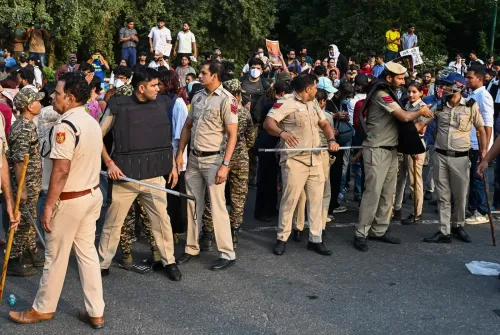
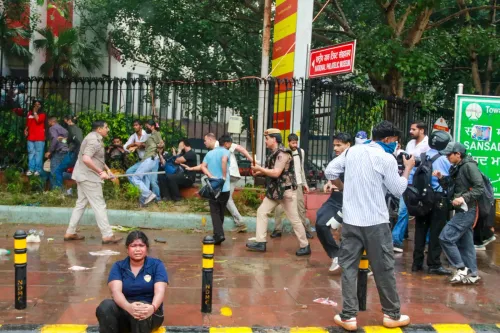
The petitions arise from alleged police excesses during nationwide student protests over the NEET-UG 2026 paper leak, including the 20 July 'Sansad Chalo' march.
Rajya Sabha MP Manoj Jha filed a fresh writ petition containing material on alleged police firing in Bihar .
All pending petitions have been directed to be listed together on Tuesday ; the Delhi High Court matter is next on 11 September .
The Supreme Court on Monday, 27 July held that the Constitutional right to peaceful protest must be protected, while simultaneously stressing that both allegations of police excesses and violence against security personnel during demonstrations require impartial examination. The court indicated that a uniform nationwide protocol may be necessary to govern the handling of public protests across India.
Key Observations from the Bench
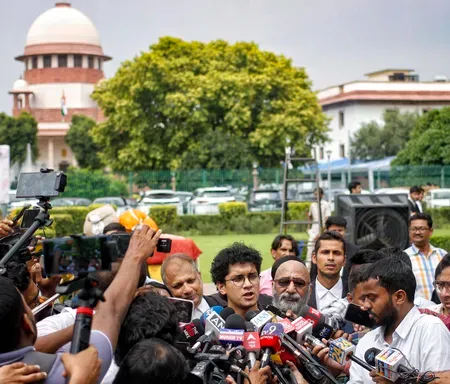
A Bench comprising Chief Justice of India (CJI) Surya Kant and Justices Joymalya Bagchi and V Mohana was hearing a batch of petitions arising from the recent nationwide student demonstrations over the alleged NEET-UG 2026 paper leak. The Bench made clear that the existence of an agitation does not, by itself, justify the use of excessive force by police.
'The right to peaceful, lawful protest is absolutely guaranteed under the Constitution. So long as it is peaceful agitation, merely because there is agitation, there can't be (police excess),' the CJI-led Bench observed.
The court added that any excess, if committed, must be independently examined, and underscored that the concern was not limited to Delhi alone. 'Uniformity in protocol is required. Merely because there is agitation, doesn't mean lathi-charge. Discipline is integral to the democratic process,' the Bench said.
Equal Concern for Protesters and Police Personnel
Justice Bagchi remarked that injuries suffered by both protesters and police personnel were matters of equal concern. 'Injury to an individual, be it to policemen or protesters, is of equal concern. We may call upon the State to explain why adequate protective gear was not provided to police to handle such situations,' he observed.
A separate counsel, appearing for families of injured police personnel, sought permission to participate in the proceedings, alleging that several policemen had been brutally assaulted during the protests.
What Petitioners and the Centre Said
Advocate-on-record Fauzia Shakil, appearing for one petitioner, informed the Bench that a fresh writ petition had been filed on behalf of Rajya Sabha MP Manoj Jha containing comprehensive material, including allegations relating to a recent police firing in Bihar.
Senior advocate Gopal Sankaranarayanan urged that all matters be heard together, as allegations of police excesses were reportedly continuing. Senior advocate Vikas Singh pressed for pan-India directions, contending that incidents were not confined to Delhi and that an all-India framework was required.
Solicitor General Tushar Mehta, appearing for the Union government, submitted that the Centre would assist the apex court 'dispassionately' and suggested that all connected petitions be clubbed for a joint hearing. Accepting the suggestion, the Bench directed that all pending petitions be listed together on Tuesday for further hearing.
Background: NEET Protests and Delhi High Court Action
The matter stems from allegations of excessive use of force against students who took to the streets over the alleged NEET-UG 2026 paper leak. Last week, the Delhi High Court issued notice to the Centre and Delhi Police on a batch of PILs claiming disproportionate force during the protests, and directed preservation of CCTV footage and other relevant records connected with the 20 July 'Sansad Chalo' march.
A Division Bench of Chief Justice Devendra Kumar Upadhyaya and Justice Tejas Karia sought responses from the authorities within four weeks, directing preservation of all electronic records including CCTV footage in accordance with standard operating procedures. That matter is next scheduled for 11 September.
During the Delhi High Court hearing, senior advocates alleged that students were subjected to lathi-charge, tear gas, and other coercive measures. The Centre's law officers countered that prohibitory orders were in force, the crowd had turned violent, and police personnel were injured.
What Comes Next
The Supreme Court's intervention signals a possible shift toward a structured, codified framework for managing public protests at the national level — a legal development that could have lasting implications for how law enforcement agencies across states respond to demonstrations. The consolidated hearing on Tuesday will determine the scope of inquiry and whether an independent examination of police conduct is ordered.
Point of View
But the devil will be in the details. India has no codified national standard for crowd management — what counts as 'proportionate force' has been left to state police discretion, producing wildly inconsistent outcomes from Kerala to Bihar. The NEET protests have exposed that gap starkly. Critically, the court's insistence on equal scrutiny of violence against police is a signal that this will not become a one-sided inquiry — which strengthens its institutional credibility but also complicates the petitioners' framing. The real test is whether the court moves beyond observation to enforceable directions.
NationPress
25 Oct 2026
Frequently Asked Questions
What did the Supreme Court say about police action during protests?
The Supreme Court said on 27 July that the Constitutional right to peaceful protest is absolutely guaranteed and that the existence of an agitation does not justify police excess, including lathi-charges. The court also stressed that violence against police personnel cannot be overlooked and that both must be independently examined.
What is the NEET-UG 2026 protest case before the Supreme Court?
The case involves a batch of petitions filed over alleged police excesses during nationwide student protests against the alleged NEET-UG 2026 paper leak. Petitioners allege disproportionate use of force including lathi-charges and tear gas, while the government contends that crowds turned violent and police personnel were injured.
What is the uniform protest protocol the Supreme Court referred to?
The Supreme Court indicated that a uniform nationwide protocol may be needed to govern how authorities handle public demonstrations across all states — covering both the facilitation of peaceful protests and the management of any anti-social elements. No such codified national standard currently exists.
What has the Delhi High Court done in this matter?
The Delhi High Court issued notice to the Centre and Delhi Police on PILs alleging excessive force during the 20 July 'Sansad Chalo' march. It directed preservation of CCTV footage and electronic records, and sought government responses within four weeks. The next hearing is scheduled for 11 September.
Who are the key parties in the Supreme Court proceedings?
The petitioners include advocates appearing on behalf of affected students and Rajya Sabha MP Manoj Jha. Senior advocates Gopal Sankaranarayanan and Vikas Singh argued for pan-India directions. Solicitor General Tushar Mehta appeared for the Union government, which offered to assist the court dispassionately. A separate counsel represented families of injured police personnel.