Supreme Court Orders NIA to Investigate Malda Hostage Incident Involving Judicial Officers
Synopsis
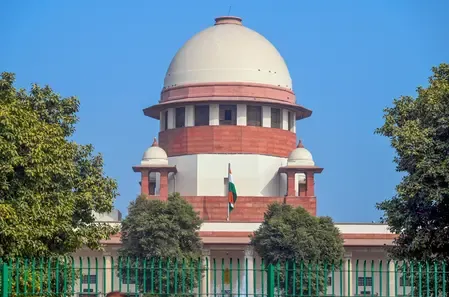
In a significant ruling, the Supreme Court has mandated the NIA to investigate the alarming incident in Malda, West Bengal, where judicial officers were held hostage. This decision comes amidst serious allegations against local police and emphasizes the judiciary's commitment to upholding justice.
Key Takeaways
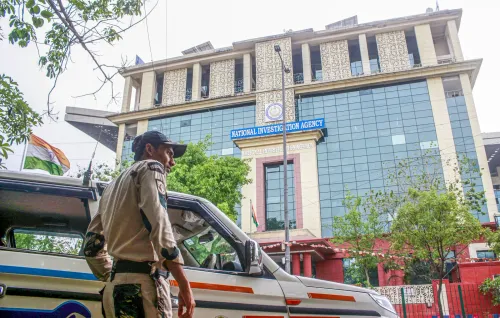
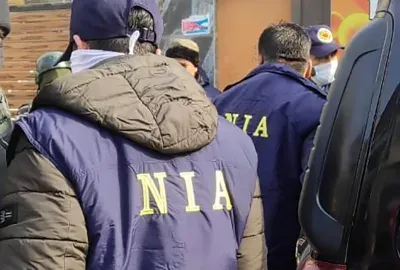
Supreme Court's Directive: The Supreme Court has mandated the NIA to take over the investigation into the Malda incident.
Judicial Officers Held Hostage: Seven judicial officers were reportedly confined by a mob for hours.
Independent Investigation: The NIA will conduct an independent investigation due to serious allegations against local police.
Response from Election Commission: The ECI has requested an inquiry from the NIA as directed by the Supreme Court.
Accountability in Law Enforcement: The situation highlights the need for greater accountability within local law enforcement agencies.
New Delhi, April 6 (NationPress) The Supreme Court has instructed the National Investigation Agency (NIA) to lead the investigation into a troubling event that transpired in Malda district of West Bengal, where seven judicial officers assigned for the Special Intensive Revision (SIR) of electoral rolls were reportedly held hostage for several hours in a BDO office located in Kaliachowk.
A Bench comprising Chief Justice of India (CJI) Surya Kant along with Justices Joymalya Bagchi and Vipul M. Pancholi was reviewing a suo motu writ petition stemming from the incident on April 1. They acknowledged a preliminary status report submitted in a sealed cover and remarked that the allegations against the state police necessitated an independent investigation.
Utilizing its authority under Article 142 of the Constitution, the apex court mandated that the NIA assume control over the investigation of all 12 FIRs filed by the West Bengal Police concerning this incident, “regardless of the offences under which these FIRs have been lodged.”
“There are grave allegations against members of the state/local police. By exercising powers under Article 142, we direct that the investigation of these FIRs be taken over by the NIA,” ordered the CJI Kant-led Bench.
The Supreme Court clarified that the central agency may register additional FIRs should the investigation uncover evidence of a broader conspiracy, the involvement of more individuals, or additional offences.
Furthermore, the CJI Kant-led Bench directed the NIA to provide regular status reports to the apex court and subsequently submit its investigation findings to the designated NIA court in Kolkata.
The court also instructed the West Bengal Police to transfer all case diaries, materials, and evidence gathered thus far to the NIA and to offer full logistical support to assist the investigation.
This directive follows the Supreme Court’s serious condemnation of the incident on April 2, labeling it a “brazen attempt” to intimidate the judiciary and a direct affront to its authority.
The CJI Kant-led Bench took into account a communication from the Chief Justice of the Calcutta High Court, noting that seven judicial officers, including three women, were confined by a mob at a BDO office in Kaliachowk for over nine hours, only being released after midnight. During this time, they were allegedly denied even basic necessities like food and water.
The apex court also highlighted that the officers’ vehicles were subjected to stone and stick attacks as they attempted to return, expressing distress over the “complete failure” of civil and police administration to respond effectively despite prior alerts.
Following this, the court directed the Election Commission of India (ECI) to assign a preliminary inquiry to an independent agency such as the NIA or the CBI.
In response to the apex court’s directive, the ECI subsequently contacted the NIA, requesting an investigation and the submission of a preliminary report directly to the apex court.
During the hearing on Monday, Additional Solicitor General (ASG) S.V. Raju, representing the NIA, informed the CJI Kant-led Bench that three FIRs were directly related to incidents involving judicial officers, while nine others dealt with disruptions and blockades in nearby areas.
According to the Centre’s law officer, a total of 12 FIRs had been filed, with 24 suspects identified, and over 400 individuals under investigation, with call detail record (CDR) analysis currently in progress.
ASG Raju further stated that the offences initially documented did not fall within the scheduled offences under the NIA Act but clarified that the agency would be authorized to investigate any related offences once it took over the case.
Noting submissions from state authorities indicating that two alleged “kingpins” had already been apprehended, the apex court instructed that the suspects be transferred to the NIA for custodial interrogation.
The CJI Kant-led Bench also expressed strong disapproval of the actions of senior state officials, including the Chief Secretary and Director General of Police, regarding their perceived inaction during the incident.
“Are you so occupied that you cannot respond to the Chief Justice of the High Court?” the CJI Surya Kant-led Bench questioned, adding that timely intervention could have averted the escalation of the situation.
The Chief Secretary, who appeared virtually, claimed he was traveling at the time and did not receive any such communication.
Nonetheless, he expressed regret over the incident. Taking into account these submissions, the apex court chose not to initiate further action against the officials, indicating that it expected greater accountability and promptness in the future.
“We trust that the officers now comprehend the sense of responsibility they are expected to uphold and provide assistance to the Chief Justice of the High Court when judicial officers are made hostages. We do not intend to pursue further actions against them,” the CJI Kant-led Bench concluded, while halting further proceedings against the officials.
Point of View
The Supreme Court's decision to hand over the Malda incident to the NIA underscores the urgent need for accountability in law enforcement. This situation not only raises questions about the safety of judicial officers but also highlights the judiciary's resilience in the face of serious threats to its authority. A thorough investigation is imperative for restoring public trust.
NationPress
6 Oct 2026
Frequently Asked Questions
What incident prompted the Supreme Court's intervention?
The Supreme Court intervened following an incident in Malda, West Bengal, where seven judicial officers were allegedly held hostage for several hours by a mob at a BDO office.
What actions has the Supreme Court ordered?
The Court has directed the NIA to take over the investigation of all FIRs related to the incident and submit regular status reports.
What are the implications for local law enforcement?
The Supreme Court's intervention raises serious concerns about the effectiveness of local police and their response to threats against judicial officers.
How did the Election Commission respond to the situation?
The Election Commission of India has sought an inquiry from the NIA following the Supreme Court's directive.
What might happen next in the investigation?
The NIA may register additional FIRs if new evidence suggests a broader conspiracy or further involvement of individuals.