SC to quiz Bihar on Deepak Prakash staying minister past 6-month limit
Synopsis
The Supreme Court has put Bihar on notice over a pointed constitutional question: can an unelected minister keep resetting the six-month clock under Article 164(4) by being reappointed each time the government changes? The Deepak Prakash case could redefine the limits of a provision meant as a brief exception, not a revolving door.
Key Takeaways
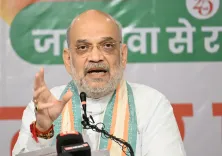
Supreme Court on 30 July directed the Bihar government to explain why Panchayati Raj Minister Deepak Prakash continues in office beyond six months without a legislative seat.
CJI Surya Kant termed it a pure question of law under Article 164(4) of the Constitution.
Prakash was first appointed to the Cabinet on 20 November 2025 and reappointed on 7 May under Chief Minister Samrat Choudhary — both times without being elected.
The PIL, filed by activist Rakesh Kumar Singh , relies on the 2001 S.R.
Chaudhuri verdict , which ruled the six-month exception is a one-time privilege.
The petition seeks a quo warranto writ and a declaration that Prakash's reappointment is unconstitutional.
The Supreme Court is expected to hear the matter on Tuesday .
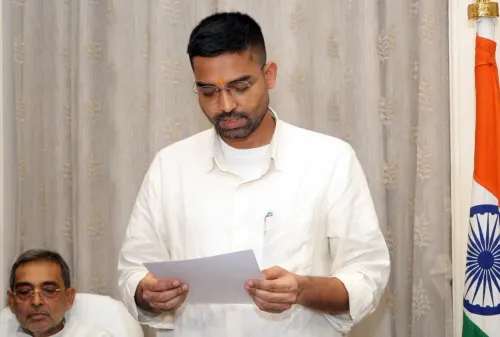
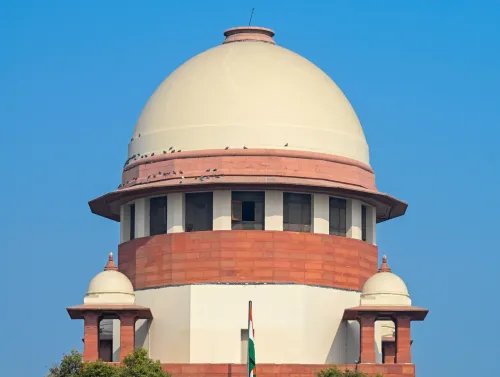
The Supreme Court on Thursday, 30 July directed the Bihar government to explain the constitutional basis for allowing Panchayati Raj Minister Deepak Prakash to remain in office for more than six months without being elected to either House of the state legislature. Chief Justice of India (CJI) Surya Kant, who led the bench, observed that the matter raises a pure question of law under Article 164(4) of the Constitution.
What the Court Said
The petitioner's counsel told the bench that more than six months had elapsed and Deepak Prakash continued to hold ministerial office despite not securing membership of either the Bihar Legislative Assembly or the Bihar Legislative Council. 'My Lord, it is now over six months and he continues as a minister,' counsel submitted while pressing for an early hearing.
The Bihar government's counsel informed the bench that the matter was already listed for 27 August and left the question of advancing the date to the court's discretion. The Supreme Court indicated it would take up the plea on Tuesday.
Background: Two Appointments, One Unelected Minister
According to the petition, Deepak Prakash was first inducted into the Bihar Cabinet on 20 November 2025, despite holding no legislative seat. When then Chief Minister Nitish Kumar resigned on 15 April, the entire Council of Ministers ceased to exist. Prakash was subsequently reappointed as Panchayati Raj Minister on 7 May in the new government headed by Chief Minister Samrat Choudhary — again without having been elected to either House.
This is the crux of the constitutional challenge: the petitioner argues that each fresh appointment effectively resets the six-month clock, allowing an unelected person to hold ministerial office indefinitely through a cycle of resignations and reappointments.
The Constitutional Question at Stake
Article 164(4) of the Constitution permits a non-legislator to serve as a minister for a maximum of six months, within which the person must secure membership of the legislature or vacate office. The petition relies on the Supreme Court's landmark 2001 judgment in S.R. Chaudhuri versus State of Punjab, which held that this constitutional exception is a one-time privilege and cannot be repeatedly invoked through resignation, Cabinet reshuffles, or reappointment.
The petitioner has argued that Prakash's reappointment amounts to a 'colourable exercise of constitutional power' — a legal term for using valid authority to achieve an outcome the law does not permit.
Who Filed the Petition
The Public Interest Litigation (PIL) was filed by social activist and whistleblower Rakesh Kumar Singh, challenging Prakash's reappointment after the formation of the new Bihar government. The PIL seeks a declaration that the reappointment is unconstitutional and void, and also seeks issuance of a writ of quo warranto — a legal instrument questioning the authority under which a person holds public office.
What Happens Next
The Supreme Court is expected to hear the matter on Tuesday, when the Bihar government will be required to place on record its constitutional justification for Prakash's continued tenure. The outcome could set a significant precedent on how Article 164(4) is interpreted — particularly whether the six-month window can be reset through government reconstitution.
Point of View
Yet Bihar's arrangement suggests it has remained ajar. If the Supreme Court upholds a strict reading of Article 164(4), it will put every state government on notice that Cabinet reshuffles cannot serve as a workaround for the electorate's verdict. The real question is whether the court will also address the enforcement gap — because without a clear consequence mechanism, the six-month rule risks remaining aspirational rather than binding.
NationPress
14 Sept 2026
Frequently Asked Questions
What is Article 164(4) of the Indian Constitution?
Article 164(4) allows a person who is not a member of the state legislature to be appointed as a minister, but only for a maximum period of six months, within which they must get elected to either House. If they fail to do so, they must vacate the ministerial post.
Why is Deepak Prakash's appointment being challenged in the Supreme Court?
A PIL filed by activist Rakesh Kumar Singh argues that Deepak Prakash has held ministerial office in Bihar for more than six months without being elected to the Legislative Assembly or Legislative Council. The petition contends that his reappointment after the government changed was a colourable exercise of power designed to reset the six-month clock, which the 2001 S.R. Chaudhuri judgment prohibits.
When was Deepak Prakash first appointed as a minister in Bihar?
Deepak Prakash was first inducted into the Bihar Cabinet on 20 November 2025, without holding a legislative seat. He was reappointed as Panchayati Raj Minister on 7 May in the new government led by Chief Minister Samrat Choudhary, again without having been elected.
What is a writ of quo warranto?
A writ of quo warranto is a legal instrument issued by a court demanding that a person show by what authority they hold a public office. In this case, the petitioner has sought such a writ to question the legal basis for Deepak Prakash's continued tenure as minister.
What precedent could the Supreme Court's ruling set?
If the court rules strictly on Article 164(4), it could establish that the six-month exception for non-legislator ministers cannot be reset through government reconstitution or reappointment. This would have implications for similar arrangements in other states and close a loophole that has been used to keep unelected individuals in ministerial positions beyond the constitutionally intended period.