Supreme Court upholds ED freeze on TMC bank accounts, ₹440 crore locked
Synopsis
The Supreme Court has refused to unfreeze ₹440 crore locked in three Trinamool Congress bank accounts by the ED, letting a court-supervised spending arrangement stand. With the main money laundering case still pending and a factional war simmering inside the TMC, the Calcutta High Court — not the Supreme Court — will be the arena where this battle is decided.
Key Takeaways
The Supreme Court on 11 August declined to interfere with the ED's freeze on three HDFC Bank accounts of the Trinamool Congress .
Total deposits in the frozen accounts stand at approximately ₹440 crore ; the ED cited suspicious transactions of around ₹164 crore .
Senior advocate Kapil Sibal argued the freeze was disproportionate, as alleged proceeds of crime were only about ₹160 crore .
Retired Justice Subrata Talukdar continues as Special Officer overseeing account operations until 30 September .
The Supreme Court disposed of petitions by both the Mamata Banerjee faction and rebel leader Biswanath Das , directing parties to raise objections before the Calcutta High Court.
The ED's ECIR was initiated on 23 June based on a predicate FIR from the Cyber Crime Police Station, Bidhannagar .
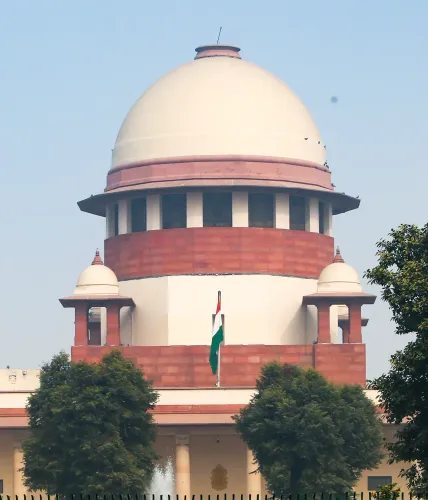
The Supreme Court on Tuesday, 11 August declined to interfere with the Enforcement Directorate's (ED) freezing of three HDFC Bank accounts belonging to the All India Trinamool Congress (TMC), linked to an alleged money laundering probe. The bench allowed the existing interim arrangement — supervised by a court-appointed Special Officer — permitting the party to draw funds for day-to-day operational expenses.
What the Supreme Court Ruled
A bench of Justices M.M. Sundresh and Prasanna B. Varale disposed of two separate petitions: one filed by the Mamata Banerjee-led TMC faction challenging the Calcutta High Court's refusal to grant interim relief, and another filed by rebel TMC leader Biswanath Das, who claimed to represent the 'real party.'
The court declined to adjudicate the internal factional dispute, restricting its examination to the limited question of account operations. 'We will not say anything. We will dispose of both the matters and leave it to the discretion of the Special Officer appointed by the High Court. Whatever you want to say, say it in the main petition,' the bench stated.
The apex court characterised the High Court's arrangement as 'balanced,' noting it preserved the party's operational continuity while keeping account access under judicial oversight.
Arguments From Both Sides
Senior advocate Kapil Sibal, appearing for the TMC, contended that while the alleged proceeds of crime stood at approximately ₹160 crore, more than ₹400 crore remained frozen — a disproportionate restriction. 'Everything is frozen. We can't pay salaries. We can't pay our employees. Why are you freezing more than the proceeds of crime? They are also freezing recipient accounts. This is not fair,' Sibal submitted.
Additional Solicitor General S.V. Raju, appearing for the ED, countered that the party was adequately protected under the day-to-day expenses arrangement, adding that nearly ₹120 crore remained accessible. Senior advocate K. Parameshwar, representing a rebel TMC MLA whose complaint had originally triggered the police action, argued that one faction alone should not be permitted to operate the accounts.
Background: How the Accounts Were Frozen
The three accounts, holding total deposits of around ₹440 crore, were initially subjected to debit restrictions by HDFC Bank following directions from the West Bengal Police. Complaints alleged the funds could contain proceeds of corruption and extortion and risked misuse.
The ED subsequently initiated an Enforcement Case Information Report (ECIR) on 23 June, based on a predicate FIR registered by the Cyber Crime Police Station, Bidhannagar. The agency imposed debit restrictions under Section 17(1-A) of the Prevention of Money Laundering Act (PMLA), citing suspicious transactions of approximately ₹164 crore.
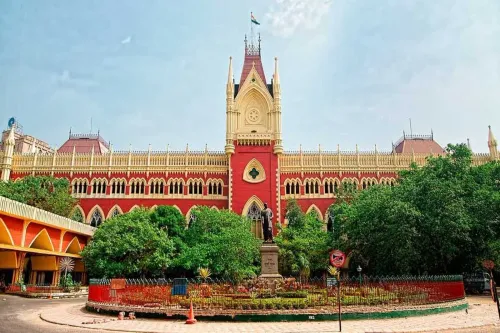
The TMC challenged the action before the Calcutta High Court, arguing the freeze was arbitrary and that the ED had failed to identify specific proceeds of crime. On 20 July, a single-judge bench of Justice Krishna Rao refused interim relief, finding no prima facie case or balance of convenience in the party's favour.
The Special Officer Arrangement
On 9 July, the Calcutta High Court permitted the TMC to use the three accounts for daily expenditure, including legal expenses, under strict supervision. A single-judge bench of Justice Sougata Bhattacharya appointed retired Justice Subrata Talukdar as Special Officer to oversee account operations until 30 September.
Under this arrangement, two authorised TMC signatories may issue cheques, but each cheque requires the counter-signature of the Special Officer before it can be processed.
What Happens Next
The Supreme Court left it open to all parties to raise objections before the Special Officer and in the main proceedings before the Calcutta High Court. The substantive money laundering case — and the broader factional dispute within the TMC — remains to be adjudicated in those forums. The court's refusal to intervene signals that the High Court's supervised arrangement will govern account access at least until 30 September.
Point of View
Which is now as much a legal battle as a political one. The core tension Kapil Sibal raised deserves scrutiny: freezing ₹440 crore when alleged proceeds of crime are ₹164 crore is a near-threefold overreach by any proportionality standard, and the PMLA's Section 17(1-A) powers have drawn repeated criticism for being deployed broadly. That the court found the High Court's supervised arrangement 'balanced' rather than ordering a partial release suggests judicial caution in an overtly political case — but it also leaves a major opposition party operationally constrained ahead of what remains a politically charged environment in West Bengal.
NationPress
11 Aug 2026
Frequently Asked Questions
Why has the ED frozen Trinamool Congress bank accounts?
The ED froze three HDFC Bank accounts of the Trinamool Congress under Section 17(1-A) of the Prevention of Money Laundering Act, citing suspicious transactions of approximately ₹164 crore. The agency initiated an Enforcement Case Information Report on 23 June, based on a predicate FIR filed at the Cyber Crime Police Station, Bidhannagar.
How much money is locked in the frozen TMC accounts?
The three frozen HDFC Bank accounts held total deposits of around ₹440 crore at the time of the freeze. The TMC's counsel argued this was disproportionate, as the alleged proceeds of crime identified by the ED amount to approximately ₹160–164 crore.
What did the Supreme Court decide on 11 August?
The Supreme Court declined to interfere with the ED's freeze and disposed of petitions from both the Mamata Banerjee-led TMC faction and rebel leader Biswanath Das. It upheld the Calcutta High Court's supervised arrangement, allowing the party to access funds for day-to-day expenses through a court-appointed Special Officer.
Who is the Special Officer overseeing the TMC accounts?
Retired Justice Subrata Talukdar was appointed Special Officer by the Calcutta High Court to supervise the three accounts until 30 September. Cheques drawn by two authorised TMC signatories require his counter-signature before they can be processed.
What happens next in the TMC money laundering case?
The substantive money laundering proceedings remain pending before the Calcutta High Court. The Supreme Court directed all parties to raise their objections before the Special Officer and in those main proceedings. The supervised access arrangement stays in place at least until 30 September.