Supreme Court to hear TMC's plea against ED bank account freeze on Monday
Synopsis
The Supreme Court is set to hear on Monday whether the Trinamool Congress can unlock three frozen HDFC Bank accounts — a case that sits at the intersection of money laundering law and allegations of political targeting. With the Calcutta High Court already refusing interim relief and ₹164 crore in suspicious transactions flagged by the ED, the stakes for both the party and the PMLA's reach over political finances are significant.
Key Takeaways
The Supreme Court will hear the TMC and Dola Sen's special leave petition on Monday before Justices M.M.
Sundresh and Prasanna B.
The ED froze three HDFC Bank accounts of the TMC under Section 17(1-A) of PMLA after registering an ECIR on 23 June .
Allegedly suspicious transactions of ₹164 crore , including transfers to the Carewell group , triggered the ED's action.
The Calcutta High Court refused interim relief on 20 July , finding no prima facie case for interference.
The TMC continues to operate 36 other bank accounts with deposits exceeding ₹164 crore , per the High Court's record.
The party alleges the freeze is arbitrary and part of coercive measures linked to the political change in West Bengal .
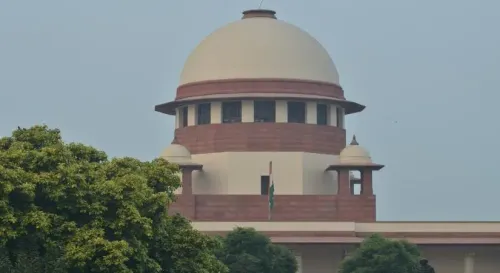
The Supreme Court is scheduled to hear on Monday a special leave petition filed by the All India Trinamool Congress (TMC) and its Rajya Sabha member Dola Sen, challenging the Enforcement Directorate's (ED) decision to freeze three of the party's bank accounts in an alleged money laundering case. The matter will be taken up before a Bench of Justices M.M. Sundresh and Prasanna B. Varale, as per the apex court's official causelist.
Background: What the ED Did
The ED imposed debit restrictions on three HDFC Bank accounts held by the TMC after registering an Enforcement Case Information Report (ECIR) on 23 June, based on a predicate FIR lodged by the Cyber Crime Police Station, Bidhannagar. The FIR was registered under provisions of the Bharatiya Nyaya Sanhita and the Information Technology Act, following a complaint alleging that funds from illegal activities — including misuse of influence, dishonest financial dealings, and suspected unlawful collection of money — had been routed through the accounts.
Notably, before the ED's intervention, the same accounts had already been subjected to debit restrictions by the bank on the instructions of the West Bengal Police. The ED subsequently acted under Section 17(1-A) of the Prevention of Money Laundering Act (PMLA) after detecting allegedly suspicious transactions amounting to ₹164 crore.
Calcutta High Court Refused Interim Relief
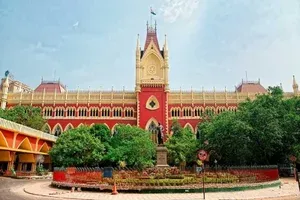
The TMC had first approached the Calcutta High Court, which on 20 July refused to grant interim relief against the ED's freezing order. A single-judge Bench of Justice Krishna Rao held that the court did not find any prima facie case warranting interference at the interim stage.
'This court did not find any prima facie case and balance of convenience and inconvenience in favour of the petitioners. In view of the above, interim order as prayed for by the petitioners is refused,' the bench had said.
The High Court observed that the ED had analysed the party's accounts and found 'substantial transfers of funds to various entities', including the Carewell group, and held that the legality of those transactions could not be examined at the interim stage. It further noted that the ED had frozen only six bank accounts in total, while the party continued to operate 36 other accounts containing deposits of over ₹164 crore.
However, the High Court also rejected the ED's preliminary objection on maintainability, holding that the writ petition had been validly instituted and that the existence of an alternative statutory remedy did not bar the court from examining allegations of arbitrariness in the ECIR proceedings.
TMC's Contentions Before the Supreme Court
The Trinamool Congress has argued before the Supreme Court that the freezing action was mechanical, arbitrary, and undertaken without identifying or segregating any specific proceeds of crime. The party has also alleged that the ED's move forms part of a broader pattern of coercive measures initiated against it following the recent political change in West Bengal.
What Happens Next
The Supreme Court's hearing on Monday will determine whether the TMC can secure interim relief that the Calcutta High Court declined to provide. A favourable order could restore the party's access to the frozen accounts ahead of any final adjudication by the PMLA's Adjudicating Authority. The case is being closely watched as a test of the legal boundaries of the ED's powers to freeze political party funds under the PMLA.
Point of View
It may effectively raise the evidentiary bar for the ED to freeze political party accounts — a constraint the agency has so far not faced. The absence of that safeguard is precisely what critics of the PMLA's preventive powers have long flagged.
NationPress
16 Sept 2026
Frequently Asked Questions
Why has the Supreme Court been approached by the Trinamool Congress over the ED freeze?
The TMC approached the Supreme Court after the Calcutta High Court refused on 20 July to grant interim relief against the ED's order freezing three of its HDFC Bank accounts. The party argues the freeze is arbitrary and lacks identification of specific proceeds of crime.
What triggered the ED's decision to freeze TMC's bank accounts?
The ED registered an ECIR on 23 June based on an FIR by the Cyber Crime Police Station, Bidhannagar, following a complaint of alleged illegal fund flows. The agency detected allegedly suspicious transactions of ₹164 crore, including transfers to the Carewell group, and imposed debit restrictions under Section 17(1-A) of the PMLA.
What did the Calcutta High Court say about the TMC's plea?
The Calcutta High Court's Justice Krishna Rao refused interim relief, holding there was no prima facie case for interference at that stage. The court noted the ED had found substantial fund transfers to various entities and that the legality of those transactions could only be examined by the Adjudicating Authority.
How many bank accounts does the TMC currently have access to?
According to the High Court's record, the ED froze six accounts in total, while the TMC continues to operate 36 other bank accounts holding deposits of over ₹164 crore.
What is the significance of the Supreme Court hearing?
The Supreme Court's ruling will determine whether the TMC can restore access to the frozen accounts before the PMLA Adjudicating Authority reaches a final decision. It could also set a broader precedent on the ED's powers to freeze political party funds under the PMLA.