SC stays Punjab & Haryana HC order on IT Act Section 147A unconstitutionality

Synopsis
The Supreme Court has put on hold a Punjab and Haryana High Court order that struck down Section 147A of the Income Tax Act as unconstitutional — a provision introduced retrospectively via Finance Bill 2026. With assessment proceedings frozen until December 3, the ruling could reshape how jurisdictional Assessing Officers operate under India's faceless tax regime.
Key Takeaways
The Supreme Court on 18 September 2026 stayed a Punjab and Haryana High Court order that declared Section 147A of the Income Tax Act, 1961 unconstitutional.
A bench of Justices J.B.
Vinod Chandran passed the interim stay, directing that assessment proceedings shall not proceed further.
The High Court had on 10 September ruled that Section 147A's retrospective introduction — effective 1 April 2021 via Finance Bill, 2026 — could not override the faceless, randomised-allocation framework.
The Union government , CBDT , Deputy Commissioner of Income Tax , and NFAC filed the special leave petition challenging the High Court ruling.
The matter is listed for final hearing on 3 December , when the constitutional validity of Section 147A will be examined in full.
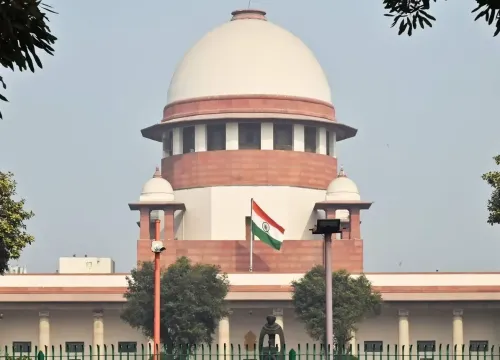
The Supreme Court on Friday, 18 September 2026, stayed the operation of a Punjab and Haryana High Court judgment that had declared Section 147A of the Income Tax Act, 1961, unconstitutional and set aside reassessment notices issued by jurisdictional Assessing Officers. The interim stay was granted while the apex court hears the Union government's challenge to the High Court's ruling.
The Supreme Court's Interim Order
A bench of Justices J.B. Pardiwala and K. Vinod Chandran passed the order while hearing a special leave petition (SLP) filed by the Union of India and other Income Tax authorities. The bench ordered that assessment proceedings shall not proceed further until the final disposal of the main matter.
'The impugned judgment and order passed by the High Court shall remain stayed on the condition that the assessment proceedings shall not proceed further till the final disposal of the main matter,' the Justice Pardiwala-led bench ordered. The case has been listed for final hearing on 3 December.
What the High Court Had Ruled
The Punjab and Haryana High Court, in a judgment pronounced on 10 September, had held that the retrospective introduction of Section 147A could not override the existing statutory framework requiring randomised allocation and faceless proceedings. A Division Bench of Justices Deepak Sibal and Rupinderjit Chahal declared the provision unconstitutional and directed that notices issued under Section 148 to the petitioners be set aside, allowing the batch of writ petitions.
The High Court observed that Section 147A, introduced retrospectively with effect from 1 April 2021 through the Finance Bill, 2026, sought to clarify that an Assessing Officer for purposes of Sections 148 and 148A would mean an officer other than the National Faceless Assessment Centre (NFAC) or an assessment unit under Section 144B. The court found that even independently of Section 147A, the notices were not sustainable because they had not been issued through randomised allocation and in a faceless manner, as mandated under Section 151A read with the scheme dated 29 March 2022.
Background and Constitutional Challenge
The proceedings stemmed from a batch of petitions before the Punjab and Haryana High Court challenging the constitutional validity of Section 147A. The petitioners sought a declaration that the provision was ultra vires Articles 14, 19(1)(g) and 265 of the Constitution. They also challenged notices under Section 148, contending these had not been issued through the automated allocation mechanism prescribed under Section 151A.
Notably, the Supreme Court had earlier, in an order dated 10 April, set aside earlier judgments on the limited ground that the legislative position had subsequently been altered, remitting the cases to the respective High Courts for fresh consideration. The apex court had at that stage left open all questions concerning the validity, scope, effect, retrospectivity, and applicability of the amended provision, while granting an interim stay on further assessment or reassessment proceedings.
Who Moved the Supreme Court
Following the Punjab and Haryana High Court's declaration, the Union government, the Central Board of Direct Taxes (CBDT), the Deputy Commissioner of Income Tax, and the National Faceless Assessment Centre (NFAC) collectively approached the Supreme Court, triggering the present SLP proceedings. The apex court's stay restores the status quo pending a full constitutional examination of Section 147A.
With the final hearing scheduled for 3 December, the ruling will have significant implications for reassessment proceedings involving jurisdictional Assessing Officers across the country.
Point of View
Introduced retrospectively to let jurisdictional officers bypass faceless allocation, sits at the heart of a structural tension the government created when it legislated around its own reform. The apex court's April remand had already signalled it was not done with the issue; the December hearing will force a definitive answer on whether Parliament can retrospectively redefine 'Assessing Officer' to sidestep faceless safeguards that were themselves touted as a landmark anti-harassment measure. The outcome will determine the effective reach of India's faceless tax architecture for years.
NationPress
18 Sept 2026
Frequently Asked Questions
What is Section 147A of the Income Tax Act?
Section 147A is a provision introduced retrospectively with effect from 1 April 2021 through the Finance Bill, 2026. It clarifies that an 'Assessing Officer' for the purposes of Sections 148 and 148A means an officer other than the National Faceless Assessment Centre or an assessment unit under Section 144B, effectively allowing jurisdictional officers to issue reassessment notices outside the faceless framework.
Why did the Punjab and Haryana High Court declare Section 147A unconstitutional?
The High Court held on 10 September that the retrospective introduction of Section 147A could not override the statutory requirement of randomised allocation and faceless proceedings under Section 151A. It found that notices issued by jurisdictional Assessing Officers were not sustainable because they bypassed the mandated faceless and randomised process, and declared the provision ultra vires Articles 14, 19(1)(g) and 265 of the Constitution.
What did the Supreme Court order on 18 September?
The Supreme Court stayed the Punjab and Haryana High Court's judgment, directing that assessment proceedings shall not proceed further until the final disposal of the matter. It listed the case for a final hearing on 3 December.
Who challenged the High Court order in the Supreme Court?
The Union of India, the Central Board of Direct Taxes (CBDT), the Deputy Commissioner of Income Tax, and the National Faceless Assessment Centre (NFAC) filed a special leave petition before the Supreme Court challenging the High Court's ruling.
What happens to reassessment notices until December 3?
Assessment and reassessment proceedings pursuant to the notices at issue are frozen until the Supreme Court disposes of the main matter. The stay restores the status quo, and no further action can be taken on those notices until the apex court rules on the constitutional validity of Section 147A.