India bans monopolies in any sector, says Scindia amid Musk satcom row
Synopsis
India's Communications Minister Scindia pushed back hard at IMC 2026, declaring India bans monopolies in any sector and that three satcom licences have been issued under identical rules for all — directly countering Musk's discrimination claims. The real bottleneck? MHA security clearances that every operator, not just one, is still waiting on.
Key Takeaways
Communications Minister Jyotiraditya Scindia declared on 9 October 2026 that India does not allow monopolies in any sector, amid the Elon Musk satcom controversy.
Three companies have received GMPCS satcom licences ; all are subject to the same regulatory and security requirements.
Final operational clearances are pending Ministry of Home Affairs (MHA) security assessments for all operators equally.
The DoT has already issued licences and provisional spectrum approvals; the MHA clearance is the sole remaining step.
India now has 1.1 billion broadband connections and 5G coverage in 99.9% of districts, Scindia said at IMC 2026 .
Scindia also targeted Congress after Rahul Gandhi reportedly defended Musk on X, saying the party didn't know if it was 'going left or right.'
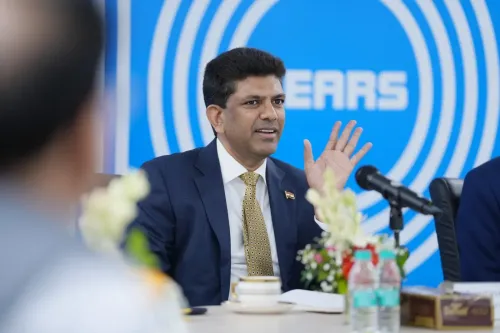
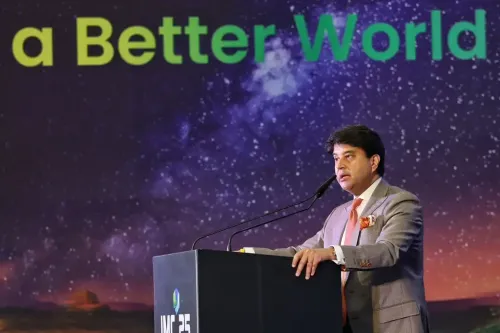
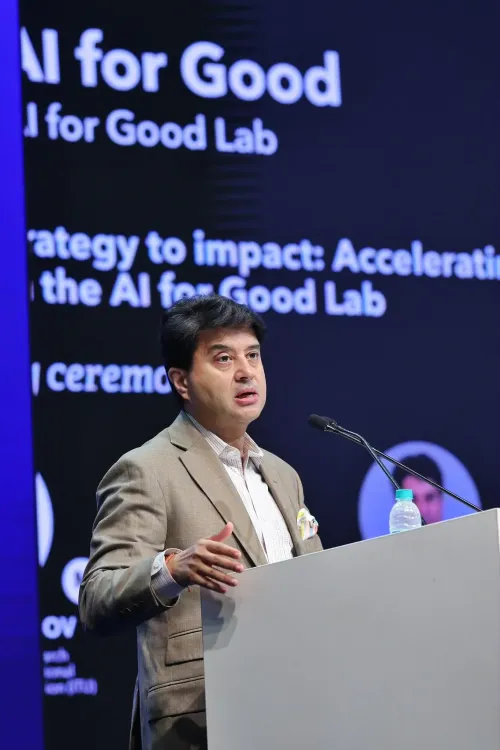
Union Communications Minister Jyotiraditya Scindia on Friday, 9 October 2026, firmly stated that India does not permit monopolies in any sector, as the debate over satellite communication (satcom) licences and allegations by Elon Musk intensified. Scindia's remarks came at the India Mobile Congress (IMC) 2026 in New Delhi, where he sought to counter claims that Indian regulators were applying satcom rules in a discriminatory fashion.
Three Licences, No Monopoly
'There is a lot of conversation about one specific company, but three companies have got satcom licences,' Scindia said, pushing back against the notion that any single operator was being favoured or blocked. He added that satellite communication players can begin operations only after meeting national security requirements and operational milestones set by the government.
The Ministry of Communications confirmed that telecom licences have been granted to three Global Mobile Personal Communication by Satellite (GMPCS) service providers operating non-geostationary satellite networks. The ministry stressed that all licensees are subject to the same regulatory and security compliance requirements.
Security Clearances Holding Up Operations
Minister of State for Communications Chandra Sekhar Pemmasani, speaking on the sidelines of the India Mobile Congress 2026, said the rollout of satellite communication services is currently awaiting security clearances from the Ministry of Home Affairs (MHA). He indicated that all satcom companies are at a similar stage in the regulatory process.
The Department of Telecommunications (DoT) has already issued licences and provisional spectrum-related approvals to satellite communication service providers. However, final operational clearances remain contingent on security assessments being completed by the MHA. 'Now the issue is pending with MHA for security clearance. As soon as it is cleared, they will get it. It has nothing to do with one company,' Pemmasani said.
Government Rejects Discrimination Claims
The government has categorically rejected Musk's allegations that India was applying its satcom regulations in a discriminatory manner. Officials clarified that a fair and non-discriminatory authorisation framework is being followed for all satellite communication operators seeking to enter the Indian market. This is not the first time the government has had to publicly defend the neutrality of its licensing regime amid pressure from global tech players eyeing India's rapidly growing broadband market.
Scindia Takes a Dig at Congress
In a sharp political aside, Scindia targeted the Indian National Congress (INC) after Leader of Opposition Rahul Gandhi reportedly defended Musk in a post on X. Scindia suggested the party did not know whether it was 'going left or right,' framing Congress's stance as contradictory. The remark underscored how the satcom controversy has spilled beyond regulatory debate into electoral politics.
India's Connectivity Milestone
Scindia also highlighted India's progress in connectivity and digital infrastructure at the event. The minister said India now has 1.1 billion broadband connections, with 5G coverage across 99.9 per cent of its districts — figures he cited as evidence of a competitive, well-regulated telecom ecosystem. He also flagged India's advances in artificial intelligence and digital infrastructure as part of the broader narrative at IMC 2026.
With MHA security clearances still pending, all eyes are now on how swiftly the home ministry concludes its assessments — a timeline that will determine when satcom players, including Musk-backed ventures, can begin serving Indian consumers.
Point of View
Same rules' defence is legally coherent but politically pointed — it is also a tacit admission that the MHA clearance delay has become the story. If all operators are truly at the same stage, the real question is why the home ministry's security assessment is taking as long as it is, and whether the timeline is process-driven or discretionary. Scindia's jab at Rahul Gandhi for defending Musk is the sharper political signal: the BJP is framing Congress as siding with a foreign billionaire over national regulatory sovereignty, a framing that plays well domestically. The satcom row ultimately reveals a structural tension in India's digital ambitions — a government eager to project a ₹1 trillion digital economy while retaining granular security oversight that can, intentionally or not, function as a market-entry throttle.
NationPress
9 Oct 2026
Frequently Asked Questions
Why is Elon Musk alleging discrimination in India's satcom licensing?
Musk has alleged that India's satellite communication regulations are being applied in a discriminatory manner, suggesting his companies face unequal treatment. The Indian government has rejected these claims, stating that a fair and non-discriminatory authorisation framework applies equally to all three licensed GMPCS operators.
How many companies have received satcom licences in India?
Three companies have been granted Global Mobile Personal Communication by Satellite (GMPCS) licences in India. All three are at a similar stage in the regulatory process, awaiting the same MHA security clearance before they can begin commercial operations.
What is holding up satellite broadband services launching in India?
The final operational clearances for all satcom operators are contingent on security assessments being completed by the Ministry of Home Affairs (MHA). The DoT has already issued licences and provisional spectrum approvals; the MHA clearance is the sole pending step.
What did Jyotiraditya Scindia say about India's broadband progress at IMC 2026?
Scindia said India has reached 1.1 billion broadband connections, with 5G coverage across 99.9 per cent of its districts. He highlighted these figures at the India Mobile Congress 2026 in New Delhi as evidence of a competitive, well-regulated telecom ecosystem.
Why did Scindia criticise the Congress party at IMC 2026?
Scindia targeted Congress after Leader of Opposition Rahul Gandhi reportedly defended Elon Musk on X. The minister said the party did not know whether it was 'going left or right,' framing Congress's stance as contradictory on the satcom issue.