Starlink, satcom rivals at same regulatory stage in India; spectrum pricing decision imminent

Synopsis
India's satellite internet race is entering a decisive phase: all three licensed operators, including Starlink, are at the same regulatory stage, spectrum pricing is close to finalisation, and telecom incumbents are partnering with the very rival they compete against. The outcome will hinge on affordability and connectivity — not just who wins the regulatory sprint.
Key Takeaways
All three licensed satellite communication operators in India, including Starlink , are at broadly the same stage in the security assessment process.
Starlink holds a telecommunications licence but still requires spectrum assignment and security clearance for commercial operations.
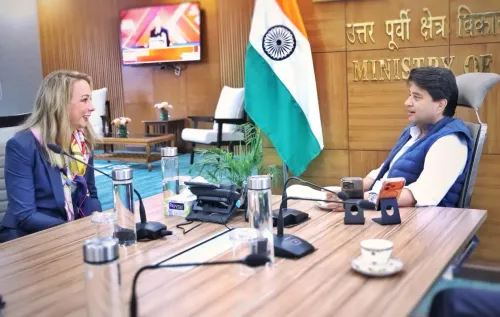
Communications Minister Jyotiraditya Scindia has indicated a decision on satellite spectrum pricing is nearing completion.
TRAI recommended spectrum charges of 4% of adjusted gross revenue plus ₹500 per urban subscriber annually in mid-2025 ; rural subscribers would be exempt.
Indian telecom operators have formed partnerships with Starlink , reflecting a complex competitive and cooperative dynamic.
Industry observers say adoption will ultimately depend on affordable pricing , reliability, and service quality — especially in underserved areas.
India's three licensed satellite communication operators, including Starlink, are at broadly the same stage in the government's regulatory approval process, with security assessments underway for all of them, according to a report. A decision on satellite spectrum pricing is also reportedly nearing completion, Communications Minister Jyotiraditya Scindia has indicated.
Where the Regulatory Process Stands
While Starlink has secured a telecommunications licence, commercial operations in India still require full compliance with security conditions and the formal assignment of spectrum needed to deliver services. The government has publicly confirmed that security assessments are ongoing for all licensed operators — a process that, according to reports, applies uniformly across the sector and does not in itself indicate any wrongdoing by any specific firm.
The report noted that greater clarity is needed around which approvals remain outstanding and whether delays hinge on government decisions or on actions still required from applicants themselves.
Musk's Allegations and the Lack of Evidence
The discussion has intensified amid delays to Starlink's commercial rollout in India, with the company's owner Elon Musk reportedly alleging that business interests have impeded its progress. However, no evidence has been publicly provided to support those claims, the report noted. The episode has drawn attention to the broader regulatory timeline for new entrants in India's satellite internet market.
TRAI's Spectrum Pricing Recommendations
In mid-2025, the Telecom Regulatory Authority of India (TRAI) recommended spectrum charges of 4% of adjusted gross revenue for certain satellite broadband services, along with an annual charge of ₹500 per urban subscriber. Rural and remote subscribers would be exempt from the additional levy. These recommendations are yet to be finalised and do not determine the eventual cost to end customers — equipment prices, installation charges, subscription fees, and contract terms are all expected to play a significant role in adoption.
Telecom Partnerships Add Complexity
India's incumbent telecom operators have moved to partner with Starlink even as they compete in overlapping service segments. Industry observers say this signals a more nuanced competitive landscape than a straightforward clash between a foreign entrant and domestic rivals — with companies potentially cooperating on distribution while contesting satellite broadband customers.
What Ultimately Matters for Consumers
Industry analysts argue that the success of satellite internet services in India will ultimately depend less on regulatory disputes and more on operators' ability to deliver reliable connectivity, competitive pricing, and clear service options — particularly in areas where existing broadband and mobile networks remain limited. The regulatory outcome, whenever it arrives, will be judged against that standard.
Point of View
And every month of delay is a month of foregone rural connectivity. The telecom incumbents' decision to partner with Starlink while competing against it reflects a pragmatic read of ground realities — but it also complicates any clean 'domestic vs foreign' framing that has driven some of the political noise around this story.
NationPress
26 Oct 2026
Frequently Asked Questions
What is the current regulatory status of Starlink in India?
Starlink holds a telecommunications licence in India but has not yet begun commercial operations. It still requires compliance with security conditions and formal spectrum assignment, both of which are currently under review alongside the other two licensed satellite operators.
What has TRAI recommended on satellite spectrum pricing?
In mid-2025, the Telecom Regulatory Authority of India recommended spectrum charges of 4% of adjusted gross revenue for satellite broadband services, plus an annual fee of ₹500 per urban subscriber. Rural and remote subscribers would be exempt from the per-subscriber charge. These recommendations are yet to be finalised.
Why has Starlink's India launch been delayed?
Starlink's commercial launch in India has been delayed due to pending security clearances and spectrum assignment. Elon Musk has alleged that business interests impeded the company's progress, though no public evidence has been provided to support those claims.
Are Indian telecom operators competing with or partnering Starlink?
Both. India's telecom operators have moved to partner with Starlink even as they compete in overlapping satellite broadband segments. Industry observers describe this as a complex landscape where distribution cooperation and service competition can coexist.
When will satellite internet services be available commercially in India?
No firm launch date has been confirmed. The timeline depends on the completion of security assessments and the finalisation of spectrum pricing — a decision that Communications Minister Jyotiraditya Scindia has indicated is close but has not yet been announced.