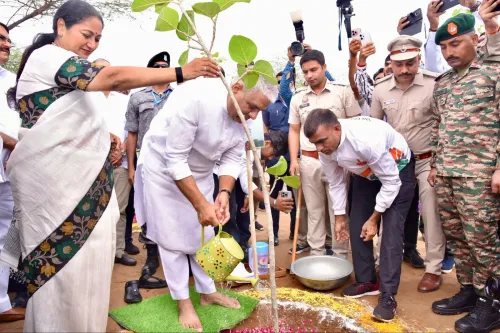
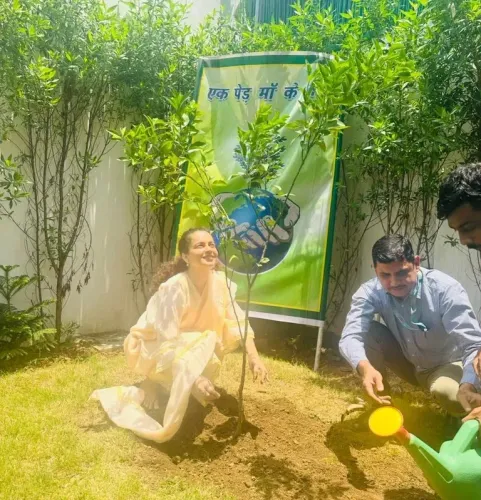
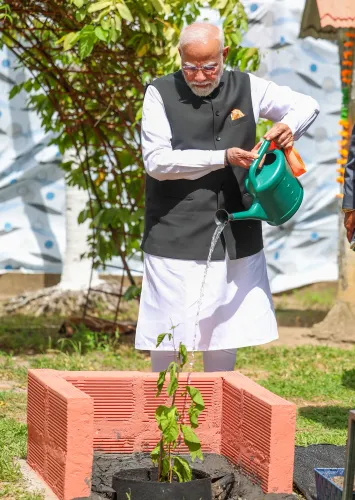
Ek Ped Maa Ke Naam: Scindia plants Palash sapling on World Environment Day
Synopsis
On World Environment Day, Union Minister Jyotiraditya Scindia planted a Palash sapling in New Delhi and called 'Ek Ped Maa Ke Naam' more than a plantation drive — a symbol of sensitivity to nature and motherhood. With Phase 2.0 now underway after crores of saplings in 2024, the campaign is testing whether emotional framing can turn a government scheme into a genuine mass movement.
Key Takeaways
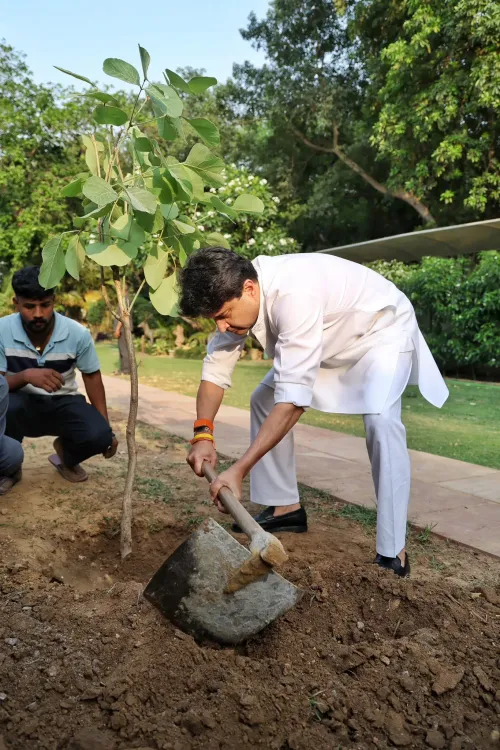
Jyotiraditya Scindia planted a Palash sapling at his official residence on 5 June (World Environment Day) as part of the 'Ek Ped Maa Ke Naam' campaign.
The campaign was originally launched by Prime Minister Narendra Modi on 5 June 2024 , urging citizens to plant a tree in their mother's name.
Crores of saplings were planted across India during the first phase in 2024 . 'Ek Ped Maa Ke Naam 2.0' has been launched this year to further scale up the drive.
Scindia called environmental conservation a 'shared duty of every citizen', not just governments.
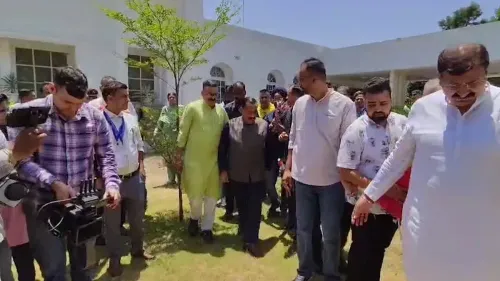
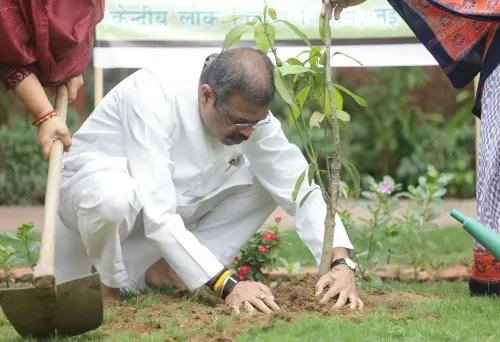
Union Minister for Communications and Development of North Eastern Region Jyotiraditya Scindia on Friday, 5 June planted a Palash sapling at his official residence in New Delhi, marking World Environment Day as part of the 'Ek Ped Maa Ke Naam' campaign. The minister called tree plantation the 'most effective way to protect Mother Earth' and urged every citizen to join the initiative.
What Scindia Said
'Tree plantation is the most effective way to protect Mother Earth; this public pledge, taken under the leadership of Prime Minister Modi, will certainly succeed,' Scindia said in a statement to the press.
He emphasised that the campaign transcends a mere plantation drive. 'This campaign is not limited to tree plantation alone; it also symbolises our sensitivity towards nature, motherhood, and the environment,' he added.
Scindia also stressed that conservation is a shared civic responsibility: 'Environmental conservation is not merely the responsibility of governments but a shared duty of every citizen. A sapling planted today lays the foundation for a secure future for generations to come.'
About the Campaign
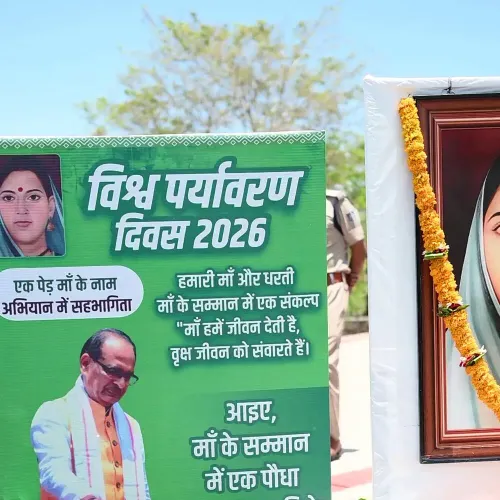
The 'Ek Ped Maa Ke Naam' campaign was launched by Prime Minister Narendra Modi on 5 June 2024, coinciding with World Environment Day. The initiative urges citizens to plant a tree in the name of their mother, weaving environmental responsibility into the emotional fabric of the mother-child bond.
The campaign aims to expand green cover, promote sustainable lifestyles, and transform environmental conservation into a grassroots people's movement. According to reports, crores of saplings were planted across the country during the first phase in 2024.
Phase 2.0 and Scale-Up
Building on that momentum, 'Ek Ped Maa Ke Naam 2.0' was launched this year to further scale up the drive. Scindia noted that the campaign has received widespread public support since its inception and is steadily evolving into a mass movement.
Notably, the choice of the Palash sapling — a native Indian flowering tree — carries symbolic weight, reflecting a deliberate preference for indigenous species that support local biodiversity.
Broader Significance
The campaign's framing — linking the act of planting a tree to honouring one's mother — represents an attempt to give environmental conservation a personal, emotional dimension that purely policy-driven messaging often lacks. This comes amid growing concern over urban heat islands, declining forest cover, and climate-linked extreme weather events across India.
As Phase 2.0 gathers pace, the government's ability to sustain participation beyond symbolic gestures and translate sapling counts into measurable green-cover gains will determine the campaign's long-term impact.
Point of View
Not just headline counts, if it is to be taken seriously as a conservation intervention. The symbolism is effective; the accountability framework is still missing.
NationPress
20 Oct 2026
Frequently Asked Questions
What is the 'Ek Ped Maa Ke Naam' campaign?
'Ek Ped Maa Ke Naam' (One Tree in the Name of Mother) is a tree-plantation initiative launched by Prime Minister Narendra Modi on 5 June 2024 on World Environment Day. It urges every citizen to plant a tree dedicated to their mother, aiming to expand green cover and make environmental conservation a mass movement.
What did Jyotiraditya Scindia do on World Environment Day 2025?
Union Minister Jyotiraditya Scindia planted a Palash sapling at his official residence in New Delhi on 5 June 2025 as part of the 'Ek Ped Maa Ke Naam' campaign. He called tree plantation the most effective way to protect Mother Earth and appealed to citizens to participate.
What is 'Ek Ped Maa Ke Naam 2.0'?
'Ek Ped Maa Ke Naam 2.0' is the second phase of the campaign, launched in 2025 to scale up the plantation drive following the first phase in 2024, during which crores of saplings were reportedly planted across India.
Why does the campaign link tree planting to motherhood?
The campaign uses the emotional bond between a child and mother to give environmental responsibility a personal dimension, making the act of planting a tree feel like a tribute rather than a civic obligation. According to Scindia, this framing symbolises sensitivity towards nature, motherhood, and the environment simultaneously.
Who is responsible for environmental conservation according to Scindia?
Scindia stated that environmental conservation is not merely the responsibility of governments but a shared duty of every citizen, arguing that individual participation is essential for the campaign — and broader conservation efforts — to succeed.