Second Saraighat Rail-cum-Road Bridge to boost Northeast connectivity
Synopsis
Sixty-four years to the day after the first engine crossed the original Saraighat Bridge, India is building its replacement — a double-decker structure that will carry two rail lines and a three-lane road over the Brahmaputra. With piling starting in October 2026, this is the single biggest upgrade to Northeast India's rail-road spine in decades.
Key Takeaways
The Northeast Frontier Railway (NFR) is building a 1.3-km double-decker rail-cum-road bridge over the Brahmaputra at Guwahati.
The new bridge will carry two railway lines on the lower deck and a three-lane road on the upper deck — upgrading from the existing single-line, two-lane structure.
The project also includes doubling of the 7.2-km Agthori-Kamakhya railway section, sanctioned by the Ministry of Railways in 2024 .
Larsen and Toubro (L&T) has been awarded execution of the project.
Piling works are targeted to begin from October 2026 ; completion is expected within the next few years.
The existing Saraighat Bridge was completed in September 1962 and has served as the primary Brahmaputra crossing for over six decades.
The second Saraighat Rail-cum-Road Bridge over the Brahmaputra, coupled with the doubling of the Agthori-Kamakhya railway section in Guwahati, is poised to significantly expand multimodal transportation capacity in Assam and the broader Northeastern region, officials said on Wednesday, 23 September 2026. The project is being executed by the Northeast Frontier Railway (NFR) and marks one of the most ambitious rail-road infrastructure investments on the Brahmaputra in over six decades.
What the Project Involves
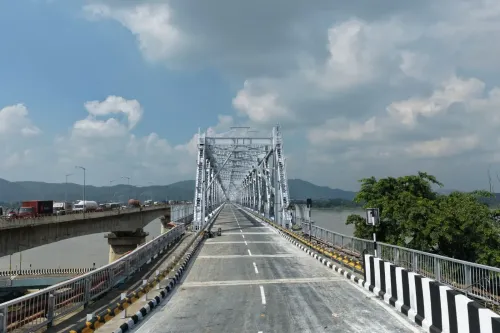
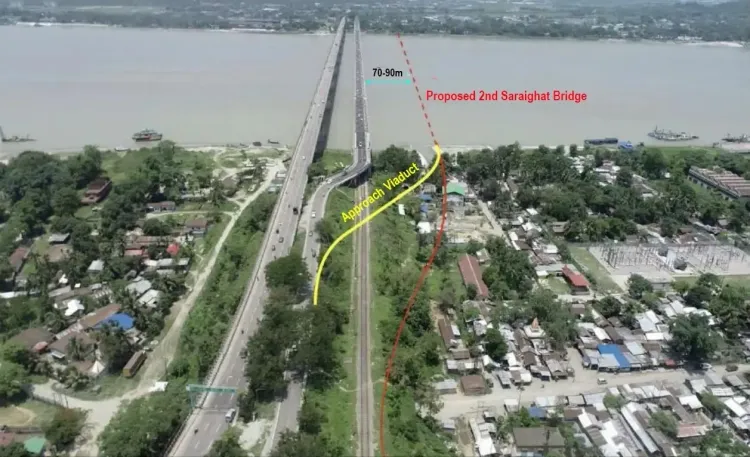
At its core, the project comprises two interlinked components: the doubling of the 7.2-km railway track between Agthori and Kamakhya stations, and the construction of a 1.3-km-long double-decker rail-cum-road bridge across the Brahmaputra. The new bridge will feature a lower deck carrying two railway lines and an upper deck accommodating a three-lane road carriageway along with a footpath — a marked upgrade over the existing Saraighat Bridge, which carries only a single railway line and a two-lane road.
The main bridge will be built on well foundations using a welded Open Web Girder (OWG) superstructure with a span length of 125 metres. Approach viaducts will connect the main structure on either side — approximately 600 metres on the Agthori side and 200 metres on the Kamakhya side. The project will also interface with road approaches being developed by the National Highways Authority of India (NHAI), providing connectivity towards Jalukbari and the Agthori-side road network.
Historical Significance and Growing Demand
The existing Saraighat Bridge was completed in September 1962, with the first engine crossing it on 23 September 1962 — exactly 64 years before Wednesday's announcements. For more than six decades, it has served as a critical link between the northern and southern banks of the Brahmaputra and a key gateway to the Northeast. NFR Chief Public Relations Officer Kapinjal Kishore Sharma noted that with passenger and freight traffic in the region continuing to grow, 'augmentation of capacity along the critical corridor has assumed increasing importance.'
The 7.2-km railway-doubling segment was sanctioned by the Ministry of Railways in 2024, following which detailed planning and tendering were initiated. Larsen and Toubro (L&T) has been entrusted with the project's execution.
Engineering Challenges and Current Progress
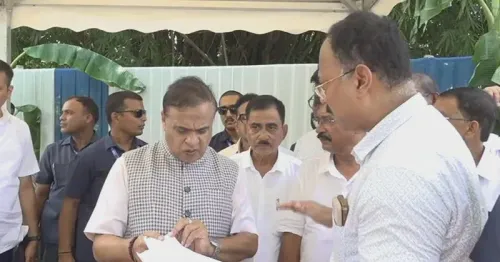
The project's location within a densely urbanised environment has posed considerable challenges around land acquisition, removal of encroachments, and the relocation of existing utilities. According to CPRO Sharma, the proactive support of the state government and local administration has helped resolve a substantial portion of these issues, with coordination ongoing to clear remaining work fronts.
On the engineering front, geotechnical investigations have been completed and major design and construction-drawing activities are under way. The construction methodology is being tailored to the challenging hydraulic and soil conditions of the Brahmaputra, with particular attention to foundation construction, structural erection, and long-term durability. Advanced digital monitoring and bridge instrumentation systems will be incorporated to facilitate real-time performance tracking of the structure.
Timeline and Expected Impact
Piling works are targeted to commence from October 2026, with the project scheduled for completion within the next few years. Once operational, the second Saraighat bridge will more than double the existing rail and road capacity across the Brahmaputra at this corridor. The additional railway capacity is expected to ease both passenger and freight movement, while the three-lane road component will reduce congestion between the two banks of Guwahati and support the city's longer-term transport needs.
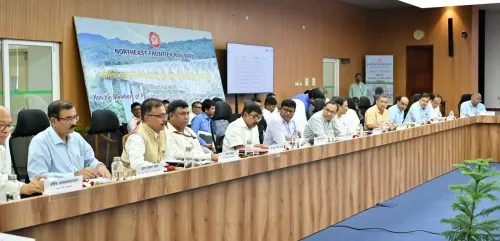
The project is being closely monitored by the Railway Board, underscoring its strategic importance for connectivity and capacity in the Northeast. By integrating rail, road, and associated approach infrastructure into a single corridor, it is designed to enhance multimodal connectivity at one of India's most strategically sensitive transport bottlenecks.
Point of View
With a vague 'few years' completion window, reflects how India's infrastructure ambition in the Northeast repeatedly outruns execution timelines. The land acquisition and encroachment challenges flagged by NFR are not new problems; they have delayed Northeast rail projects for years. The real test is whether the Railway Board's close monitoring this time translates to on-time delivery — or whether this corridor, as strategic as any in India's connectivity map, waits another decade.
NationPress
24 Sept 2026
Frequently Asked Questions
What is the second Saraighat Rail-cum-Road Bridge?
It is a new 1.3-km double-decker bridge being built over the Brahmaputra in Guwahati, featuring two railway lines on the lower deck and a three-lane road on the upper deck. It is part of a larger project that also includes doubling the 7.2-km Agthori-Kamakhya railway section, being executed by the Northeast Frontier Railway (NFR) and Larsen and Toubro (L&T).
When will the second Saraighat Bridge be completed?
Piling works are targeted to begin from October 2026 , and the project is scheduled for completion within the next few years. No specific year-end deadline has been publicly announced by NFR officials.
How does the new bridge compare to the existing Saraighat Bridge?
The existing Saraighat Bridge, completed in September 1962 , carries a single railway line and a two-lane road. The new bridge will carry two railway lines and a three-lane road with a footpath, effectively more than doubling the corridor's rail and road capacity.
Why is the second Saraighat Bridge important for Northeast India?
The Brahmaputra crossing at Saraighat is one of the primary gateways to the Northeastern region. With passenger and freight traffic growing, the existing bridge has become a capacity bottleneck. The new structure, integrated with NHAI road approaches, will strengthen multimodal connectivity across Assam and the broader Northeast.
What are the main challenges facing the project?
The project faces significant challenges related to land acquisition, removal of encroachments, and relocation of utilities in a densely developed urban area. NFR has said that state government support has helped address a substantial portion of these issues, with coordination continuing to clear remaining work fronts.