NIA Detains Kashmiri Separatist Leader Shabir Shah in Long-Standing Case

Synopsis
In a significant development, Kashmiri separatist leader Shabir Ahmad Shah has been arrested by the NIA in connection with a decades-old case of alleged police attacks. This arrest follows a recent bail granted by the Supreme Court in a terror funding case.
Key Takeaways
Shabir Ahmad Shah arrested by the NIA in connection with a 30-year-old case.
Arrest follows Supreme Court bail in a terror funding case.
Shah has faced legal challenges over the years.
The NIA accuses Shah of facilitating separatist activities.
Prolonged detention cited as a factor in bail considerations.
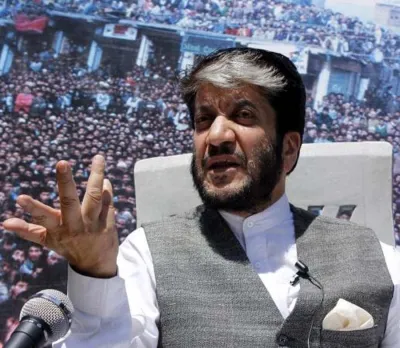
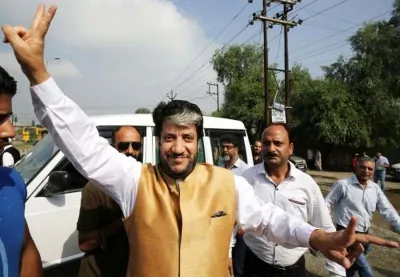
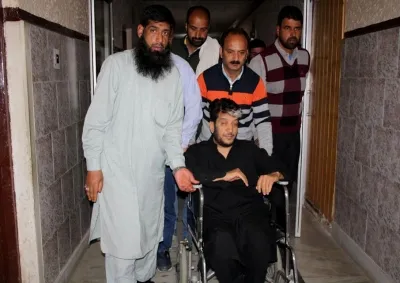
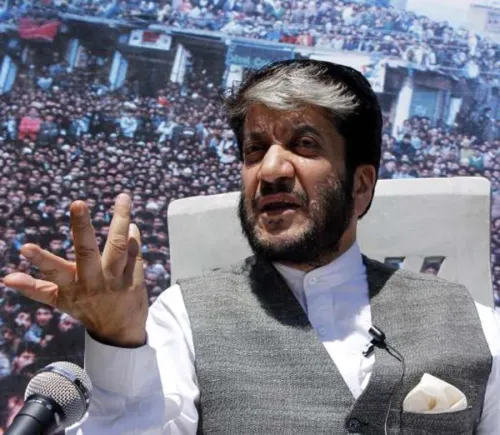
New Delhi/Srinagar, April 18 (NationPress) Kashmiri separatist figure Shabir Ahmad Shah has been apprehended by the National Investigation Agency (NIA) in relation to a case that dates back 30 years, which involves alleged assaults on police personnel, as reported on Saturday.
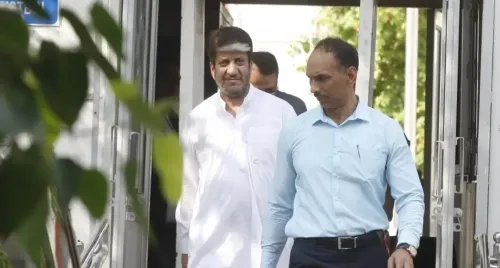
Shah was arrested by the NIA’s Srinagar unit on Friday evening and was later presented to a court in Delhi, which granted a three-day transit remand to facilitate the anti-terror agency's further inquiries in Jammu and Kashmir.
The case involves accusations originating from 1996 concerning violence against law enforcement officers. Following his capture, Shah appeared before the Patiala House Court, which approved the NIA’s request for a transit remand.
This latest arrest comes shortly after Shah was granted bail by the Supreme Court in a terror funding investigation, with the court considering his extended detention, age, and the slow pace of the trial.
In its ruling on March 12, a Bench comprising Justices Vikram Nath and Sandeep Mehta noted that prolonged detention, particularly when the trial is unlikely to conclude in a timely manner, is a significant consideration in bail decisions.
The apex court also established strict conditions, including travel and communication restrictions, along with mandatory check-ins with the investigating officer.
On March 28, a court in Delhi had also granted him bail in a money laundering inquiry led by the Enforcement Directorate (ED).
At the age of 74, Shah has faced numerous legal challenges and has spent significant time in custody throughout his life.
In 2017, the NIA charged 12 individuals, including Shah, with criminal conspiracy for raising funds aimed at undermining peace in Jammu and Kashmir through violent protests, vandalism, and attempts to incite insurrection against the Union government.
The anti-terror agency accuses Shah of playing a pivotal role in fostering separatist movements within the Union Territory by allegedly inciting public protests, voicing support for secession, honoring deceased militants as “martyrs,” and receiving funds through hawala networks and cross-Line of Control (LoC) trade.
According to the NIA, these funds were purportedly directed towards supporting subversive and militant operations in the region.
Point of View
The arrest of Shabir Ahmad Shah by the NIA highlights ongoing tensions in Jammu and Kashmir and raises questions about the effectiveness of legal processes in addressing separatist activities. As authorities navigate these complex issues, it is crucial to prioritize national security while respecting due process.
NationPress
19 Sept 2026
Frequently Asked Questions
What charges has Shabir Ahmad Shah faced?
Shabir Ahmad Shah has faced allegations related to attacks on police personnel dating back to 1996, along with involvement in terror funding and money laundering.
What is the significance of the NIA's arrest?
The NIA's arrest of Shah underscores the agency's commitment to addressing separatist activities and terrorism in Jammu and Kashmir.
What were the conditions of Shah's bail prior to his arrest?
Shah's bail was granted with stringent conditions, including travel restrictions and mandatory reporting to the investigating officer.
How has the legal system responded to Shah's cases?
The legal system has shown a complex response, granting bail in some instances while permitting ongoing investigations into serious allegations.
What impact does this arrest have on Jammu and Kashmir?
This arrest may impact the separatist movement and the broader security situation in Jammu and Kashmir, emphasizing the government's efforts to regulate unrest.