Amit Shah: 40 Arunachal villages see reverse migration under Vibrant Villages Programme
Synopsis
Forty villages along the India-China border in Arunachal Pradesh are reporting reverse migration — residents returning from cities — after the Centre's Vibrant Villages Programme brought healthcare, power, roads, and schools to frontier settlements. Home Minister Amit Shah backed the claim with a ₹5,610 crore development package, signalling that border population retention is now as much a security strategy as a welfare goal.
Key Takeaways
Amit Shah on 22 November launched four development initiatives worth over ₹5,610 crore in Arunachal Pradesh .
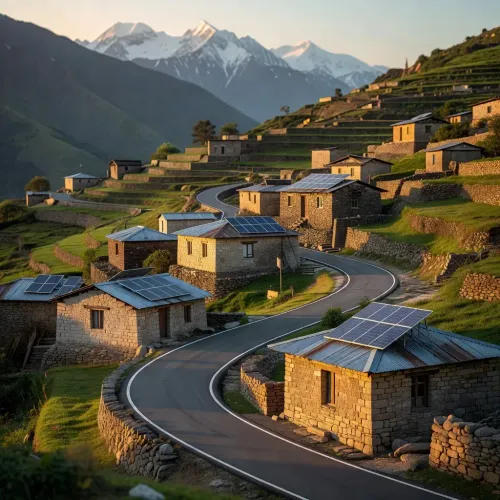
40 villages along the India-China border are reportedly seeing reverse migration, attributed to the Vibrant Villages Programme (VVP) .
199 VVP projects worth ₹110.95 crore are being taken up across 11 border districts .
Mission Shikshit Arunachal — Phase II (₹1,500 crore), two ₹2,000 crore programmes on power and rural roads, and Mission SURAKSHA were among the initiatives launched.
Shah announced an NDDB team will visit Arunachal Pradesh to explore scaling up dairy production, with Amul committed to purchasing output.
The Arunachal Pradesh Cooperation Vision Document 2047 was unveiled at the Cooperative Conference in Itanagar .
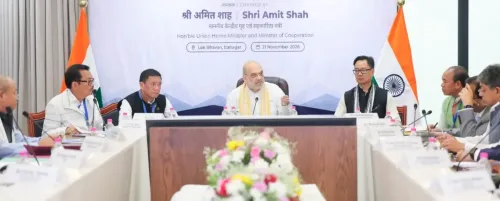
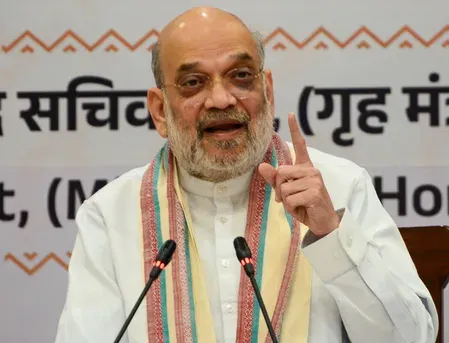
Union Home Minister Amit Shah on Sunday, 22 November said that residents of 40 villages in Arunachal Pradesh along the India-China border are returning to their native homes, crediting the turnaround to modern infrastructure delivered under the Centre's Vibrant Villages Programme (VVP). Shah made the remarks in Itanagar while launching four major development initiatives worth over ₹5,610 crore for the state.
Four Major Initiatives Launched
The development package unveiled by Shah spans education, power, roads, and border infrastructure. 'Mission Shikshit Arunachal — Phase II' carries an outlay of ₹1,500 crore, while both the Chief Minister's Comprehensive State Power Development Programme and the Chief Minister's Comprehensive State Rural Road Development Programme are each allocated ₹2,000 crore. Additionally, 199 projects worth ₹110.95 crore under the VVP are being taken up across 11 border districts of the state. Shah also launched Mission SURAKSHA as part of the initiative.
Border Villages as 'First Villages'
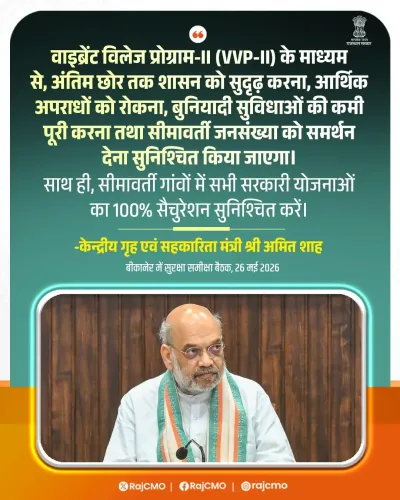
Shah stated that the Narendra Modi government has officially designated border villages as the country's 'first villages' — a symbolic and policy reversal of the long-held perception that frontier settlements are remote afterthoughts. He said the Centre is delivering healthcare, electricity, education, and drinking water to these villages as part of an all-round development drive.
'Development of border villages is the priority of the government. If villagers are economically and otherwise empowered, their lifestyle will change, and their happiness will increase,' Shah said at the event.
Army, ITBP and Cooperative Movement as Pillars
Shah highlighted the role of the Indian Army and the Indo-Tibetan Border Police (ITBP) in supporting border communities — particularly by purchasing locally grown agricultural produce, which he said is deepening emotional bonds between security forces and border villages. He also emphasised that the cooperative movement would be instrumental in making Arunachal Pradesh self-sufficient in milk, eggs, fish, and meat, economically empowering rural and border populations.
Shah assured residents that if milk production reaches sufficient levels, the National Dairy Development Board (NDDB) and Amul would purchase their output. He announced that an NDDB team would soon visit the state to assess possibilities for scaling up dairy activity. Women's self-help groups (SHGs), he added, would be central to expanding the cooperative sector and enabling women's economic empowerment.
Cooperative Conference and Vision Document 2047
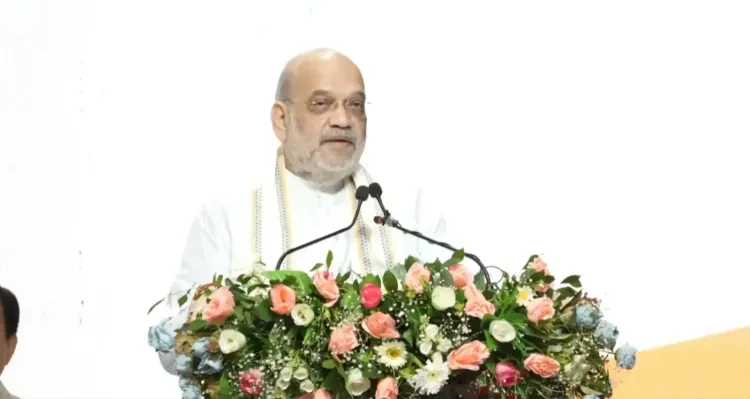
Earlier in the day, Shah inaugurated a Cooperative Conference at the Dorjee Khandu State Convention Centre in Itanagar, where he unveiled the Arunachal Pradesh Cooperation Vision Document 2047 and presented Cooperation Awards recognising contributions to the sector. He also inaugurated the 'Saras Mela' and flagged off a Mobile Medical Van. The events were framed around Prime Minister Modi's 'Sahkar Se Samriddhi' (Prosperity through Cooperation) vision.
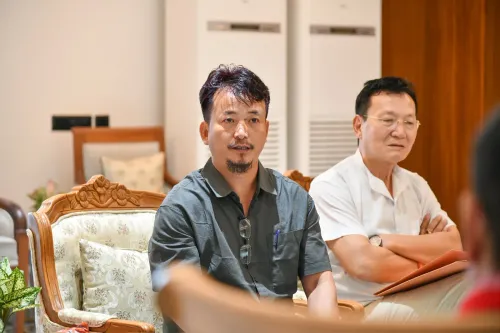
The gathering was attended by Chief Minister Pema Khandu, Union Minister Kiren Rijiju, Deputy Chief Minister Chowna Mein, state Home Minister Mama Natung, Agriculture Minister Gabriel Denwang Wangsu, Lok Sabha member Tapir Gao, Rajya Sabha member Tai Tagak, and senior officials from the Home and Cooperation Ministries.
Political Context and Comparative Funding Claims
Shah claimed that the Modi government has provided more than four times the funding for Arunachal Pradesh's development compared to the previous Congress-led government — a figure he offered without independent verification. This comes amid sustained geopolitical sensitivity along the India-China Line of Actual Control (LAC) in Arunachal Pradesh, a territory China claims as 'South Tibet'. The VVP's focus on populating and developing these frontier zones carries a clear strategic dimension beyond its welfare objectives.
With sectoral rollouts now underway across 11 border districts, the pace of on-ground delivery — particularly on the ₹2,000 crore road and power programmes — will determine whether the reverse migration trend Shah cited holds and broadens.
Point of View
Not just ministerial assertion. The deeper story here is that India is now using welfare infrastructure as a force-multiplier along the LAC, explicitly countering China's own well-documented border village construction programme in Tibet. Shah's framing of frontier settlements as 'first villages' rather than 'remote villages' is a deliberate rebranding with both political and security intent. Whether the ₹5,610 crore translates into lasting demographic change — or remains headline investment that stalls at procurement and tendering — will be the real measure of the VVP's strategic value.
NationPress
22 Nov 2026
Frequently Asked Questions
What is the Vibrant Villages Programme and how does it relate to the India-China border?
The Vibrant Villages Programme (VVP) is the Centre's flagship scheme to develop border villages with essential infrastructure including healthcare, electricity, education, and roads. In Arunachal Pradesh, it targets settlements along the Line of Actual Control with China, aiming to retain and attract residents to strategically sensitive frontier areas.
What development projects did Amit Shah launch in Arunachal Pradesh on 22 November?
Shah launched four initiatives worth over ₹5,610 crore: Mission Shikshit Arunachal — Phase II (₹1,500 crore), the Chief Minister's Comprehensive State Power Development Programme (₹2,000 crore), the Chief Minister's Comprehensive State Rural Road Development Programme (₹2,000 crore), and 199 VVP projects worth ₹110.95 crore across 11 border districts. Mission SURAKSHA was also launched.
Why are people returning to border villages in Arunachal Pradesh?
According to Home Minister Amit Shah, residents of 40 Arunachal Pradesh villages along the India-China border are returning due to improved facilities delivered under the Vibrant Villages Programme, including access to healthcare, electricity, clean water, and education — services that previously drove migration toward urban centres.
What role will NDDB and Amul play in Arunachal Pradesh?
Shah announced that the National Dairy Development Board (NDDB) will send a team to Arunachal Pradesh to explore opportunities for scaling up milk production. He assured residents that Amul will purchase their dairy output once production reaches sufficient levels, as part of a broader cooperative development push.
What is the Arunachal Pradesh Cooperation Vision Document 2047?
It is a long-term policy blueprint for the cooperative sector in Arunachal Pradesh, unveiled by Amit Shah at the Cooperative Conference in Itanagar on 22 November. It aligns with Prime Minister Modi's 'Sahkar Se Samriddhi' (Prosperity through Cooperation) framework and aims to make the state self-reliant in key agricultural produce through cooperative institutions and women's self-help groups.