CM Rekha Gupta Shares Modi's Call to Prioritise Skill Over Degree
Synopsis
Delhi CM Rekha Gupta shared a PM Modi quote on 22 November 2026 declaring that skill will soon be the most important currency in a fast-changing world, echoing India's long-running Skill India Mission and its push to rewire workforce priorities for a new economic era.
Key Takeaways
Delhi CM Rekha Gupta shared a PM Modi quote on 22 November 2026 emphasising skill as the defining asset of the future.
Modi's words: 'Time is changing fast… a future is coming when skill will be the most important thing of all.' The quote aligns with the Skill India Mission , launched in 2015 , which targeted training 400 million people in industry-relevant vocational skills.
Rapid automation and AI-driven economic shifts have sharpened the case for prioritising applied skills over traditional academic credentials.
As Delhi's Chief Minister, Rekha Gupta's amplification signals political and policy alignment between central and state-level skill agendas.
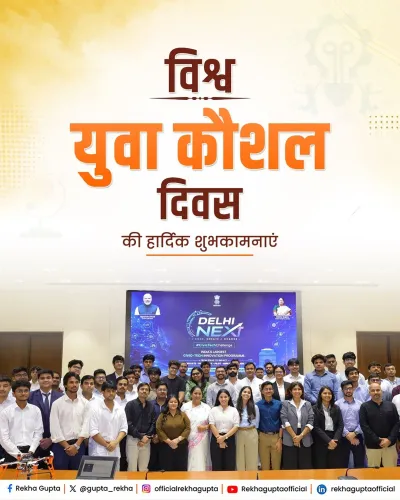
In a future where algorithms rewrite job descriptions overnight, one message is cutting through the noise: hunar — skill — will be the ultimate currency. Delhi Chief Minister Rekha Gupta amplified that message on Sunday, 22 November 2026, sharing a pointed quote attributed to Prime Minister Narendra Modi that frames vocational ability as the defining asset of the generation ahead.
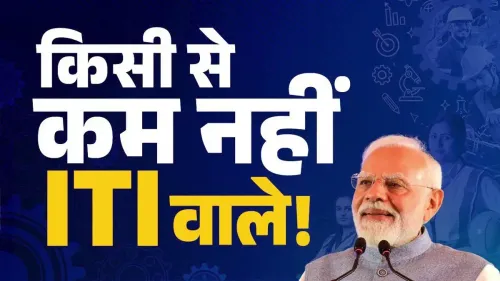
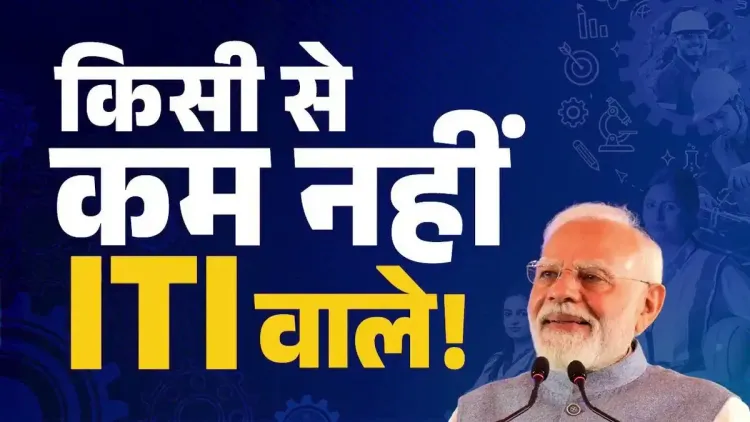
The quote, shared on X, reads: 'मेरी एक बात लिख लीजिए… वक्त तेजी से बदल रहा है…भविष्य ऐसा आने वाला है, जब हुनर की अहमियत सबसे महत्वपूर्ण होगी.' In English: 'Write this down… time is changing fast… a future is coming when skill will be the most important thing of all.' Three sentences. No caveats. The kind of line that lands in a stadium and echoes in a classroom.
Why 'Skill Over Credential' Is More Than a Slogan
India has heard this argument before — and it has been backed by policy muscle. The Skill India Mission, launched in 2015, set an ambitious target of training over 400 million people by 2022, funnelling resources into industry-aligned vocational programmes across manufacturing, IT, construction, and services. The goal was not just employment; it was a structural rewiring of how a young nation values learning. The mission's underlying bet: that a certified welder, a trained coder, or a credentialled healthcare worker carries more economic horsepower than a degree-holder with no applicable craft.
That bet looks sharper now than it did a decade ago. Rapid automation, the rise of artificial intelligence, and the gig economy's relentless expansion have all accelerated the premium on applied, adaptable skills. Traditional academic pipelines — long and expensive — are struggling to keep pace with the speed at which industries are reshaping themselves.
Delhi's Role in the Skill Push
Rekha Gupta, as Delhi's Chief Minister, governs a city that is both a major employment hub and a pressure cooker of youth aspiration. By amplifying the Prime Minister's framing, she signals alignment between the Centre's skill-first philosophy and Delhi's own priorities for workforce development. The capital's state-level implementation of vocational programmes — and how aggressively it draws on central schemes and budget allocations — will be the real test of whether the slogan translates into opportunity on the ground.
India's youth are watching. And in a labour market that rewards the adaptable, the CM's decision to put this message front and centre is itself a signal of where policy energy is heading.
The future, as Modi's words suggest, will not wait for the unprepared. The race to skill India's next generation is already underway — and the states that move fastest will shape who wins it.
Point of View
Rekha Gupta is doing something politically deliberate: anchoring Delhi's BJP administration to a central government priority with strong popular resonance among the city's large youth and migrant workforce. The move reinforces Centre-state ideological cohesion on education and employment ahead of any budget or policy cycle. It also reflects a broader BJP communication strategy of translating macro economic vision — skill-led growth, reduced credential dependency — into digestible personal appeals from regional leaders. The real policy watch, however, is whether Delhi's on-ground vocational infrastructure can match the rhetorical momentum.
NationPress
22 Nov 2026
Frequently Asked Questions
What did PM Modi say about skills and the future?
PM Modi stated that 'time is changing fast' and that a future is coming when skill — hunar — will be the most important thing of all, a quote shared by Delhi CM Rekha Gupta on 22 November 2026.
What is the Skill India Mission?
The Skill India Mission is a national programme launched in 2015 aimed at providing vocational and industry-relevant training to over 400 million Indians, with a focus on sectors like manufacturing, IT, and services.
Why did Delhi CM Rekha Gupta share this quote?
Rekha Gupta shared Modi's quote to signal alignment between Delhi's governance priorities and the Centre's skill-first development agenda, emphasising the importance of vocational ability in a rapidly changing economy.
How does skill development connect to India's economic future?
With automation, artificial intelligence, and the gig economy reshaping labour markets, applied and adaptable skills are increasingly more valuable to employers than traditional academic degrees, making vocational training a central pillar of India's employability strategy.
What is Delhi's role in India's skill development push?
As a major employment hub, Delhi's state-level implementation of vocational programmes and its use of central scheme funding are critical to translating the Skill India vision into tangible opportunities for the capital's youth workforce.