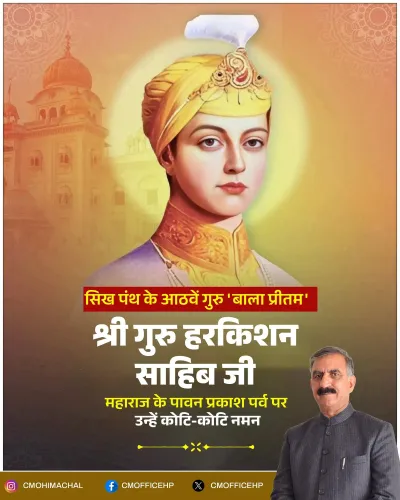
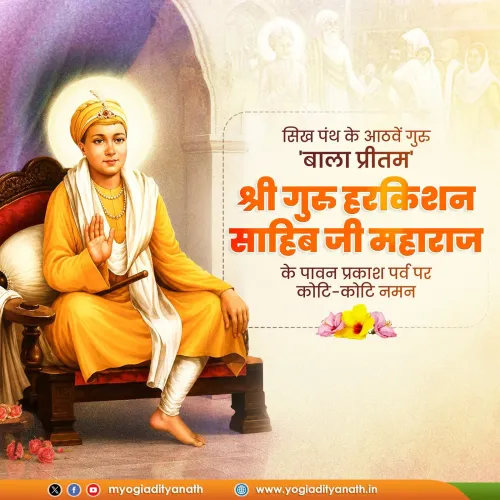
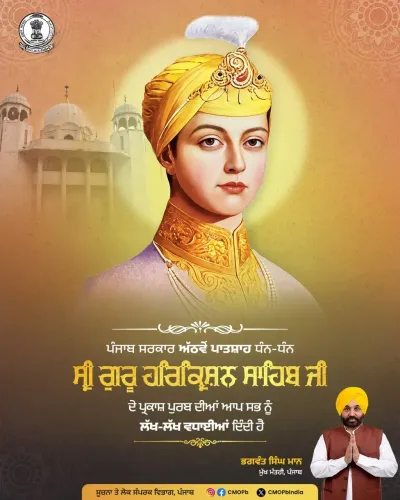
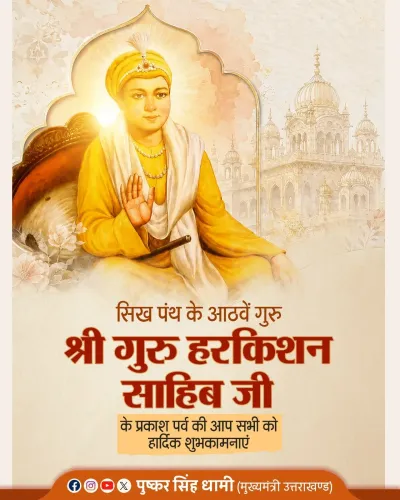
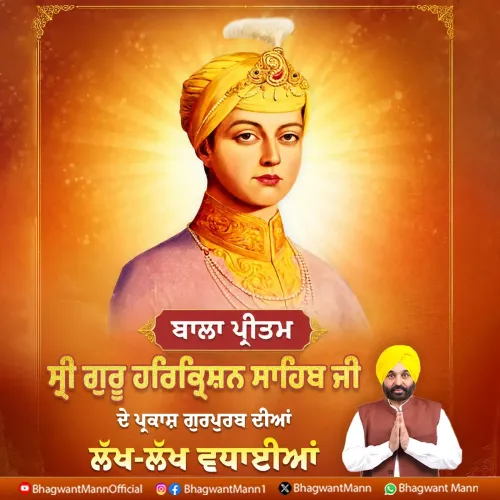
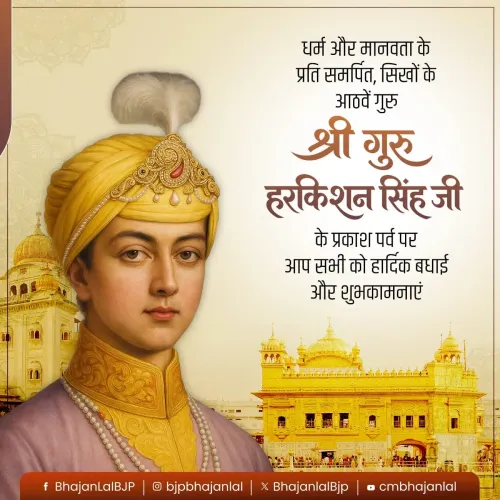
Amit Shah greets nation on Guru Harkrishan Sahib's Prakash Purab
Synopsis
Union Home Minister Amit Shah marked Guru Harkrishan Sahib Ji's Prakash Purab with a bilingual Hindi-Punjabi tribute, honouring the eighth Sikh Guru's selfless service during a Delhi epidemic and his timeless message that service to humanity is the highest religion.
Key Takeaways
Union Home Minister Amit Shah extended greetings on the Prakash Purab of Sri Guru Harkrishan Sahib Ji on August 7, 2026 .
Guru Harkrishan Sahib, born in 1656 , became the eighth Sikh Guru at age five — the youngest of the ten Gurus.
He is revered as 'Bala Pritam' (Beloved of the Young) and is remembered for nursing smallpox victims in Delhi before his passing in 1664 at age seven.
Shah's message, issued in both Hindi and Punjabi , highlighted the Guru's core teaching: 'manav seva hi sabse bada dharm hai' — service to humanity is the highest religion.
Gurdwara Bangla Sahib in New Delhi stands on the site associated with the Guru's service and is among the capital's most revered shrines.
A child-saint who served plague victims in Delhi before turning eight years old — Union Home Minister Amit Shah invoked that extraordinary legacy on Friday, August 7, 2026, extending heartfelt greetings to the nation on the Prakash Purab of Sri Guru Harkrishan Sahib Ji, the eighth Sikh Guru.
Writing in both Hindi and Punjabi, Shah described the Guru — revered as 'Bala Pritam' (Beloved of the Young) — as a beacon of 'knowledge, compassion and the spirit of seva who showed society the path of harmony.' He added that the Guru's teachings, rooted in selfless service to those afflicted by epidemic, carry the message that 'manav seva hi sabse bada dharm hai' — service to humanity is the highest religion.
'Bala Pritam': the child Guru who nursed a city
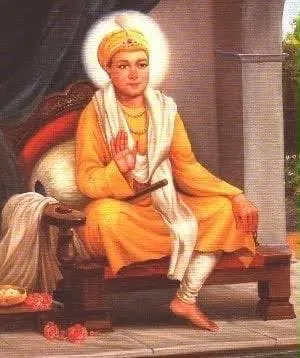
Guru Harkrishan Sahib Ji was born in 1656 and became the eighth Guru of the Sikhs at the age of just five. He is the youngest of the ten Sikh Gurus and the only one to have attained Guruship in early childhood — a fact that earned him the title Bala Pritam, the child beloved of the faithful. Despite his brief life, his tenure left a mark that centuries have not erased.
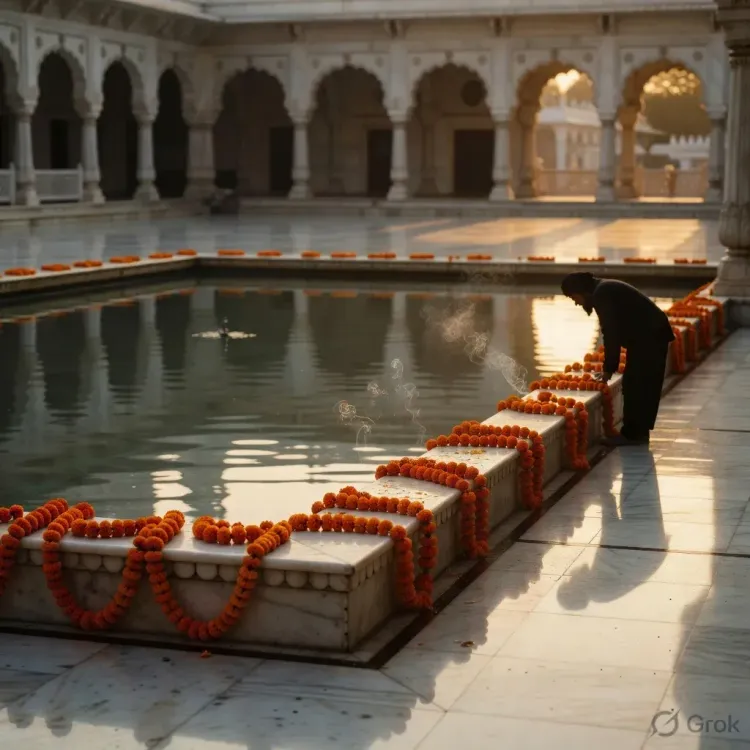
When a devastating smallpox epidemic swept through Delhi, the young Guru personally tended to the sick, drawing no distinction of caste or creed. He contracted the disease himself and passed away in 1664, aged barely seven — but not before establishing, in the Sikh tradition, the principle that the Langar of service must reach the most vulnerable first. The Gurdwara Bangla Sahib in New Delhi, one of the capital's most visited shrines, stands on the site where he served and passed, its sacred pool said to carry healing properties.
Prakash Purab and the tradition of political outreach
Prakash Purab — literally 'festival of light' — marks the birth anniversary of a Sikh Guru and is observed with prayers, kirtan, and community langar across gurdwaras worldwide. Indian political leaders across the spectrum routinely mark these occasions with public messages, acknowledging the Sikh community's foundational emphasis on equality, service, and collective welfare.
Shah's message, issued bilingual in Hindi and Punjabi, signals deliberate cultural reach — the Punjabi script addresses the community in its liturgical and everyday language, while the Hindi text broadens the message to a national audience.
On a day when gurdwaras from Amritsar to Delhi to diaspora centres across the world hold special congregations, the Home Minister's words anchor a centuries-old spiritual legacy to a contemporary call for public service — a reminder that the youngest Guru left behind the oldest lesson: when a city suffers, you go in, not away.
Point of View
Reinforcing the BJP's long-term cultural outreach strategy around religious anniversaries. The invocation of the Guru's epidemic-era selfless service carries a resonance that goes beyond ceremonial greetings, subtly aligning political messaging with the Sikh principle of 'sarbat da bhala' — welfare of all. Such Prakash Purab messages have become a standard tool of political communication in India, but the specific emphasis on humanitarian service and epidemic response gives this one a slightly sharper contemporary edge. It also reflects the broader pattern of the ruling dispensation framing governance and public service through the lens of religious and cultural heritage.
NationPress
21 Sept 2026
Frequently Asked Questions
What is Guru Harkrishan Sahib's Prakash Purab?
Prakash Purab is the birth anniversary celebration of a Sikh Guru. Guru Harkrishan Sahib Ji's Prakash Purab marks the birth of the eighth Sikh Guru, observed with prayers, kirtan, and community langar at gurdwaras worldwide.
Who was Guru Harkrishan Sahib Ji?
Guru Harkrishan Sahib Ji was the eighth of the ten Sikh Gurus, born in 1656 . He became Guru at age five — the youngest ever — and is known as 'Bala Pritam.' He passed away in 1664 after selflessly serving smallpox victims in Delhi.
Why is Guru Harkrishan called Bala Pritam?
'Bala Pritam' means 'Beloved of the Young' in Punjabi. The title was given to Guru Harkrishan because he attained Guruship in early childhood and was known for his gentle, compassionate nature even as a young child.
What did Amit Shah say about Guru Harkrishan Sahib?
Union Home Minister Amit Shah described Guru Harkrishan Sahib as a guide who showed society the path of harmony through knowledge, compassion, and seva. He highlighted the Guru's message that service to humanity is the highest religion, drawn from his selfless care of epidemic victims.
Where is Gurdwara Bangla Sahib located?
Gurdwara Bangla Sahib is located in New Delhi and is one of the most prominent Sikh shrines in the capital. It stands on the site where Guru Harkrishan Sahib Ji served smallpox patients and eventually passed away in 1664 .