CM Bhajan Lal backs 2-year Agniveer service extension
Synopsis
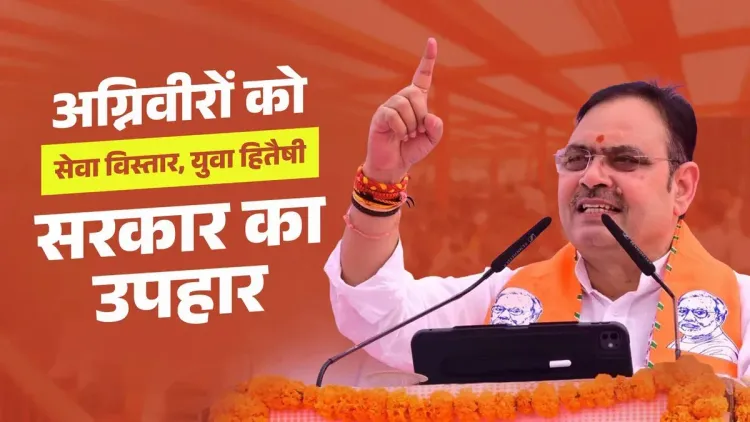
Rajasthan CM Bhajan Lal Sharma has praised PM Modi and the Union Cabinet for extending Agniveer service by two years, calling it a youth-friendly step and conveying thanks from the state's 80 million people.
Key Takeaways
The Union Cabinet approved an additional 2 years of national service for Agniveers, extending the original 4-year Agnipath contract.
Rajasthan CM Bhajan Lal Sharma praised the decision on November 5, 2026 , conveying gratitude from 80 million Rajasthanis .
The Agnipath scheme was originally launched in June 2022 with a 4-year term and 25 percent permanent retention.
The extension directly addresses criticism that a 4-year tenure was too short for meaningful military experience or post-service stability.
Rajasthan is among India's highest military-recruitment states, making the reform especially significant for the state's youth.
Formal gazette notification and new recruitment terms from the Ministry of Defence remain the key watch-points ahead.
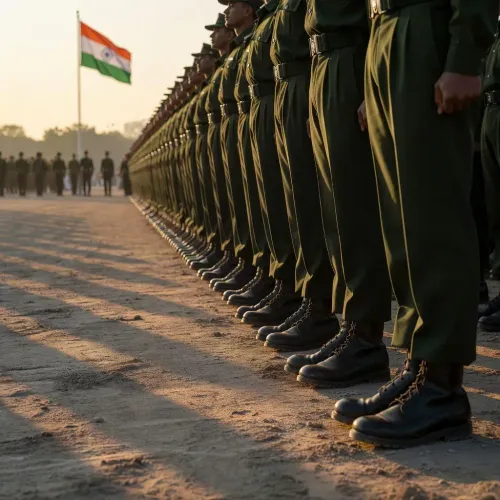
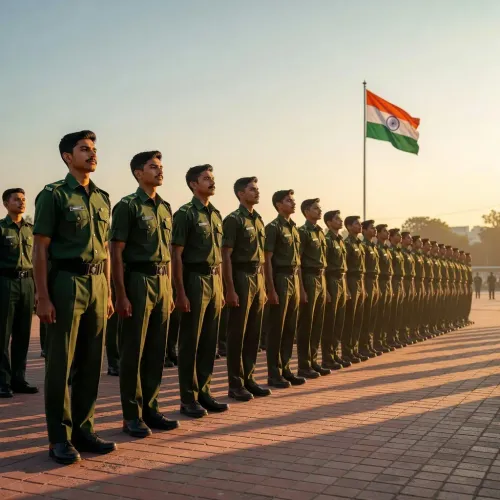
A quiet but consequential shift in India's military recruitment landscape moved into sharper focus on Thursday, November 5, 2026, when Rajasthan Chief Minister Bhajan Lal Sharma threw his weight behind a central government decision to grant Agniveers an additional two years of national service — extending their window in uniform beyond the original four-year contract introduced under the Agnipath scheme in 2022.
Posting on X in Hindi, CM Sharma called the decision 'yuvaon ke saamarthya, samarpan aur ujjwal bhavishy ko nayi disha dene wala kadam' — 'a step that gives new direction to the ability, dedication, and bright future of the youth.' He extended the gratitude and congratulations of 'Rajasthan ki 8 crore janta' — the state's 80 million people — to Prime Minister Narendra Modi and the Union Cabinet for what he described as an important and youth-friendly decision.
What the Agnipath scheme promised — and what changed
When PM Modi's government launched the Agnipath scheme in June 2022, it restructured military induction into a four-year contractual model: recruits, called Agniveers, would serve for four years, with 25 percent offered permanent absorption into the forces and the rest returning to civilian life with a lump-sum corpus and skill certificates. The announcement triggered protests in several states — including Rajasthan — with young aspirants arguing the terms left them in a precarious position after service ended.
The decision now endorsed by CM Sharma adds two more years to that service window, pushing the total tenure to six years for those who opt in. Proponents argue it deepens the Agniveers' operational experience and expands their employability after exit. Critics had long contended that four years was too short to build meaningful military expertise or secure a stable livelihood afterward — the extension is a direct answer to that criticism.
Rajasthan's stake in defence recruitment
Rajasthan has historically been one of India's largest contributors to the armed forces, with districts such as Sikar, Jhunjhunu, and Churu producing generations of soldiers. The state's young men — many from agrarian or semi-urban backgrounds — have viewed army recruitment as one of the most reliable pathways to economic stability. The Agnipath rollout in 2022 hit Rajasthan hard; CM Sharma's effusive endorsement of the extension signals that the BJP government in Jaipur sees it as a meaningful course correction that it can carry to voters.
The broader pattern here is worth noting: state-level BJP leaders have consistently amplified central defence reforms, but the Agnipath scheme was unusual in generating significant intra-constituency friction. A six-year window, if it also comes with clearer post-service pathways, could ease that tension considerably — both on the ground and at the ballot box.
What comes next for Agniveer recruitment
The immediate watch-point is the formal gazette notification from the Ministry of Defence laying out the revised terms — including whether the two-year extension is mandatory, optional, or merit-based, and how it interacts with the existing 25 percent permanent retention quota. Recruitment notifications for new Agniveer cohorts under the revised framework will be the next concrete marker of implementation. For the lakhs of young Rajasthanis eyeing the uniform, that notification cannot come soon enough.
Point of View
And Bhajan Lal Sharma's public endorsement is strategically timed — Rajasthan's dense soldier-family constituencies were among the loudest critics of the short tenure. By framing the extension as a gift to the state's 80 million people rather than a central policy correction, Sharma is simultaneously associating himself with a popular relief measure and reinforcing BJP's claim that it listens to its core demographic. The bigger question the extension leaves open is whether structural changes — clearer lateral-entry pipelines, improved post-service guarantees — will follow, or whether the additional two years is as far as the reform goes.
NationPress
5 Nov 2026
Frequently Asked Questions
What is the Agniveer 2-year extension decision?
The Union Cabinet approved giving Agniveers an additional two years of national service, extending their total tenure from the original four years under the Agnipath scheme to six years.
What is the Agnipath scheme?
The Agnipath scheme, launched in June 2022 , introduced a contractual military recruitment model where Agniveers serve for four years, with 25 percent offered permanent absorption into the armed forces.
Why did Rajasthan CM Bhajan Lal Sharma praise the Agniveer extension?
CM Sharma called it a youth-friendly decision that gives new direction to the ability and future of young people, conveying the gratitude of Rajasthan's 80 million residents to PM Modi and the Union Cabinet.
How does the Agniveer extension affect Rajasthan youth?
Rajasthan is one of India's largest contributors to the armed forces; the extended service window offers more time in uniform, deeper experience, and potentially better post-service prospects for young recruits from the state.
What comes next after the Agniveer service extension decision?
A formal gazette notification from the Ministry of Defence detailing the revised terms — including whether the extension is optional or mandatory and how it interacts with permanent retention — is the key next step.