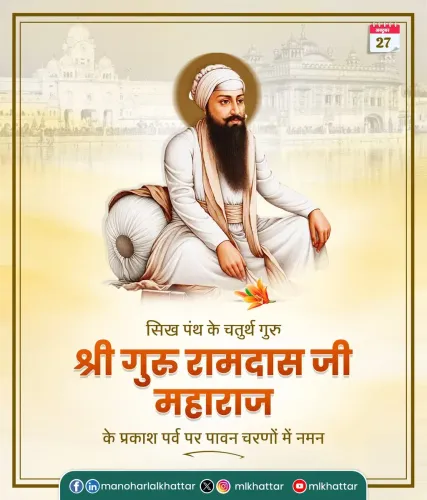
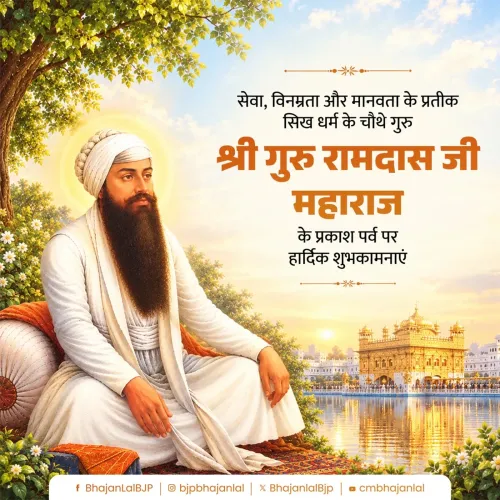
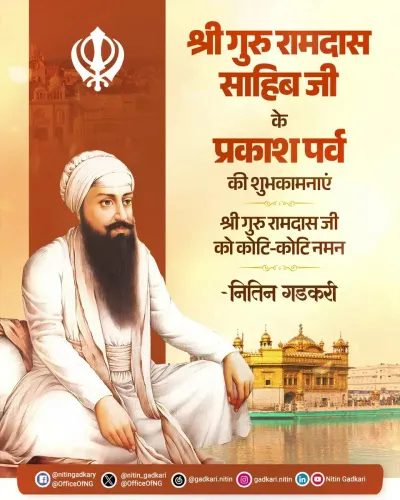
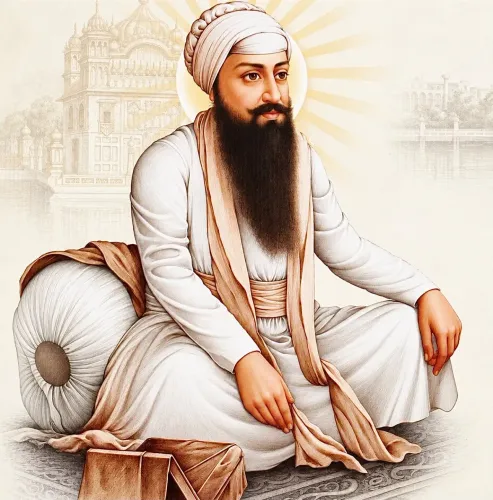
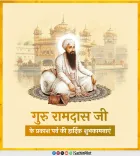
Amit Shah greets nation on Guru Ramdas Ji Prakash Purab

Synopsis
Union Home Minister Amit Shah marked the Prakash Purab of Guru Ramdas Ji, the fourth Sikh Guru, praising his founding of Amritsar and his message of selfless service and human unity, in a bilingual Hindi-Punjabi post on 27 October 2026.
Key Takeaways
Amit Shah extended national greetings on the Prakash Purab of the fourth Sikh Guru, Guru Ramdas Ji .
Guru Ramdas Ji ( 1534–1581 ) founded Amritsar , now home to the Harmandir Sahib, as a global centre of Sikh faith.
His hymns are enshrined in the Guru Granth Sahib , the eternal Sikh scripture.
Shah highlighted the Guru's core teaching that selfless service ( seva ) is the highest religion.
The post was published in both Hindi and Punjabi , reflecting the cross-community reach of the message.
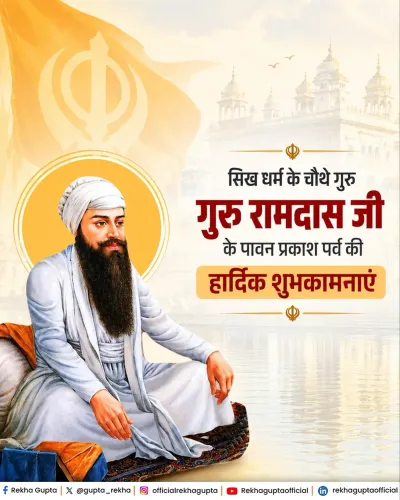
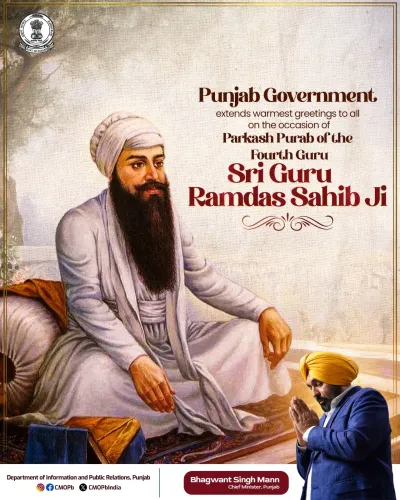
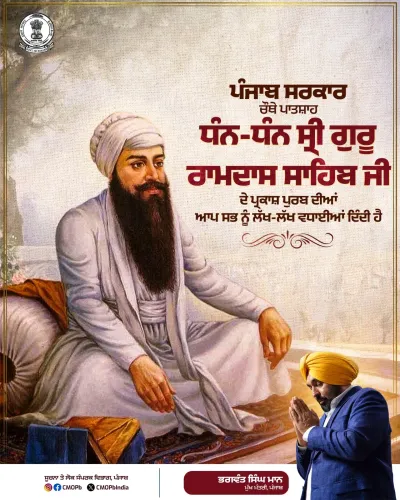
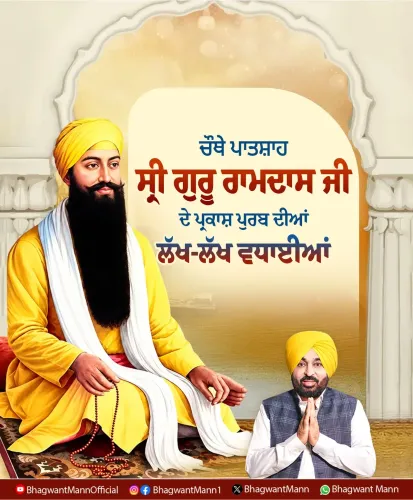
On the occasion of the Prakash Purab of Guru Ramdas Ji — the fourth Sikh Guru — Union Home Minister Amit Shah extended heartfelt greetings to every citizen of India, invoking the Guru's enduring legacy of selfless service and human unity.
Writing in both Hindi and Punjabi, Shah offered his tribute: 'sewa ko hi sabse bada dharm bataya' — 'he declared service itself to be the highest religion.' The bilingual post underscored the cross-community resonance that Guru Ramdas Ji's teachings continue to carry.
The Guru who gave the world Amritsar
Guru Ramdas Ji, born in 1534 and the fourth in the lineage of Sikh Gurus, founded the city of Amritsar — today among the most sacred sites in Sikhism and home to the Harmandir Sahib (the Golden Temple). Shah's post specifically highlighted this act of city-founding as a gift to humanity: a centre of faith that still broadcasts its message of seva (service) and samrasata (harmony) to the entire world.
Guru Ramdas Ji also composed hymns that were later enshrined in the Guru Granth Sahib, the eternal scripture of Sikhism. His philosophy — that discrimination must be transcended and all of humanity bound in a single thread of compassion — forms the bedrock of the Sikh social ethic that continues to animate langar halls and relief efforts across the globe.
Political leaders and the practice of Sikh observance
Senior Indian political figures routinely mark major Sikh religious occasions with public messages, a practice that reflects both the deep historical rootedness of Sikhism in the subcontinent and the significant Sikh electorate in states like Punjab, Haryana, and Delhi. Shah's post follows this established tradition, situating the tribute within a broader acknowledgement of India's religious plurality.
Similar official messages are expected to follow as the Sikh calendar moves toward Guru Nanak Prakash Purab, one of the most widely observed Sikh festivals of the year.
The Guru's words — and the golden city he built on the banks of a sacred pool — remain a living argument that devotion and service are not separate acts. That argument is as urgent today as it was in the sixteenth century.
Point of View
A practice that carries particular weight given the BJP's continuing outreach in Punjab and the diaspora. By anchoring the message in the founding of Amritsar, Shah situates the Guru's legacy not just as religious heritage but as nation-building history, a framing consistent with the ruling party's broader cultural-nationalist narrative. The post is ceremonial in register, yet it reinforces a pattern: senior Union ministers increasingly use religious observances as soft-power moments to project inclusivity across faith communities. With Guru Nanak Prakash Purab approaching, this tribute also sets the tone for what will be a more prominent national observance.
NationPress
27 Oct 2026
Frequently Asked Questions
Who was Guru Ramdas Ji?
Guru Ramdas Ji was the fourth Sikh Guru, born in 1534 and passing in 1581 . He is best known for founding the city of Amritsar and composing hymns included in the Guru Granth Sahib.
What is Prakash Purab?
Prakash Purab is the celebration of the birth anniversary of a Sikh Guru. The word prakash means 'light' or 'illumination', and the occasion marks the Guru's arrival as a light of divine wisdom.
Why did Amit Shah post about Guru Ramdas Ji?
Union Home Minister Amit Shah extended Prakash Purab greetings to mark the birth anniversary of Guru Ramdas Ji , the fourth Sikh Guru, as part of the standard practice of senior Indian leaders acknowledging major religious observances.
What is Guru Ramdas Ji's connection to Amritsar?
Guru Ramdas Ji laid the foundation of the city of Amritsar in Punjab, which later became the site of the Harmandir Sahib (Golden Temple), the holiest shrine in Sikhism.
What was Guru Ramdas Ji's key teaching?
Guru Ramdas Ji taught that seva — selfless service — is the highest form of religion, and that all of humanity must be united above discrimination and division.