Mahua Moitra Cites SC Affidavit on 16 Lakh WB Voter Deletions
Synopsis
TMC MP Mahua Moitra has cited an alleged ECI affidavit before the Supreme Court claiming over 16 lakh voter appeals filed through West Bengal CEO Manoj Agarwal's office were never placed before the Commission, with the voters subsequently deleted from electoral rolls.
Key Takeaways
16,10,311 appeals filed through West Bengal CEO Manoj Agarwal's office were allegedly 'not brought to the Commission,' per ECI's own Supreme Court affidavit as cited by Moitra.
The voters behind these appeals were allegedly already cleared by judicial officers before being arbitrarily deleted from electoral rolls.
The allegation implicates a procedural breakdown within the West Bengal CEO's office , not the Election Commission itself.
Under the Representation of the People Act, 1950 , deletions after successful appeals would constitute a serious procedural violation.
The Supreme Court of India is the active forum; the next hearing and any bench directions will determine whether deleted names are restored.
TMC MP Mahua Moitra says she has documentary proof and has shared it publicly alongside the post.
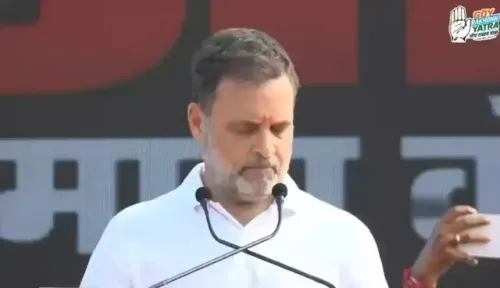
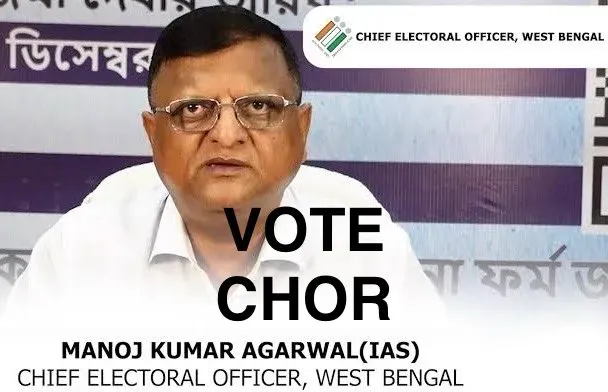
Over 16 lakh voter appeals filed through the office of West Bengal Chief Electoral Officer Manoj Agarwal were never placed before the Election Commission of India — and the voters behind them were deleted anyway. That is the explosive claim TMC MP Mahua Moitra made on Tuesday, October 27, 2026, citing what she says is an ECI affidavit filed before the Supreme Court of India.
Moitra's post states that the ECI's own affidavit before the apex court acknowledges 16,10,311 appeals submitted through the CEO's office 'were not brought to the Commission.' She alleges these voters had already been cleared by judicial officers, only to be 'arbitrarily deleted' by the CEO's office — a charge she punctuates by labelling Agarwal a 'VOTE CHOR' (vote thief) and attaching what she describes as documentary proof.What the Alleged Affidavit Reveals
Under the Representation of the People Act, 1950, the preparation and revision of electoral rolls must follow a structured process: claims and objections are heard, appeals are processed, and only then can deletions be effected. If the ECI's own affidavit concedes that over 1.6 million appeals were submitted but never escalated internally, that would represent a significant procedural breakdown — one occurring within the bureaucratic chain below the Commission itself, not above it.
The distinction matters legally. Voters whose appeals were adjudicated by judicial or administrative officers and upheld cannot ordinarily be deleted without further due process. Moitra's central allegation is that this protection was bypassed inside the West Bengal CEO's office.
A Pattern Playing Out in West Bengal
West Bengal has been a recurring flashpoint in India's electoral-roll disputes. Opposition parties — including the TMC itself and national parties — have periodically accused state CEOs of both wrongful inclusions and wrongful deletions, with the disputes intensifying in the run-up to assembly and parliamentary cycles. The Supreme Court has intervened in electoral-roll matters before, issuing directions to the ECI and state authorities on restoration of deleted names and procedural compliance.
In this context, Moitra's decision to anchor her allegation in a court-filed affidavit — rather than a political press conference — is a deliberate legal and optics move. An admission in a sworn document before the apex court carries a different weight than a partisan claim; it becomes the subject of judicial scrutiny, cross-examination, and potential directions for remedial action.
What the Supreme Court Decides Next
The immediate watch point is the next hearing in the Supreme Court on this affidavit and what directions, if any, the bench issues to the ECI or to Manoj Agarwal's office regarding restoration of the deleted voters. A court order mandating reinstatement of over 16 lakh names on the electoral roll would be extraordinary; even a direction to 'show cause' would keep the pressure alive. The ECI and the West Bengal CEO's office have not, as of this report, issued a public response to Moitra's specific characterisation of the affidavit.
For 1.6 million voters whose names may have been erased without their appeals being heard, the answer will come not on social media — but in court.
Point of View
If accepted by the court, would represent one of the largest documented instances of procedural failure in India's electoral-roll management. West Bengal has long been a state where electoral-roll manipulation is alleged by multiple political actors; the pattern now has potential apex-court scrutiny. The broader implication is a test of whether the Election Commission's internal control mechanisms over state CEOs are functioning — a structural governance question with implications well beyond one state.
NationPress
27 Oct 2026
Frequently Asked Questions
What did the ECI affidavit in the Supreme Court say about West Bengal voters?
According to TMC MP Mahua Moitra's post, the ECI's affidavit before the Supreme Court acknowledges that 16,10,311 voter appeals filed through the West Bengal CEO's office were 'not brought to the Commission' before the voters were deleted from the electoral roll.
Who is Manoj Agarwal and what is his role?
Manoj Agarwal is the Chief Electoral Officer (CEO) of West Bengal , the state-level authority responsible for maintaining and revising electoral rolls under the Election Commission of India.
Is it legal to delete voters whose appeals have been cleared by judicial officers?
Under the Representation of the People Act, 1950 , voters who have had appeals decided in their favour by judicial or administrative officers have a protected status; deleting them without further due process would constitute a serious procedural violation.
What action can the Supreme Court take in electoral roll deletion cases?
The Supreme Court can issue directions to the ECI or state CEOs to restore deleted names, demand explanations ('show cause'), or appoint oversight mechanisms; its orders on electoral-roll matters are binding on all election authorities.
Has West Bengal had voter deletion controversies before?
Yes. West Bengal has been a recurring site of electoral-roll disputes, with multiple parties alleging both wrongful inclusions and wrongful deletions during roll revisions, particularly ahead of assembly and parliamentary election cycles.