Amit Shah hands 932 appointment letters to Arunachal police recruits in Banderdewa
Synopsis
Home Minister Amit Shah flew to Banderdewa on Saturday to hand appointment letters to 932 Arunachal Pradesh police and security recruits in person — and went a step further, bestowing the President's Police Colour on the state force in the same ceremony. The twin moves signal unmistakable Central attention to India's most strategically exposed northeastern frontier.
Key Takeaways
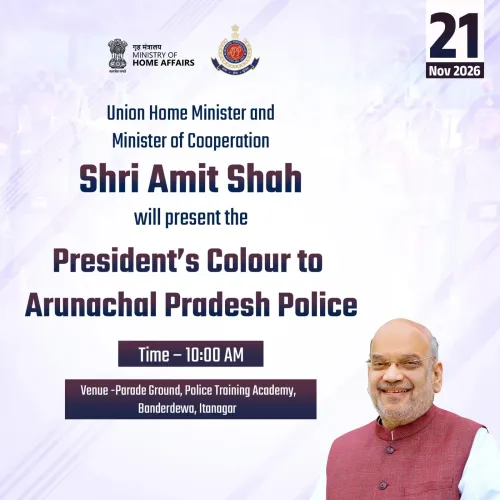
Amit Shah distributed appointment letters to 932 recruits at the Police Training Academy, Banderdewa on 21 November 2026 .
Recruitment covers six categories : 14 IRBn Band Constables, 235 IRBn Constables, 157 female Civil Police Constables, 211 male Civil Police Constables, 72 firemen, and 243 STPF personnel.
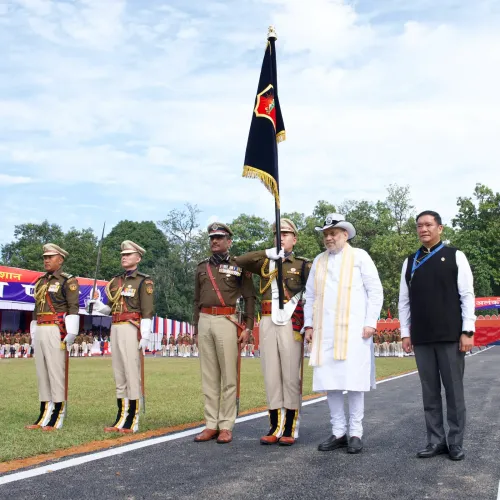
Shah also conferred the President's Police Colour — India's highest police honour — on the Arunachal Pradesh Police .
Chief Minister Pema Khandu and Deputy Chief Minister Chowna Mein both publicly thanked Shah via social media posts.
The ceremony reflects the Centre's strategic focus on bolstering law enforcement in a state bordering China and Myanmar .
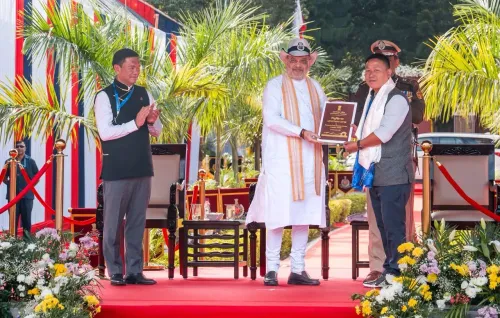
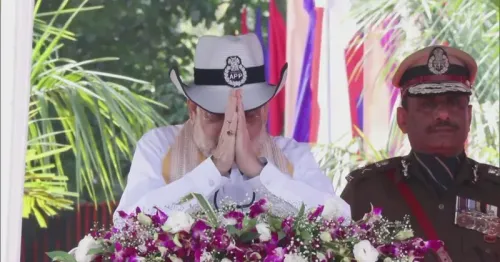
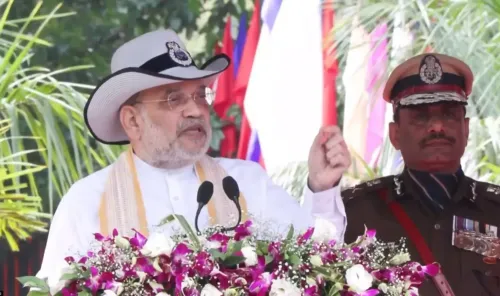
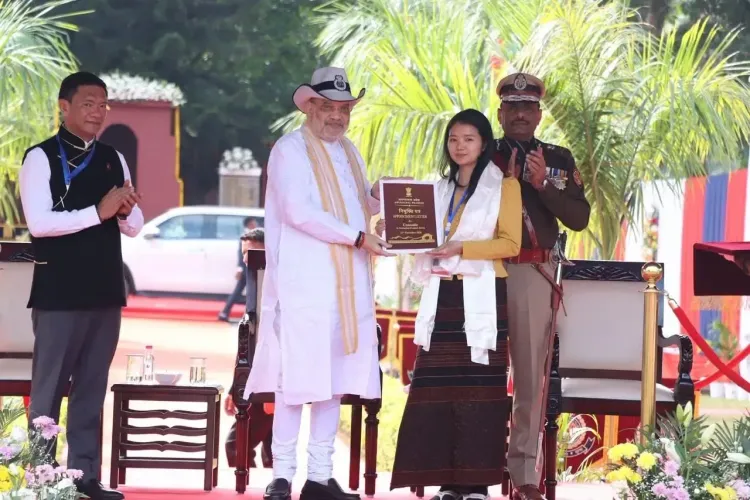
Union Home Minister Amit Shah on Saturday, 21 November 2026, personally distributed appointment letters to 932 newly recruited personnel of the Arunachal Pradesh Police and allied departments at a ceremony held at the Police Training Academy, Banderdewa, near Itanagar. The event marks one of the largest single-day recruitment drives in the northeastern state's security establishment in recent memory.
Who Was Recruited and in What Categories
Chief Minister Pema Khandu, who congratulated all 932 newly appointed personnel, confirmed the recruitments span six categories. These include 14 Constable Band personnel of the Indian Reserve Battalion (IRBn) of Arunachal Rifles, 235 IRBn constables, 157 female constables in the Civil Police, 211 male constables in the Civil Police, 72 firemen, and 243 personnel of the Special Tiger Protection Force (STPF).
President's Police Colour: A Historic Honour for Arunachal Police
Ahead of the distribution of appointment letters, Home Minister Shah presented the President's Police Colour to the Arunachal Pradesh Police — the highest honour a police force in India can receive — in recognition of its distinguished service and achievements. The dual significance of the occasion, combining a mass recruitment with this prestigious decoration, underscores the Centre's focus on strengthening law enforcement in the strategically sensitive northeastern frontier state.
What Leaders Said
Chief Minister Khandu, in a social media post, expressed gratitude to the Home Minister for personally attending the ceremony. 'We are grateful to the Hon'ble Union Home Minister, Shri Amit Shah Ji, for his gracious presence at the Police Training Academy, Banderdewa, and for personally handing over the appointment letters to the newly recruited personnel,' Khandu wrote, adding, 'Wishing all the newly appointed personnel a bright future and a successful career in service to Arunachal Pradesh.'
Deputy Chief Minister Chowna Mein, also posting separately on social media, described the recruitment as a significant step toward fortifying state security while creating fresh employment avenues for the youth of Arunachal Pradesh. 'This marks an important step towards strengthening our police and security forces and creating new opportunities for the youth of Arunachal Pradesh,' Mein said, adding his gratitude to Shah for gracing the occasion.
State Home and Inter-State Border Affairs Minister Mama Natung expressed confidence that the new responsibilities would inspire each recruit to serve with courage, discipline, and integrity. Director General of Police Rajesh Kumar was also present at the ceremony.
Why This Matters for Arunachal Pradesh
Arunachal Pradesh shares sensitive borders with China and Myanmar, making a well-staffed and trained police and paramilitary force a strategic priority. The inclusion of 243 STPF personnel also reflects ongoing efforts to protect the state's biodiversity corridors — particularly tiger reserves — from poaching and encroachment. Notably, the significant induction of 157 female constables into the Civil Police signals a push toward greater gender representation within the state's security apparatus.
This comes amid broader Central government efforts to modernise and expand policing capacity in India's northeastern states, with similar recruitment drives held in Manipur and Nagaland over the past year. The presence of a senior Union minister at a state-level recruitment ceremony also carries a political dimension, reinforcing the Bharatiya Janata Party (BJP)-led Centre's visible footprint in the region ahead of future electoral cycles.
What Happens Next
The newly appointed personnel are expected to undergo structured induction training at the Police Training Academy, Banderdewa before formal deployment. Officials have indicated that the recruits will be distributed across the state's police districts, fire stations, and wildlife protection units. How quickly the STPF personnel can be deployed to critical wildlife corridors will be closely watched by conservation authorities.
Point of View
Not mere protocol — the Centre is visibly invested in Arunachal Pradesh, a state whose border sensitivity with China makes every security investment carry strategic weight beyond its numbers. The conferral of the President's Police Colour on the same occasion amplifies that message further. What mainstream coverage underplays is the STPF component: deploying 243 personnel to protect tiger corridors in a state where human-wildlife conflict and poaching pressure are rising is as much an ecological imperative as a law-enforcement one. The inclusion of 157 female constables also deserves scrutiny — whether this translates into leadership pipelines or remains a headline statistic will determine its real impact on the force's gender profile.
NationPress
21 Nov 2026
Frequently Asked Questions
How many personnel received appointment letters from Amit Shah in Arunachal Pradesh?
Union Home Minister Amit Shah distributed appointment letters to 932 newly recruited personnel at the Police Training Academy, Banderdewa, near Itanagar, on 21 November 2026. The recruits span six categories across the police, fire services, and wildlife protection departments.
What is the President's Police Colour and why was it awarded to Arunachal Pradesh Police?
The President's Police Colour is the highest honour bestowed upon a police force in India, awarded in recognition of distinguished service and achievements. Home Minister Shah presented it to the Arunachal Pradesh Police at the same Banderdewa ceremony, before the distribution of appointment letters.
Which categories of posts were filled in the Arunachal Pradesh recruitment drive?
The 932 recruits cover six categories: 14 IRBn Constable Band personnel of the Arunachal Rifles, 235 IRBn Constables, 157 female Civil Police Constables, 211 male Civil Police Constables, 72 firemen, and 243 Special Tiger Protection Force (STPF) personnel.
What is the Special Tiger Protection Force recruited in Arunachal Pradesh?
The Special Tiger Protection Force (STPF) is a dedicated unit tasked with protecting tiger reserves and wildlife corridors from poaching and encroachment. With 243 new personnel inducted, it forms the single largest category in this Arunachal Pradesh recruitment drive.
Who else attended the appointment ceremony at Banderdewa?
Deputy Chief Minister Chowna Mein, State Home and Inter-State Border Affairs Minister Mama Natung, and Director General of Police Rajesh Kumar were among the officials present alongside Chief Minister Pema Khandu and Home Minister Amit Shah at the Police Training Academy, Banderdewa.