Amit Shah launches Gramin Gyan Setu, links 63 rural libraries with 2.8 lakh books
Synopsis
Amit Shah's Gramin Gyan Setu isn't just a library scheme — it is a constituency-level model for rural knowledge access that could be replicated nationally. With 63 village libraries, 2.8 lakh books, mobile vans, and a digital app already connecting 752 libraries in three months, the project signals a shift from physical infrastructure to networked access as the new benchmark for rural education outreach.
Key Takeaways
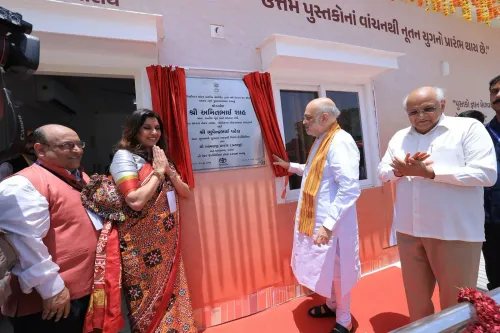
Amit Shah virtually launched Gramin Gyan Setu on 12 August 2025 , National Library Day, in the Gandhinagar Lok Sabha constituency .
63 rural libraries across Gandhinagar, Kalol and Sanand are now linked to four central libraries with a combined 2.8 lakh books .
Each village library has been stocked with 4,500–6,000 books ; four mobile library vans will serve villages every 15 days .
752 libraries were connected to the digital application within three months of the project's development.
Gujarat has earmarked ₹100 crore for a Namo Central Library in Gandhinagar; Bhagwan Birsa Munda Libraries to be set up in 15 tribal talukas this year.
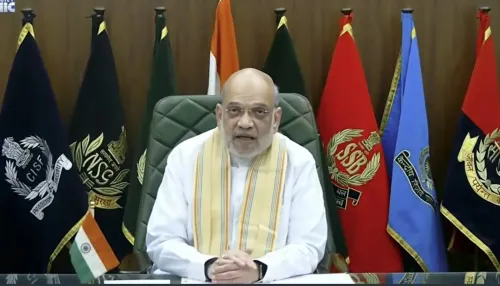
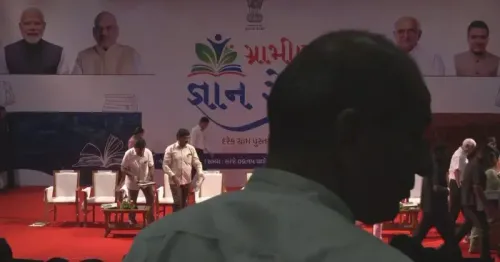
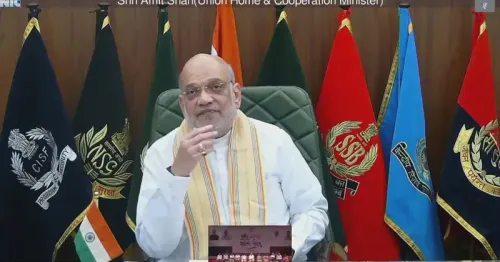
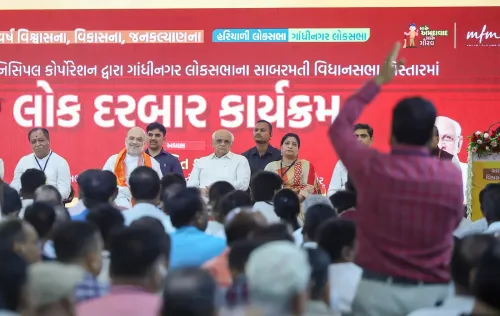
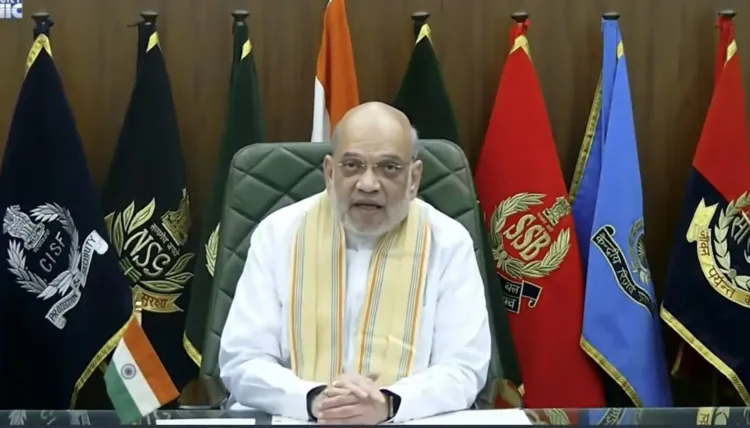
Union Home and Cooperation Minister Amit Shah on 12 August 2025 virtually launched the 'Gramin Gyan Setu' project in the Gandhinagar Lok Sabha constituency, connecting 63 rural libraries across Gandhinagar, Kalol and Sanand with four central libraries holding a combined 2.8 lakh books. The initiative, rolled out on National Library Day, aims to bring reading resources and knowledge infrastructure directly to villages through a digital network and mobile library vans.
How the Network Works
Each village library under the project has been stocked with 4,500 to 6,000 books, covering children's literature — including titles such as Aladdin's Magic Lamp and Sindbad's Adventures — alongside books on the history of Gujarat and India, the 1857 freedom struggle, and competitive examination material for state and Central government recruitments.
Four mobile library vans, funded through the Member of Parliament grant, will visit villages every 15 days. The vans will collect returned books and deliver new titles ordered through a dedicated digital application, enabling rural readers to access a far wider catalogue without travelling to central libraries.
Digital Backbone and Institutional Linkages
According to Shah, approximately 752 libraries were connected to the digital application within three months of the project's development. Work is also under way to digitally integrate literature from institutions including Sastu Sahitya Mandal, Gita Press, the Bhupen Hazarika Institute, and Thiruvalluvar Sansthan.
Shah thanked Gujarat Chief Minister Bhupendra Patel and the state government for their cooperation in building the system. He also stressed that creating a reading-friendly environment in schools and villages, supported by trained librarians, was essential for developing 'responsible and capable citizens.' Recalling his own background, Shah noted that the reading habit he had developed in childhood later helped him in his studies and public service.
What the Gujarat Government Said
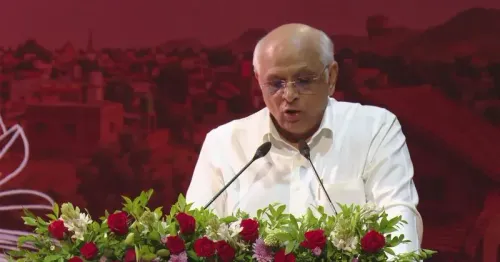
Chief Minister Bhupendra Patel, speaking at Town Hall in Gandhinagar on the occasion, described the initiative as a bridge between villages and cities, readers and libraries, and traditional collections and the digital age. He said the true measure of a library was the readers it attracted, not the grandeur of its building.
Patel announced that the state government had earmarked ₹100 crore for establishing a state-of-the-art 'Namo Central Library' in Gandhinagar. He also said the government had resolved to establish Bhagwan Birsa Munda Libraries in 15 talukas of tribal areas this year, as part of a broader plan to cover all talukas in tribal regions.
Broader Policy Context
Patel linked the project to Prime Minister Narendra Modi's emphasis on knowledge power through education, skills, research, and innovation, as well as the Centre's Digital India mission and the digitisation drive under the National Mission on Libraries. He framed the initiative within Gujarat's stated vision of 'Viksit Gujarat to Viksit Bharat', arguing that the state's human capital was central to that ambition.
With 752 libraries already connected and institutional content integration in progress, the next phase of Gramin Gyan Setu will test whether digital access alone can translate into sustained reading habits in rural Gujarat.
Point of View
At its core, a constituency-level scheme launched by a sitting MP and minister — a detail that mainstream coverage tends to gloss over. The political optics are unmistakable, but the operational design is genuinely interesting: tying mobile delivery to a digital app, and connecting 752 libraries in three months, suggests real administrative momentum rather than a ribbon-cutting exercise. The harder question is whether the reading habit infrastructure — librarian training, content relevance, consistent van schedules — will be maintained after the launch spotlight fades. India has a long history of well-announced library schemes that quietly stagnate once political attention moves on.
NationPress
27 Sept 2026
Frequently Asked Questions
What is Gramin Gyan Setu?
Gramin Gyan Setu is a digital rural library network launched on 12 August 2025 in the Gandhinagar Lok Sabha constituency by Union Home Minister Amit Shah. It connects 63 village libraries in Gandhinagar, Kalol and Sanand with four central libraries holding a combined 2.8 lakh books, supported by a digital application and mobile library vans.
How many books are available under Gramin Gyan Setu?
The four central libraries linked to the network hold a combined 2.8 lakh books. Individual village libraries have each been stocked with 4,500 to 6,000 books, covering children's literature, Indian history, the 1857 freedom struggle, and competitive examination material.
How will mobile library vans work under the scheme?
Four mobile library vans, funded through the Member of Parliament grant, will visit villages every 15 days. They will collect returned books and deliver new titles ordered by readers through the Gramin Gyan Setu digital application, removing the need for rural readers to travel to central libraries.
What is the Namo Central Library announced by Gujarat CM Bhupendra Patel?
Chief Minister Bhupendra Patel announced that the Gujarat government has earmarked ₹100 crore for a state-of-the-art Namo Central Library to be established in Gandhinagar. The announcement was made at the same National Library Day event where Gramin Gyan Setu was launched.
Who are the key beneficiaries of Gramin Gyan Setu?
The primary beneficiaries are children, young people, and competitive examination aspirants in rural areas of Gandhinagar, Kalol and Sanand. The scheme also targets tribal communities through a parallel plan to establish Bhagwan Birsa Munda Libraries in 15 talukas of tribal areas this year.