Amit Shah: NDA Governs 80% of India's Land, 76% of Population
Synopsis
Union Home Minister Amit Shah claimed on June 11, 2026, that the NDA under PM Modi governs 80% of India's land and 76% of its population, framing the coalition's state-level expansion as a mandate for good governance and development.
Key Takeaways
Amit Shah posted on June 11, 2026 , claiming the NDA governs 80% of India's land area and 76% of its population.
The claim reflects the NDA's sustained expansion across state governments since 2014 .
Shah framed the coalition's reach as an advancement of 'sushasan' (good governance) and development politics under PM Narendra Modi .
The NDA was originally formed in 1998 and returned to national power in 2014 with a Lok Sabha majority.
State assembly elections through 2027 will determine whether the NDA maintains or extends its current footprint.
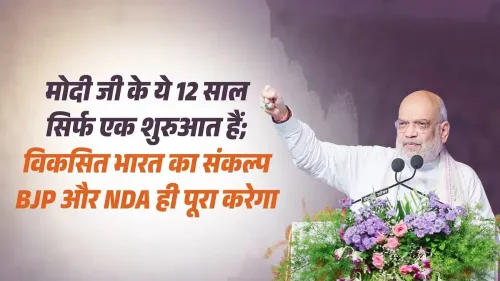
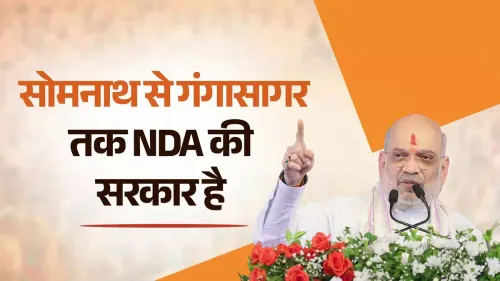
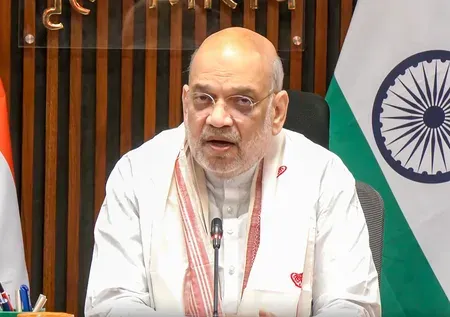
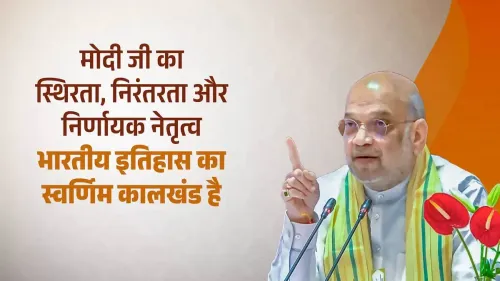
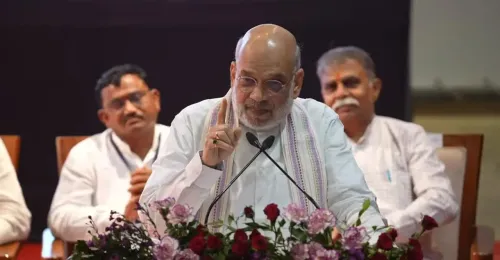
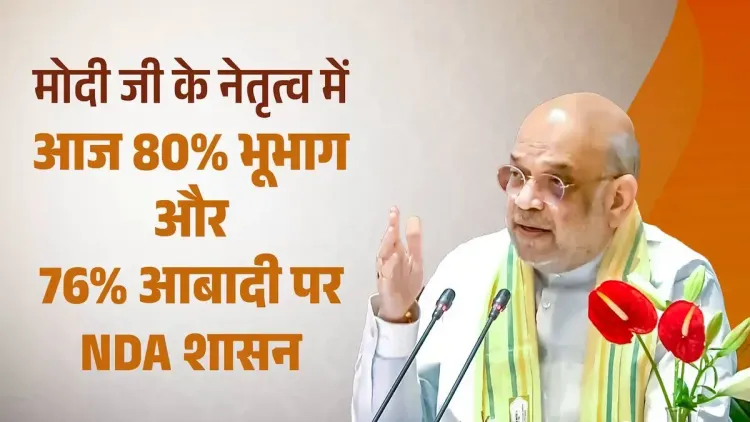
Union Home Minister Amit Shah on Thursday, June 11, 2026, stated that the National Democratic Alliance (NDA), under the leadership of Prime Minister Narendra Modi, now represents governance over 80 per cent of India's land area and 76 per cent of its population, advancing what he described as a politics of good governance and development.
Posting on X, Shah wrote: 'Modi ji ke netritva mein aaj NDA 80% bhubhag aur 76% aabadi ka pratinidhitva karte hue sushasan aur vikas ki rajneeti ko aage badha raha hai' — translated: 'Under Modi ji's leadership, today the NDA, representing 80% of the land area and 76% of the population, is advancing the politics of good governance and development.'
Context
The claim underscores the NDA's sustained electoral expansion across Indian states since 2014, when the coalition first secured a Lok Sabha majority under Narendra Modi. Over successive assembly elections, the BJP-led alliance has extended its footprint from the Union government to a majority of state governments. This geographic and demographic reach has become a central talking point for the coalition as it frames its governance record ahead of upcoming state elections.
Policy Backdrop
The NDA, originally constituted in 1998 under former Prime Minister Atal Bihari Vajpayee, re-emerged as the dominant national force after the 2014 general elections. The coalition's expansion at the state level has enabled coordinated rollout of centrally sponsored welfare and infrastructure schemes across a larger share of India's territory. This alignment between Union and state governments has been cited by BJP leaders as a structural advantage for policy delivery.
Amit Shah, as the BJP's principal strategist and former national president, has been a key architect of the party's state-level electoral campaigns. His role as Union Home Minister and Minister of Cooperation also places him at the centre of Centre-state coordination on governance and security matters.
Stakeholders and Impact
The figures cited by Shah — if accurate — would mean that residents across a substantial majority of India's states live under NDA-aligned administrations, giving the coalition significant influence over the implementation of both central and state welfare programmes. For the Indian electorate, this concentration of political power raises questions around both the effectiveness of coordinated governance and the health of federal pluralism. Opposition parties are likely to contest the framing, arguing that electoral dominance does not automatically translate to equitable development outcomes.
What's Next
Several state assembly elections are scheduled through 2027, and the NDA's ability to maintain or expand its current footprint will be closely watched. The rollout of centrally sponsored schemes in newly aligned states will also serve as a practical test of the 'sushasan' (good governance) narrative that Shah has invoked. How opposition coalitions respond to this framing is expected to shape the political discourse heading into the next electoral cycle.
Point of View
Converting electoral arithmetic into a legitimacy argument. By anchoring the claim to 'sushasan' and 'vikas', Shah connects state-level electoral wins to a broader policy delivery narrative — a framing the BJP has used consistently since 2014. The figures, whether or not independently verifiable, serve as a signal to coalition partners and fence-sitting states about the cost of staying outside the NDA umbrella. This kind of periodic scoreboard communication is characteristic of Shah's strategic communication style, reinforcing dominance without requiring a specific policy trigger.
NationPress
20 Sept 2026
Frequently Asked Questions
How much of India does the NDA govern in 2026?
According to Union Home Minister Amit Shah's post on June 11, 2026, the NDA governs 80% of India's land area and 76% of its population, though these figures have not been independently verified.
What is the NDA coalition in India?
The National Democratic Alliance (NDA) is a centre-right political coalition led by the Bharatiya Janata Party (BJP). It first formed the Union government in 1998 under Atal Bihari Vajpayee and has governed at the national level since 2014 under Narendra Modi.
What did Amit Shah say about NDA governance in June 2026?
Amit Shah stated on X that the NDA, under PM Modi's leadership, represents 80% of India's land area and 76% of its population, and is advancing a politics of good governance and development.
How has the NDA expanded its presence across Indian states?
Since 2014, the BJP-led NDA has won successive state assembly elections, extending its governance from the Union level to a majority of state governments, enabling coordinated implementation of central welfare and infrastructure schemes.
What is 'sushasan' as used by BJP leaders?
'Sushasan' is a Hindi term meaning good governance. BJP leaders, including Amit Shah and PM Modi, frequently use it to describe their governance philosophy, emphasising efficient public service delivery, development, and welfare programme implementation.