Amit Shah Contrasts NDA and Congress Growth in Modi Tenure Post
Synopsis
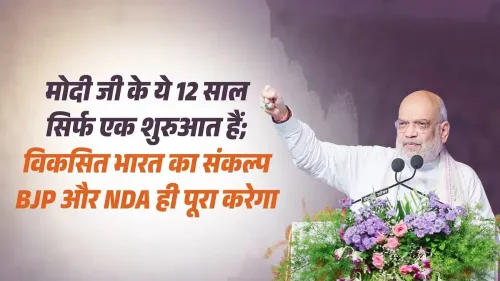
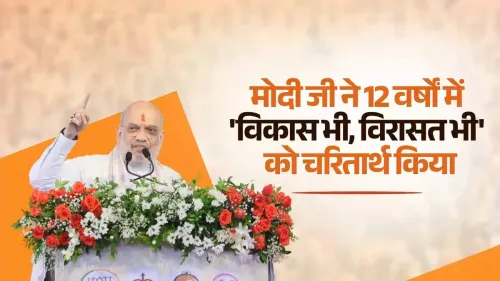
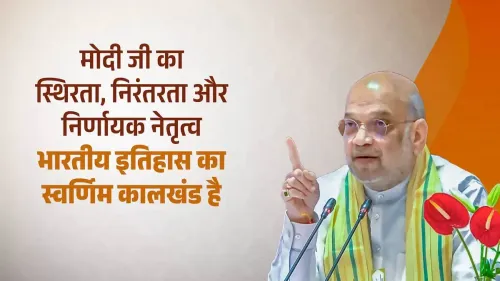
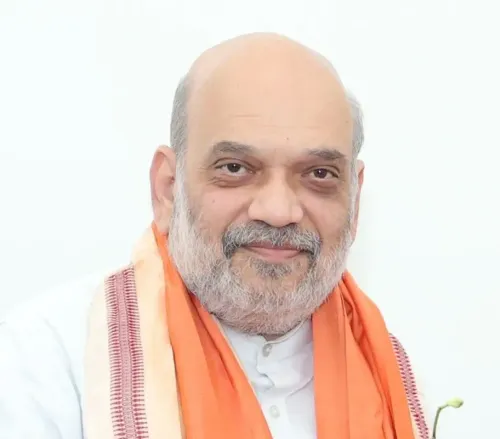
Union Home Minister Amit Shah on June 10, 2026, quoted PM Narendra Modi to argue that NDA accomplished in 12 years what Congress could not deliver over decades, tagging the post with #LongestServingElectedPMModi as BJP sharpens its incumbency narrative ahead of upcoming state elections.
Key Takeaways
Union Home Minister Amit Shah posted on June 10, 2026 , quoting PM Narendra Modi on NDA's governance record.
The post claims achievements that 'did not happen for many decades' were delivered within 12 years of NDA rule.
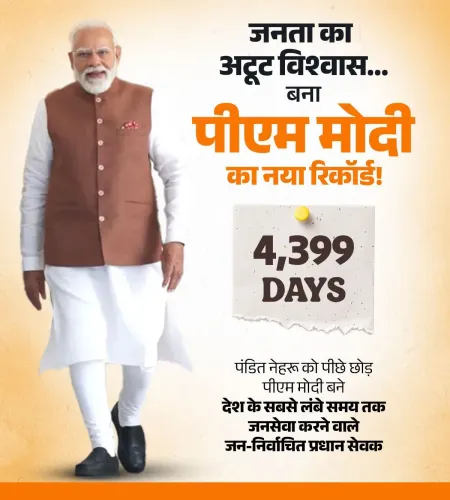
The hashtag #LongestServingElectedPMModi marks Modi's record as India's longest-serving elected Prime Minister after wins in 2014, 2019, and 2024 .
The message draws a direct contrast between Congress-led UPA governments (2004–2014) and the post-2014 NDA dispensation.
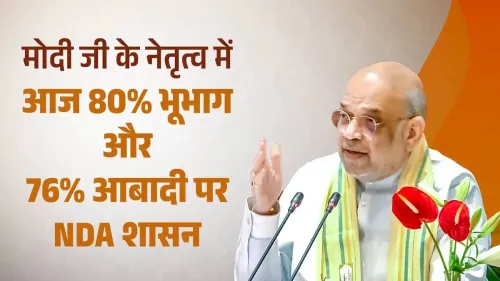
No specific statistics or named projects are cited; the framing uses 'growth rate' as a metaphor for pace of governance delivery.
The narrative is expected to feature prominently in BJP's campaign messaging ahead of state assembly elections in 2026–27 .
Union Home Minister Amit Shah on Wednesday, June 10, 2026, shared a pointed governance comparison on X, quoting Prime Minister Narendra Modi and asserting that achievements which eluded India for several decades were accomplished within 12 years of NDA rule — framing it as the defining difference between Congress-era and NDA-era growth rates.
Context
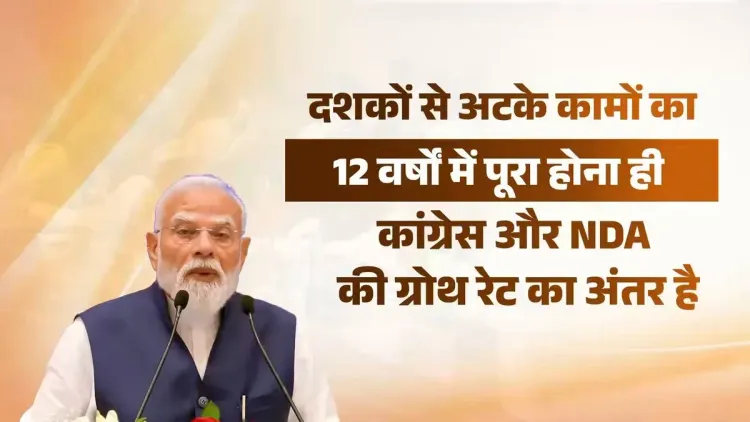
Shah's post quotes Modi directly: 'जो काम कई दशकों तक नहीं हुआ, वह 12 वर्षों में हुआ।' ('What did not happen for many decades, happened in 12 years.') The post adds: 'This is the difference between Congress's growth rate and NDA's growth rate.' The message was accompanied by a video and tagged with the hashtag #LongestServingElectedPMModi, a reference to Modi's record as India's longest-serving elected Prime Minister following three consecutive electoral victories in 2014, 2019, and 2024.
Modi first took oath as Prime Minister on 26 May 2014, after the BJP-led NDA secured a parliamentary majority. His re-elections in 2019 and 2024 extended NDA governance past the twelve-year mark, providing the factual basis for the milestone cited in the hashtag.
Policy Backdrop
The comparison between NDA and Congress-led UPA governments has been a consistent pillar of BJP's political communication since 2014. The UPA, led by the Indian National Congress, governed India from 2004 to 2014, a period the BJP has repeatedly contrasted with its own record on infrastructure delivery, welfare scheme rollouts, and economic reforms.
Shah's framing — 'growth rate' used as a metaphor for the pace of governance delivery rather than a cited GDP figure — is a rhetorical device the party has deployed across election cycles. The post does not cite specific statistics or named projects, keeping the message broad and aspirational in tone.
Stakeholders and Impact
The messaging is directed at the Indian electorate at large, particularly voters in states heading to assembly elections through 2026–27. For the BJP and its NDA allies, reinforcing the narrative of accelerated delivery under Modi strengthens the coalition's incumbency argument ahead of these contests.
For the Indian National Congress and the broader opposition, the post renews a long-running political challenge: to counter the NDA's governance narrative with specific counter-data on welfare, employment, and economic indicators from the UPA period. Congress has historically pushed back by citing social-sector spending and GDP growth figures from its own tenure.
What's Next
The development narrative Shah amplifies is expected to intensify as official economic and infrastructure data from the Ministry of Statistics and NITI Aayog are released in the coming months. State assembly election campaigns in 2026–27 are likely to see both the NDA and the opposition deploy competing data sets to substantiate their respective governance claims.
As Modi's tenure extends further into record territory, the BJP's communication apparatus appears set to make the 'decades versus 12 years' contrast a central plank — a signal that the party intends to fight the next electoral cycle on its incumbency record rather than distancing itself from it.
Point of View
Using Modi's own words to anchor the BJP's electoral identity in a record of delivery rather than promise. The 'decades versus 12 years' frame is not new, but its deployment under the #LongestServingElectedPMModi hashtag signals an attempt to convert a factual milestone into a political asset. By invoking 'growth rate' — a term with economic resonance — without attaching numbers, the messaging invites voters to fill in their own perceived improvements, a classic broad-tent communication strategy. With a clutch of state elections approaching, this post reads as an early calibration of the BJP's central campaign argument for the cycle ahead.
NationPress
20 Sept 2026
Frequently Asked Questions
What did Amit Shah post about PM Modi on June 10 2026?
Amit Shah quoted PM Narendra Modi saying that what could not be achieved for many decades was accomplished in 12 years under NDA, contrasting it with Congress's pace of governance delivery.
What is the meaning of the hashtag LongestServingElectedPMModi?
The hashtag marks Narendra Modi's record as India's longest-serving elected Prime Minister, a milestone reached after his consecutive electoral victories in 2014, 2019, and 2024.
When did Narendra Modi first become Prime Minister?
Narendra Modi first took oath as Prime Minister on 26 May 2014, after the BJP-led NDA won a majority in the 2014 general election.
What is the NDA vs Congress governance debate about?
The debate centres on whether the NDA governments since 2014 delivered infrastructure, welfare schemes, and economic reforms faster than the Congress-led UPA governments that ruled from 2004 to 2014.
Is Narendra Modi the longest-serving elected Prime Minister of India?
Yes, having served continuously since May 2014 through three terms, Modi has surpassed earlier records to become India's longest-serving elected Prime Minister.