Amit Shah: Siliguri Corridor shifting from infiltration route to secure border

Synopsis
Home Minister Amit Shah toured the Siliguri Corridor's BSF outposts on 18 July, claiming the Chicken Neck Sector — long cited as a vulnerability — is being converted into a fortified border zone. With ₹77.06 crore in projects inaugurated and a high-level security meeting chaired, the visit signals the Centre's intensified focus on the Indo-Bangladesh border ahead of West Bengal elections.
Key Takeaways
Home Minister Amit Shah inspected the BSF 19th Battalion BOP in the Siliguri Corridor on 18 July .
Shah claimed the Chicken Neck Sector is shifting from an infiltration corridor to a secure border under the BJP -led Centre.
A high-level border security meeting was chaired in Siliguri , attended by West Bengal CM Suvendu Adhikari .
Development projects worth ₹77.06 crore were inaugurated, focused on border infrastructure.
All programmes during the West Bengal visit are administrative; Shah returns to New Delhi on Sunday afternoon.
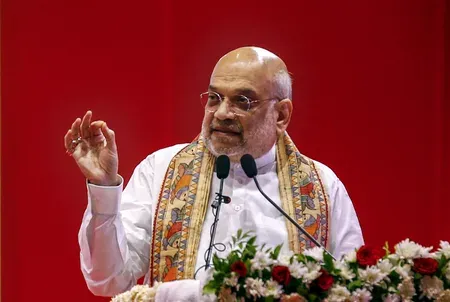
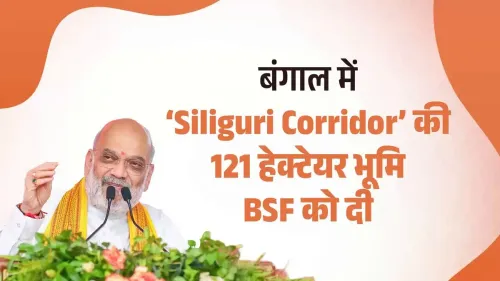
Union Home Minister Amit Shah on Saturday, 18 July claimed that the Siliguri Corridor — the strategically critical stretch also known as the Chicken Neck Sector — is transitioning from what he described as a corridor of infiltration under the previous All India Trinamool Congress (TMC) regime into a zone of reinforced border security. Shah made the assertion in a social media post following a hands-on inspection of the surveillance infrastructure at the Border Out Post (BOP) of the 19th Battalion of the Border Security Force (BSF), located under the North Bengal Frontier.
Key Developments During Shah's Visit
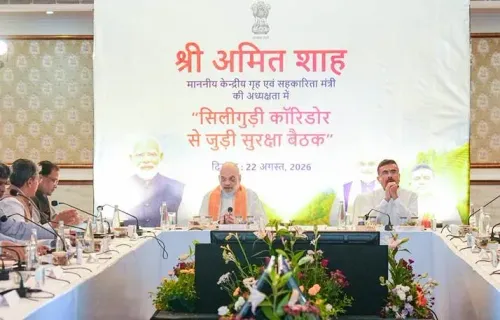
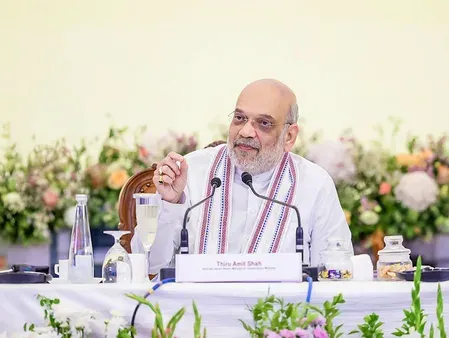
The Home Minister chaired a high-level border security meeting in Siliguri, Darjeeling district, with West Bengal Chief Minister Suvendu Adhikari in attendance. The meeting focused on tightening security along the Indo-Bangladesh border in West Bengal, particularly in North Bengal, to curb illegal infiltration and crack down on cross-border smuggling networks.
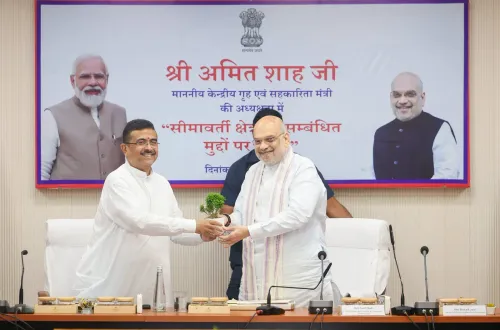
Shah also laid the foundation stone for and inaugurated development projects cumulatively valued at ₹77.06 crore. During the visit, he reviewed border fencing arrangements, inspected a watchtower, planted a sapling, and joined BSF personnel for high tea.
What the Government Said
Shah stated that the Prime Minister Narendra Modi government has significantly increased the number of watchtowers along India's borders and equipped them with state-of-the-art surveillance technology. He argued these measures have made border security 'stronger and impregnable,' though independent verification of infiltration data was not provided during the visit.
His remarks were directed squarely at the TMC, framing the Siliguri Corridor's past security lapses as a legacy of the previous state administration — a charge the TMC has consistently denied.
Itinerary and Administrative Scope
Shah arrived in Siliguri on Friday night and completed four consecutive engagements through Saturday. He is scheduled to travel to Kolkata on Saturday night for a full-day administrative programme on Sunday. Officials confirmed that all events during this West Bengal visit are administrative in nature, with no political rallies or party events on the schedule. Shah is expected to return to New Delhi on Sunday afternoon.
Why the Siliguri Corridor Matters
The Siliguri Corridor is one of India's most sensitive geographic chokepoints — a narrow strip of land connecting the northeastern states to the rest of the country, flanked by Bangladesh, Nepal, and Bhutan. Its proximity to the international tri-junction makes it a perennial focus of security planners. This visit comes amid broader Centre-state tensions over border management in West Bengal, where the BJP-led Centre and the TMC-led state government have frequently clashed on law enforcement priorities.
With assembly elections in West Bengal on the horizon, the Centre's visible push on border security in the state carries both administrative and political weight, even as officials insist the visit is strictly non-partisan.
Point of View
But the claim of an 'impregnable' border deserves scrutiny: independent data on infiltration trends in North Bengal remains thin. With West Bengal elections approaching, the line between border governance and electoral messaging will only get harder to draw.
NationPress
17 Oct 2026
Frequently Asked Questions
Why did Amit Shah visit the Siliguri Corridor?
Home Minister Amit Shah visited the Siliguri Corridor on 18 July to inspect BSF surveillance infrastructure, chair a border security meeting, and inaugurate development projects worth ₹77.06 crore. The visit was officially described as administrative, with no political events scheduled.
What is the Siliguri Corridor and why is it strategically important?
The Siliguri Corridor, also called the Chicken Neck Sector, is a narrow strip of land in North Bengal that connects India's northeastern states to the rest of the country. It is flanked by Bangladesh, Nepal, and Bhutan, making it one of India's most sensitive geographic and security chokepoints.
What decisions were taken at the Siliguri border security meeting?
The meeting, attended by West Bengal Chief Minister Suvendu Adhikari, focused on strengthening security along the Indo-Bangladesh border in West Bengal, particularly in North Bengal, to prevent illegal infiltration and arrest cross-border smugglers. Specific operational measures were not publicly disclosed.
What projects did Amit Shah inaugurate in Siliguri?
Shah laid the foundation stone for and inaugurated border infrastructure and development projects worth ₹77.06 crore during his visit to Siliguri on 18 July.
What is Shah's schedule for the rest of his West Bengal visit?
After Saturday's engagements in Siliguri, Shah is scheduled to travel to Kolkata on Saturday night for a full-day administrative programme on Sunday, before returning to New Delhi on Sunday afternoon. All events are administrative in nature.