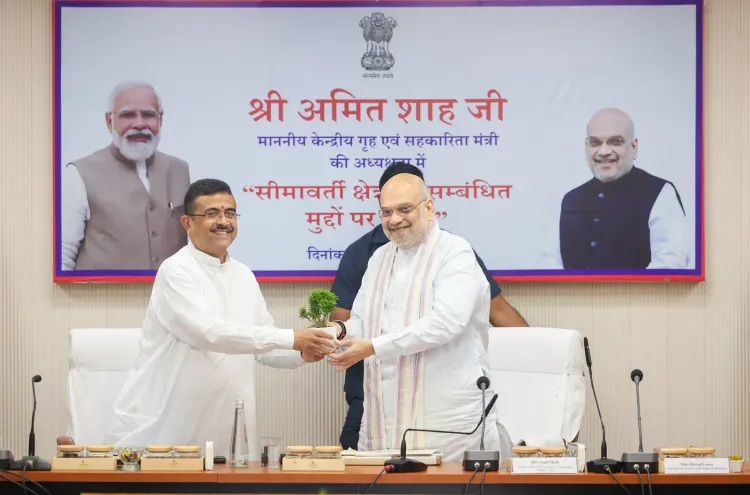
Amit Shah chairs India-Bangladesh border security meet in Siliguri
Synopsis
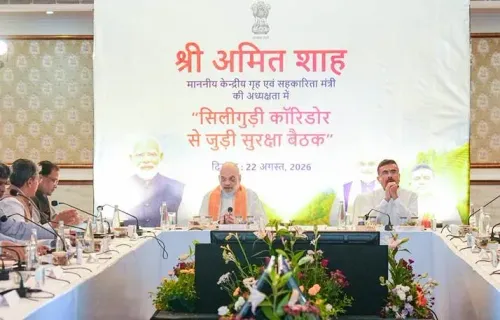
Union Home Minister Amit Shah chaired a security meeting in Siliguri on 18 July 2026, announcing zero-tolerance enforcement against drug trafficking, economic crimes, and infiltration on the India-Bangladesh border, along with priority completion of pending infrastructure and a new quadrilateral security grid.
Key Takeaways
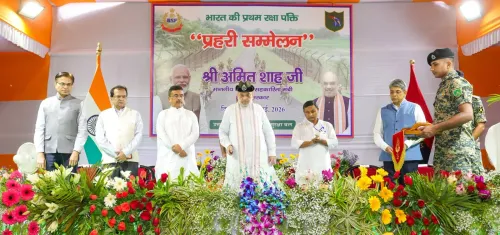
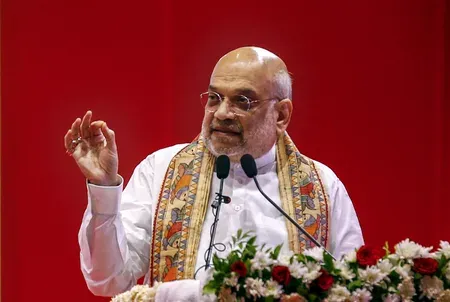
Union Home Minister Amit Shah chaired a border security meeting in Siliguri, West Bengal on 18 July 2026 .
The meeting focused on the India-Bangladesh border , covering drug trafficking, economic offences, and illegal infiltration.
The Modi government is pursuing a zero-tolerance policy against all three categories of border crime.
Long-pending national-security infrastructure projects in West Bengal will be completed on a priority basis.
A quadrilateral security grid will be established to make the border 'completely secure and impenetrable.' The India-Bangladesh border is approximately 4,096 km long, with over 2,200 km passing through West Bengal.
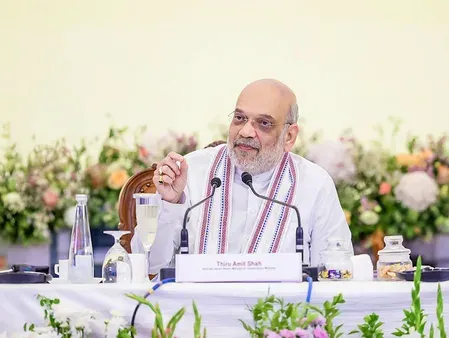
Union Home Minister Amit Shah chaired a high-level security meeting in Siliguri, West Bengal, on 18 July 2026, focused on threats along the India-Bangladesh border, including drug trafficking, economic offences, and illegal infiltration.
Posting on X in both Hindi and Bengali, Shah stated: 'आज पश्चिम बंगाल के सिलीगुड़ी में भारत-बांग्लादेश सीमा से जुड़े सुरक्षा मुद्दों पर बैठक की' ('Today I held a meeting in Siliguri, West Bengal, on security issues related to the India-Bangladesh border'). He added that the Modi government is advancing under a zero-tolerance policy against narcotics smuggling, economic crimes, and infiltration in border areas.
Context
Siliguri is a strategically critical city in northern West Bengal, situated close to both the India-Bangladesh and India-Nepal frontiers. The city has served as a recurring venue for high-level security coordination on the eastern border. Shah's choice to hold the meeting here underscores the region's sensitivity as a transit corridor for smuggling networks and cross-border movement.
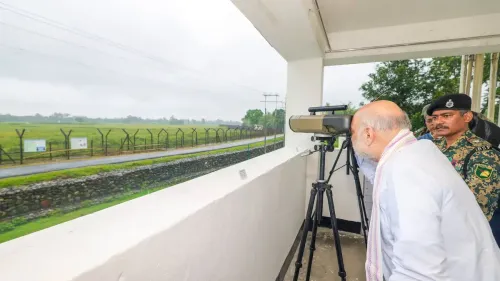
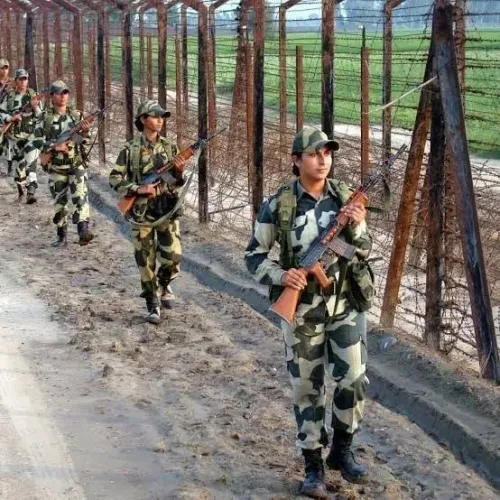
The India-Bangladesh border stretches approximately 4,096 km, of which more than 2,200 km falls within West Bengal. The frontier has historically been vulnerable to cattle trafficking, narcotics smuggling, and illegal crossings, making it a persistent focus of the Ministry of Home Affairs.
Policy Backdrop
Shah announced that long-pending national-security infrastructure works in West Bengal will now be completed on a priority basis. He also said a quadrilateral security grid (chatuskoniya suraksha grid) will be established along the border, which he described as a measure that will make the frontier 'completely secure and impenetrable.'
Border fencing and road construction along the eastern frontier were accelerated following high-level decisions in the early 2000s. The Ministry of Home Affairs formalised guidelines in 2017-18 for smart fencing, floodlighting, and integrated check posts as part of a multi-year modernisation plan. Inter-agency coordination meetings on the eastern border have been held periodically since 2014 to address infiltration routes through West Bengal and Assam.
Stakeholders and Impact
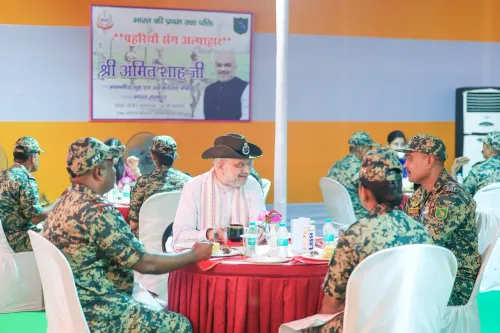
The primary agencies involved in implementing these measures are the Border Security Force (BSF) and the West Bengal Police, who jointly manage surveillance and response along the frontier. Residents of border districts stand to be directly affected by any acceleration in fencing, road-building, and surveillance infrastructure.
Shah's decision to post in both Hindi and Bengali signals a deliberate outreach to Bengali-speaking audiences in West Bengal, a state where border security and infiltration have remained politically sensitive issues. The zero-tolerance framing aligns with the broader internal-security posture the Modi government has articulated since 2014.
What's Next
Attention will now turn to the timelines announced for completing pending border roads and fencing projects in West Bengal, and whether follow-up coordination meetings are held with Bangladesh's Border Guard Bangladesh (BGB). The operationalisation of the proposed quadrilateral security grid will be a key marker of progress on the commitments made at the Siliguri meeting.
If the pending infrastructure works are executed on the accelerated schedule Shah indicated, the eastern frontier's security architecture could see its most significant upgrade in over a decade, with implications for smuggling networks and demographic pressures across the region.
Point of View
Bypassing routine bureaucratic channels to signal political urgency. The dual-language post in Hindi and Bengali is a calculated move in a state where border demographics and infiltration are electoral fault lines. The announcement of a quadrilateral security grid, layered on top of the existing smart-fencing programme, suggests the government is moving toward a more integrated, technology-and-infrastructure approach rather than relying solely on force deployment. The emphasis on 'long-pending' works is also an implicit critique of the pace of implementation under the state government.
NationPress
17 Oct 2026
Frequently Asked Questions
Why did Amit Shah hold a security meeting in Siliguri?
Amit Shah chaired the meeting in Siliguri on 18 July 2026 to address security threats on the India-Bangladesh border, including drug trafficking, economic crimes, and illegal infiltration, and to review the status of pending border infrastructure in West Bengal.
What is the quadrilateral security grid announced by Amit Shah?
Shah announced the establishment of a 'chatuskoniya suraksha grid' (quadrilateral security grid) along the India-Bangladesh border in West Bengal, describing it as a layered security framework designed to make the frontier completely secure and impenetrable. Operational details have not yet been publicly disclosed.
How long is the India-Bangladesh border?
The India-Bangladesh border stretches approximately 4,096 km in total, of which more than 2,200 km passes through West Bengal, making it one of the most extensive and sensitive frontiers in South Asia.
What pending infrastructure works did Amit Shah refer to?
Shah stated that national-security-linked infrastructure projects in West Bengal that have remained incomplete for years — including border fencing and roads — will now be completed on a priority basis, though specific project names and timelines were not detailed in his post.
What is India's zero-tolerance policy on the eastern border?
The Modi government's zero-tolerance policy on the eastern border refers to strict enforcement action against narcotics smuggling, economic offences such as cattle and goods trafficking, and illegal infiltration, coordinated between the Border Security Force and state police forces.