Amit Shah Meets BSF Jawans at Siliguri Border Outpost
Synopsis
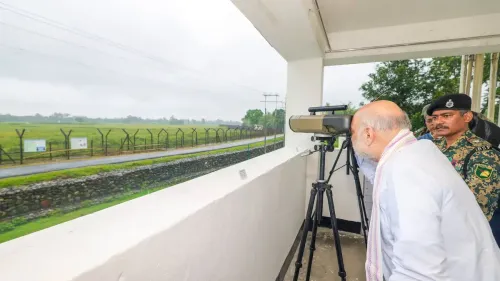
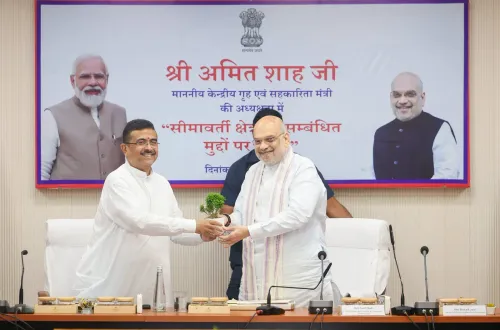
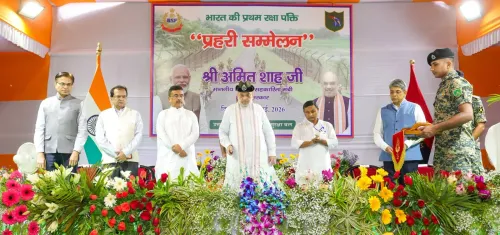
Union Home Minister Amit Shah visited the Jumagachh Border Outpost in Siliguri, West Bengal on 18 July 2026, interacting with BSF jawans over high tea and hailing the force as India's 'invincible fortress on the border.' The visit underscores continued MHA focus on the strategically critical Siliguri corridor.
Key Takeaways
Union Home Minister Amit Shah visited the Jumagachh Border Outpost in Siliguri, West Bengal on 18 July 2026 .
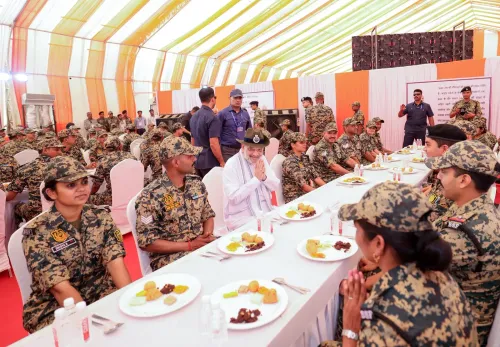
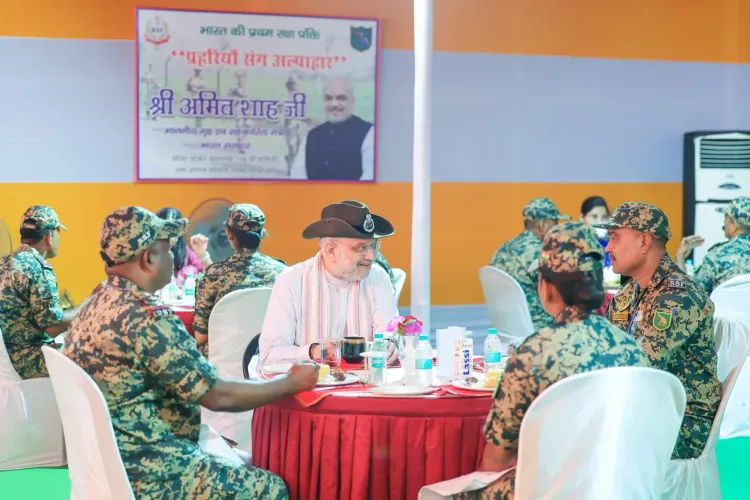
Shah interacted with BSF jawans over high tea at the forward post, calling the force India's 'invincible fortress on the border.' The Siliguri sector guards stretches of both the India-Bangladesh and India-Nepal borders and is among India's most strategically sensitive corridors.
The BSF was established in December 1965 and operates under the Ministry of Home Affairs .
High-level visits to forward posts are part of the MHA 's routine morale and operational oversight framework for paramilitary forces.
The eastern border has seen sustained government investment in fencing, surveillance, and outpost modernisation.
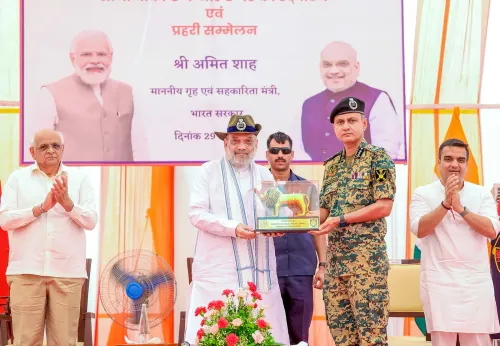
Union Home Minister Amit Shah on Saturday, 18 July 2026, interacted with Border Security Force (BSF) jawans over high tea at the Jumagachh Border Outpost in Siliguri, West Bengal, calling the force India's 'invincible fortress on the border.'
Context
Posting on X, Shah wrote: 'The BSF's valor stands as India's invincible fortress on the border. Delighted to have interacted with the BSF Jawans during high tea at Jumagachh Border Outpost in Siliguri, West Bengal.' The visit placed the Union Home Minister at a forward operational post in one of India's most strategically sensitive corridors — the Siliguri sector, which sits at the narrow land passage connecting northeastern India with the rest of the country.
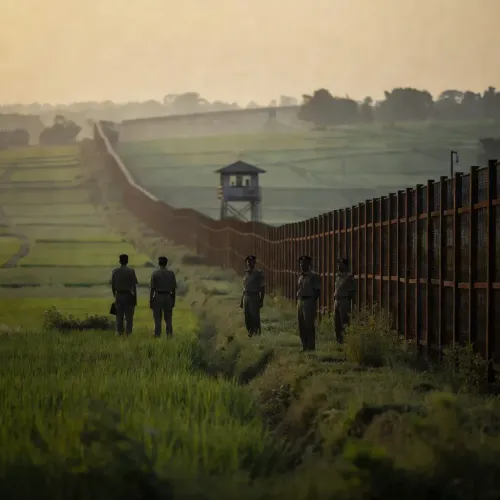
The Jumagachh Border Outpost falls within the Siliguri belt of West Bengal, a region where the BSF maintains deployments along stretches of both the India-Bangladesh and India-Nepal borders. The area's geographic sensitivity — bordered also by Bhutan — makes it a priority zone for border management agencies under the Ministry of Home Affairs (MHA).
Policy Backdrop
The BSF was raised in December 1965 following the Indo-Pakistan war, established as a dedicated border-guarding force separate from the Army and placed under the administrative control of the MHA. Over the decades it has expanded into India's largest border guarding organisation, with extensive deployments across the eastern and western frontiers.
The Siliguri sector has received sustained government attention in recent years, with ongoing work on border fencing, surveillance infrastructure, and outpost modernisation along the eastern borders. High-level ministerial visits to forward posts are a recognised instrument of morale reinforcement and operational oversight within the MHA's engagement framework with paramilitary forces.
Stakeholders and Impact
BSF jawans deployed at remote forward outposts often operate in demanding conditions with limited civilian connectivity. Direct engagement by the Union Home Minister — the political head of the force — carries significant symbolic weight for personnel morale. Residents of border districts in West Bengal and the broader northeastern region are also direct stakeholders in the security environment that the BSF sustains.
The eastern border has seen sustained focus on infiltration management, cattle smuggling, and cross-border trafficking, making the Siliguri corridor a perennial operational priority. The government's broader push to professionalise and better equip paramilitary forces guarding sensitive frontier areas provides the institutional backdrop for such field visits.
What's Next
The visit is likely to be followed by administrative reviews of border infrastructure projects in the West Bengal sector, including fencing timelines and outpost upgrades. Parliamentary updates on BSF modernisation and the eastern border fencing programme are expected to reflect any policy decisions emerging from field-level engagements of this kind. Observers will watch for any announcements on additional manpower or technology deployment along the India-Bangladesh frontier.
Point of View
Which sits at the narrow passage connecting the northeast to the mainland, signals that the eastern frontier remains a strategic priority for the Home Ministry. Such visits also serve an institutional function: direct ministerial engagement with jawans reinforces the chain of command and can accelerate on-ground feedback on infrastructure and welfare gaps. The optics of a senior Cabinet minister sharing high tea with frontline troops align with a broader political narrative of civilian leadership standing shoulder-to-shoulder with paramilitary personnel.
NationPress
17 Oct 2026
Frequently Asked Questions
Why did Amit Shah visit the BSF post in Siliguri?
Amit Shah visited the Jumagachh Border Outpost in Siliguri on 18 July 2026 to interact with BSF jawans and boost troop morale, calling the force India's 'invincible fortress on the border.' Such visits are part of routine MHA oversight and morale engagement with paramilitary forces.
Where is the Jumagachh Border Outpost located?
The Jumagachh Border Outpost is located in the Siliguri sector of West Bengal, a strategically significant corridor near the borders with Bangladesh, Nepal, and Bhutan.
What is the BSF and which ministry controls it?
The Border Security Force (BSF) is India's primary border guarding organisation, raised in December 1965 after the Indo-Pakistan war. It operates under the Union Ministry of Home Affairs.
Why is the Siliguri corridor strategically important?
The Siliguri corridor is a narrow strip of land in northern West Bengal that connects India's northeastern states to the rest of the country. It borders Nepal, Bangladesh, and Bhutan, making it one of India's most sensitive frontier zones.
What is the government doing to strengthen the eastern border?
The government has been investing in border fencing, surveillance infrastructure, and outpost modernisation along the eastern frontier, particularly in West Bengal's Siliguri sector, as part of a broader push to professionalise paramilitary border guarding.