Amit Shah Calls Rahul Gandhi's TMC Criticism a 'Late Realisation'
Synopsis
Home Minister Amit Shah fired back at Rahul Gandhi's criticism of Mamata Banerjee's TMC government in West Bengal, calling it a 'late realisation.' The rebuke exposes a decade of Congress-TMC alliance contradictions, electoral collapses, and the Congress winning just 1 of 42 Lok Sabha seats in Bengal in 2024.
Key Takeaways
Home Minister Amit Shah called Rahul Gandhi's criticism of the Trinamool Congress government in West Bengal a 'late realisation' on April 24, 2025 .
Rahul Gandhi posted a 106-second video on X blaming Mamata Banerjee's governance and polarisation for enabling the BJP's rise in Bengal .
The Congress won only 1 out of 42 Lok Sabha seats in West Bengal in the 2024 general elections , in the Malda constituency.
Both the Congress and the Left Front failed to win a single seat in the 2021 West Bengal Assembly elections .
Adhir Ranjan Chowdhury was removed as Bengal Congress chief in 2024 after losing Baharampur — a seat he held for five consecutive terms (1999–2019) .
The Congress-TMC alliance that helped end the Left Front's 34-year rule in 2011 collapsed by 2013 , setting off a chain of political realignments that weakened both parties in the state.
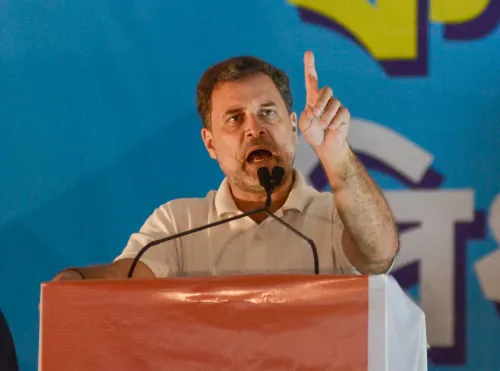
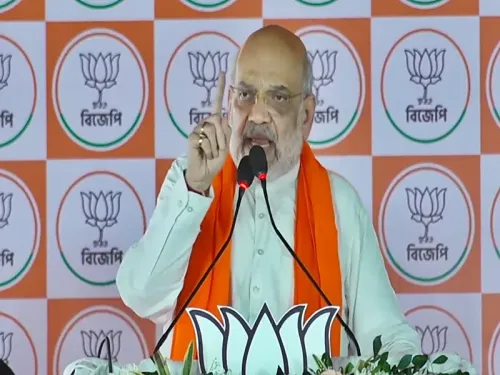
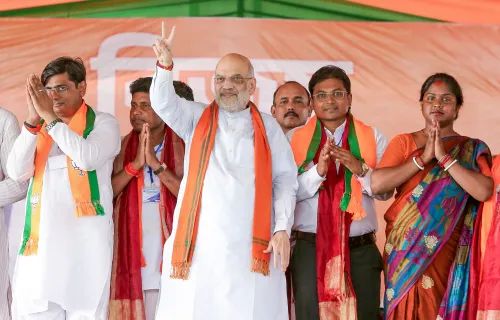
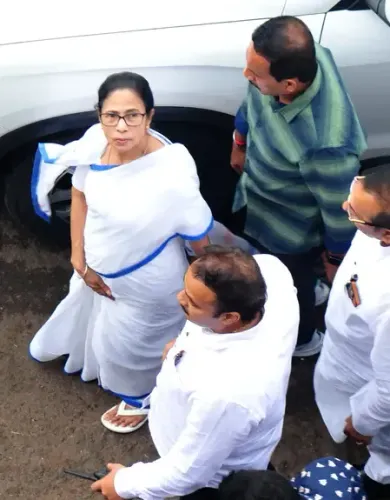
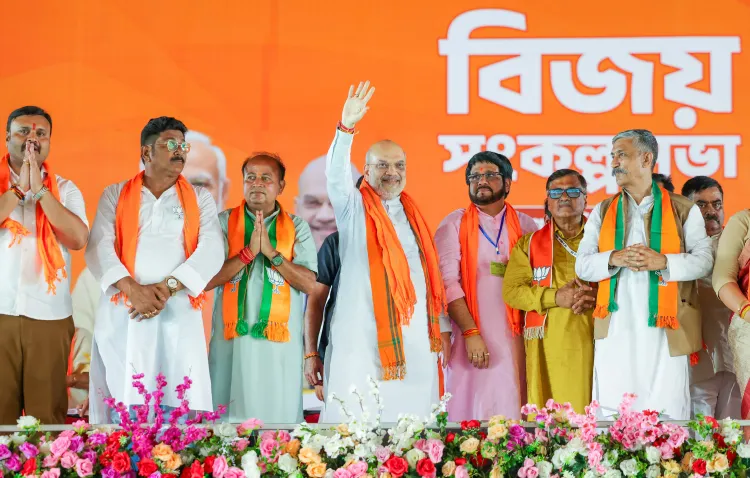
New Delhi, April 24: Union Home Minister Amit Shah on Friday sharply reacted to Leader of Opposition Rahul Gandhi's fresh criticism of the Trinamool Congress (TMC) government in West Bengal, calling it a 'late realisation'. Shah's remarks came in response to a video Gandhi posted on social media platform X, in which the Congress leader blamed Chief Minister Mamata Banerjee's governance for enabling the BJP's rise in the state.
'It has been realised very late,' Shah told IANS in Kolkata, delivering a pointed rebuke that encapsulates the broader contradictions within the Congress-TMC relationship — one defined by decades of political opportunism, broken alliances, and electoral miscalculations.
What Rahul Gandhi Said in His Video
In a 106-second video clip posted on Thursday, April 24, Rahul Gandhi criticised BJP's policies and governance in West Bengal while simultaneously taking aim at the Trinamool Congress. He urged voters in the state to back the Congress as a credible alternative.
'If Chief Minister Mamata Banerjee had run a clean government and had not polarised Bengal, then the BJP would not have got a chance,' Gandhi stated in the video — a rare public acknowledgment by the Congress that the TMC's governance failures contributed to the BJP's electoral gains in the state.
The irony, as HM Shah pointedly noted, is that this criticism arrives years after the Congress itself enabled the Trinamool Congress to ascend to power and long after the damage to the opposition's electoral base in Bengal has already been done.
Congress and TMC: A Turbulent Political History
The relationship between the Congress and the Trinamool Congress is one of India's most complex and contradictory political partnerships. It was the Congress that provided critical support to the TMC in the landmark 2011 West Bengal Assembly elections, which ended the Left Front's uninterrupted 34-year rule in the state.
The alliance proved decisive. However, by 2013, the partnership had collapsed, and the Congress pivoted to align with its former rival, the Left Front. The two contested the 2016 and 2021 Assembly elections together but failed to dislodge Mamata Banerjee, who retained power with an even stronger mandate each time.
Historically, the TMC had itself withdrawn from the National Democratic Alliance (NDA) in 2006 following electoral setbacks, before aligning with the Congress for the 2009 Lok Sabha elections after the Left Front withdrew support from the United Progressive Alliance (UPA) government at the Centre.
Adhir Ranjan Chowdhury's Exit and Congress's Bengal Decline
A pivotal moment in the Congress's Bengal trajectory was the removal of Adhir Ranjan Chowdhury as Pradesh Congress Committee President in 2024. Chowdhury, known for his outspoken criticism of Chief Minister Mamata Banerjee, stepped down after losing the Baharampur Lok Sabha constituency — a seat he had held for five consecutive terms between 1999 and 2019.
Chowdhury had also served as the Congress leader in the 17th Lok Sabha, though the party lacked the numbers for formal recognition as the Leader of Opposition. He was among the most vocal proponents of a Congress-Left Front alliance to counter the TMC.
His successor, Subhankar Sarkar, adopted a more moderate approach, distancing the party from renewed alliance talks with the Communist Party of India (Marxist). This led to a multi-cornered contest in the state, fragmenting opposition votes and indirectly altering the balance between the BJP and the TMC.
Electoral Collapse and the 2024 Lok Sabha Results
The 2021 Assembly elections were a watershed moment for the Congress and the Left Front in West Bengal — both failed to win a single seat, marking their near-total collapse in the state. The 2024 Lok Sabha elections offered little relief, with the Congress managing to win only 1 seat out of 42 — the Malda constituency — in West Bengal.
This electoral decimation has left the Congress with minimal political capital in the state, making Rahul Gandhi's current criticism of the TMC appear more like a political repositioning exercise than a substantive challenge to Mamata Banerjee's dominance.
Amit Shah's Remark and Its Deeper Political Significance
HM Amit Shah's 'late realisation' jibe is more than just a political one-liner — it exposes the fundamental contradiction at the heart of the Congress's Bengal strategy. For over a decade, the party either allied with or remained ambivalent toward the TMC, allowing the BJP to position itself as the primary opposition in the state.
Critics argue that had the Congress adopted a consistent, principled opposition stance against the Trinamool Congress years earlier, the political landscape in West Bengal could have evolved very differently. Instead, shifting alliances and internal contradictions left a vacuum that the BJP effectively filled.
As West Bengal heads toward the next electoral cycle, Rahul Gandhi's renewed engagement with the state's politics will be closely watched. Whether this marks a genuine strategic reset for the Congress in Bengal or merely a belated attempt at relevance — as Amit Shah suggests — remains to be seen in the months ahead.
Point of View
Then watched helplessly as the BJP filled the opposition vacuum it abandoned. Amit Shah's 'late realisation' jibe is not just a political taunt; it is an accurate diagnosis of the Congress's decade-long strategic incoherence in West Bengal. With just one Lok Sabha seat in Bengal, Gandhi's video posturing carries little electoral weight. The real story here is not Congress vs TMC — it is how the Congress's own alliance flip-flops gifted the BJP a foothold in a state it once had no business winning.
NationPress
3 Oct 2026
Frequently Asked Questions
Why did Amit Shah call Rahul Gandhi's TMC criticism a 'late realisation'?
Amit Shah used the phrase 'late realisation' because the Congress itself supported the Trinamool Congress in coming to power in West Bengal in 2011, and only now is publicly criticising TMC's governance. Shah argued that Gandhi's remarks come far too late to be politically credible.
What did Rahul Gandhi say about Mamata Banerjee and Bengal in his video?
In a 106-second video posted on April 24, Rahul Gandhi stated that if Chief Minister Mamata Banerjee had run a clean government and not polarised Bengal, the BJP would not have gained ground in the state. He also urged West Bengal voters to support the Congress.
How has the Congress performed in West Bengal in recent elections?
The Congress and Left Front won zero seats in the 2021 West Bengal Assembly elections. In the 2024 Lok Sabha elections, Congress managed to win only 1 seat out of 42 in West Bengal, in the Malda constituency.
What is the history of the Congress-TMC alliance in West Bengal?
The Congress allied with the Trinamool Congress for the 2009 Lok Sabha elections and the 2011 Assembly elections, helping TMC end the Left Front's 34-year rule. The alliance broke down in 2013, after which Congress aligned with the Left Front, though both failed in subsequent elections.
Who replaced Adhir Ranjan Chowdhury as Bengal Congress chief?
Subhankar Sarkar replaced Adhir Ranjan Chowdhury as the Pradesh Congress Committee President in West Bengal in 2024. Chowdhury had stepped down after losing the Baharampur Lok Sabha seat, which he had held for five consecutive terms from 1999 to 2019.