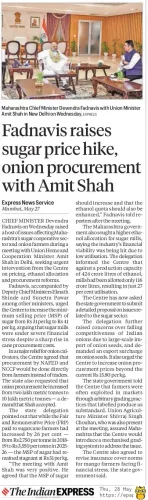
Amit Shah to chair Maharashtra onion, sugar crisis meet on Wednesday
Synopsis
With onion prices crashing to as low as 50 paise per kg and sugar mills sitting on ₹934 crore in unpaid dues, Maharashtra's agrarian economy is under simultaneous stress from two directions — and the Centre's incremental fixes have so far failed to satisfy farmers. Amit Shah's Wednesday meeting is the most senior intervention yet, but growers have already warned that anything below ₹30 per kg will be rejected.
Key Takeaways
Amit Shah will chair a crisis meeting at his New Delhi residence on 28 May 2026 at 5 pm on Maharashtra's onion and sugar sectors.
Onion wholesale prices crashed to 50 paise–₹1 per kg at key APMCs in early May, against production costs of ₹18–₹20 per kg .
The Centre raised NAFED procurement price from ₹12.35 to ₹15.80 per kg ; farmers demand a minimum of ₹30 per kg .
83 sugar mills in Maharashtra owe ₹934 crore in outstanding FRP dues as of mid-May 2026.
The DGFT banned sugar exports until 30 September 2026 on 13 May , reversing a February 2026 export permission — a move criticised as a policy flip-flop.
IMD projects the 2026 Southwest Monsoon at 92% of LPA amid El Niño warnings, raising fears of a cane shortfall for the next crushing season.
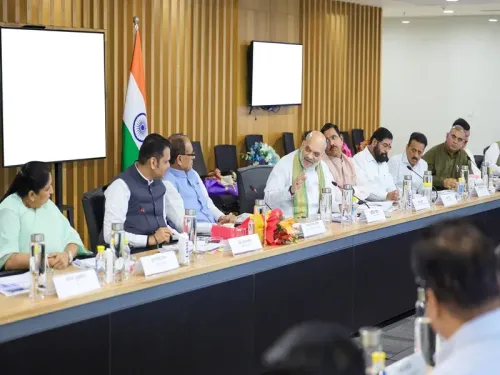
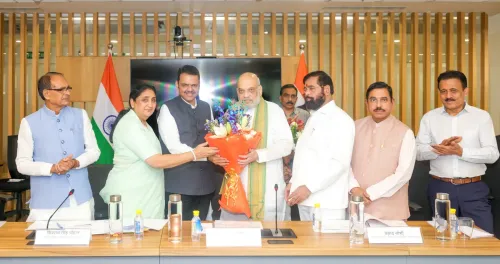
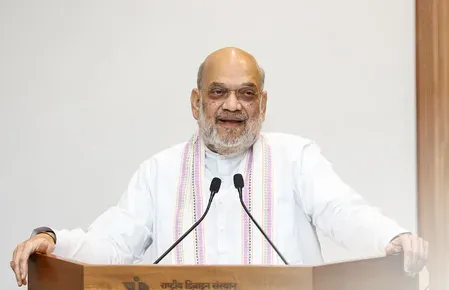
Union Home and Cooperation Minister Amit Shah will chair a high-level meeting at his New Delhi residence on Wednesday, 28 May 2026 at 5 pm to address the deepening agrarian crisis gripping Maharashtra's onion farmers and cooperative sugar industry. The meeting signals the Centre's recognition that state-level interventions alone have failed to contain mounting rural distress.
Who Will Attend
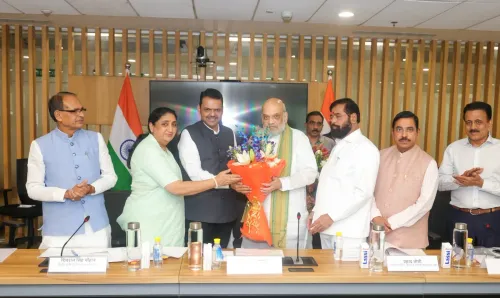
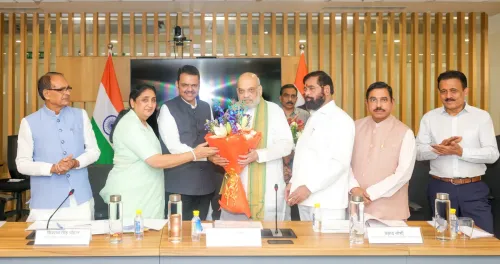
Maharashtra Chief Minister Devendra Fadnavis, Deputy Chief Ministers Eknath Shinde and Sunetra Pawar, senior ministers including Chhagan Bhujbal, Radhakrishna Vikhe Patil, and Shivendraraje Bhosale, and legislators Dilip Walse Patil, Jayant Patil, Vinay Kore, and Abhimanyu Pawar are expected to attend. Harshvardhan Patil, Chairman of the National Federation of Cooperative Sugar Factories, and PR Patil, Chairman of the Federation of Cooperative Sugar Factories in Maharashtra, will also be present.
The Onion Crisis: Prices Below Production Cost
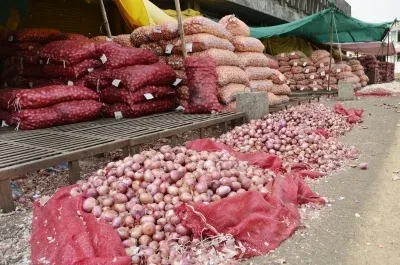
The onion belt of Maharashtra — spanning Nashik, Chhatrapati Sambhajinagar, and parts of Marathwada — is in the grip of severe farm distress. According to data from the State Agriculture Department, cultivation expanded to 10 lakh hectares in the 2025-26 season, yielding a bumper 165–170 lakh metric tonnes. Yet input costs — seeds, fertilisers, labour, and transport — average ₹18 to ₹20 per kg, while wholesale rates at major Agricultural Produce Market Committees (APMCs) such as Satana, Lasalgaon, and Paithan crashed to between 50 paise and ₹1 per kg for below-average quality in early May. Even premium-quality stocks are fetching only ₹12 to ₹15 per kg.
The crisis has been compounded by the ongoing conflict in West Asia, which has severely disrupted traditional export markets including the Arab nations and Iran. Container freight costs from India reportedly surged from $600 to $6,500, pricing out Indian exporters as competitors like Egypt and Yemen supply the same markets via overland routes. Over 150 containers remain stranded at Mumbai's Jawaharlal Nehru Port Trust (JNPT). Unseasonal rainfall and hailstorms across North Maharashtra and Marathwada have further compromised quality and shelf-life of the rabi harvest, forcing distress sales.
On 15 May 2026, the Centre announced procurement of 2 lakh tonnes of onions through NAFED and NCCF at ₹12.35 per kg (₹1,235 per quintal). The Maharashtra State Onion Growers' Association rejected the rate as inadequate, demanding a minimum floor price of ₹30 per kg and a ₹1,500 per quintal subsidy for past losses. The Centre subsequently raised the NAFED procurement price to ₹15.80 per kg, but growers have maintained the revision falls short when production costs stand at ₹18 to ₹20 per kg. Farmers have launched a fresh agitation in Chandwad, Nashik district, and have warned of blocking the Mumbai-Agra highway.
Sugar Sector: Policy Reversal and Mounting Dues
Maharashtra concluded the 2025-26 crushing season as India's top sugar-producing state, crushing 1,044.21 lakh tonnes of cane to yield 99.20 lakh tonnes of sugar. Despite this record output, the sector faces structural strain. On 13 May 2026, the Directorate General of Foreign Trade (DGFT) imposed an immediate ban on the export of raw, white, and refined sugar until 30 September 2026 — just three months after the Centre had permitted exports in February 2026.
The ruling and opposition parties, along with farmer bodies including the All India Kisan Sabha (AIKS) and Swabhiman Shetkari Sanghatana, criticised the policy reversal, arguing it cuts off high-value international revenues at a time when global demand is peaking. While the Centre raised the Fair and Remunerative Price (FRP) for cane farmers to ₹365 per quintal for the upcoming season, the Minimum Selling Price (MSP) of sugar has remained frozen at ₹31 per kg since 2019. The sugar industry has pointed out that average mill production costs have risen to ₹41.72 per kg, creating a widening viability gap.
The financial squeeze on mills has cascaded to farmers: as of mid-May 2026, 83 sugar mills across Maharashtra owe ₹934 crore in outstanding FRP dues. The Sugar Commissionerate has initiated hearings and issued seizure warnings to non-compliant factories. Adding to the uncertainty, the India Meteorological Department (IMD) has projected the 2026 Southwest Monsoon at 92% of the Long Period Average (LPA) amid emerging El Niño warnings, raising fears of a cane shortfall for the 2026-27 crushing season beginning in October.
The Structural Fault Line
A senior minister, speaking on the backdrop of the crisis, argued that the core friction for both sectors stems from an imbalance between rising domestic cultivation costs and restrictive trade policies designed to contain retail inflation — with the financial burden falling squarely on the rural economy. He said a Centre-backed bailout package is necessary for both onion growers and the cooperative sugar industry to survive. Wednesday's meeting is expected to produce concrete relief measures, though farmer groups have signalled that anything short of their stated demands will be rejected.
Point of View
Then ₹15.80 per kg — reveal a reactive rather than structural approach to a crisis that has been building for months. With production costs at ₹18–₹20 per kg, each revision still leaves onion farmers in the red, and the gap between policy optics and ground reality is growing. The sugar sector's predicament is arguably worse: a February export permission reversed in May signals that trade policy is being calibrated for retail inflation management, not farm viability — and the ₹934 crore in unpaid dues is the direct consequence. Wednesday's meeting carries political weight given the coalition arithmetic in Maharashtra, but unless it produces a credible floor price mechanism and a timeline for clearing mill dues, it risks being another high-profile gathering without durable relief.
NationPress
26 Sept 2026
Frequently Asked Questions
Why is Amit Shah holding a meeting on Maharashtra's onion and sugar crisis?
Union Home and Cooperation Minister Amit Shah is convening the meeting on 28 May 2026 because Maharashtra's onion farmers are selling below production cost and the cooperative sugar industry faces an export ban and mounting unpaid dues. The meeting brings together the state's top political leadership to work out relief measures at the Centre level.
What is the current onion procurement price and what are farmers demanding?
The Centre has set the NAFED procurement price at ₹15.80 per kg after raising it from ₹12.35 per kg. Farmers argue this is still inadequate, as production costs stand at ₹18–₹20 per kg, and are demanding a minimum floor price of ₹30 per kg along with a ₹1,500 per quintal subsidy for past losses.
Why are Maharashtra's onion prices so low in 2026?
A bumper harvest of 165–170 lakh metric tonnes across 10 lakh hectares, combined with disrupted West Asian export markets due to the regional conflict and freight costs surging from $600 to $6,500 per container, has flooded domestic markets. Unseasonal rains and hailstorms have further damaged quality, forcing distress sales at as low as 50 paise per kg.
What is the sugar export ban and why is it controversial?
On 13 May 2026, the DGFT banned exports of raw, white, and refined sugar until 30 September 2026 to protect domestic supply and control retail inflation. The ban is controversial because it reversed an export permission granted just three months earlier in February 2026, drawing criticism from both ruling and opposition parties as a damaging policy flip-flop.
How much do sugar mills owe farmers in Maharashtra?
As of mid-May 2026, 83 sugar mills in Maharashtra owe ₹934 crore in outstanding Fair and Remunerative Price (FRP) dues to sugarcane farmers. The Sugar Commissionerate has initiated hearings and issued seizure warnings to non-compliant mills.